Light
Bright indirect • approx. 10,000–20,000 lux

VAT included · plus
Your new plant has just travelled a long way and needs a calm start in its new home. For step-by-step unboxing and first-week care, check our after-delivery care guide. For deeper tips on how your plant settles in over the next weeks, read our houseplant acclimatization guide.
Secure shipping, carefully packed orders with safe delivery across the EU, UK and Switzerland.
28-day plant guarantee, if a plant arrives damaged or fails soon after delivery, we help you make it right.
Free returns, simple, cost-free returns according to our policy.
For full details, please see:
Please head to our FAQ Page or Contact us.
Quick Care Guide
Light
Bright indirect • approx. 10,000–20,000 lux
Watering
Water when ~20–35% dry
Substrate
Aerated • Moisture-buffered • Balanced organic + mineral • Medium
Temperature
Ideal: 18–28 °C • Avoid below: 15 °C
Humidity
Humid 60–80 % +
Growth habit
Upright clumping herbaceous perennial.
Support
not needed
Growth speed
Average
Max size indoors
Max. height: 100 cm • Max. spread: 100 cm
Toxicity & safety
Toxic
Origin & habitat
Native from China (southern Yunnan, Guangdong) to western and central Malesia
Outdoor growing
Outside from 15 °C · sheltered spot
These care values are quick reference points for indoor growing. Use them as a guide, then adjust for pot size, substrate, temperature and how quickly the substrate dries.
For more detail, read the full product description or visit our Plant Care Guides.
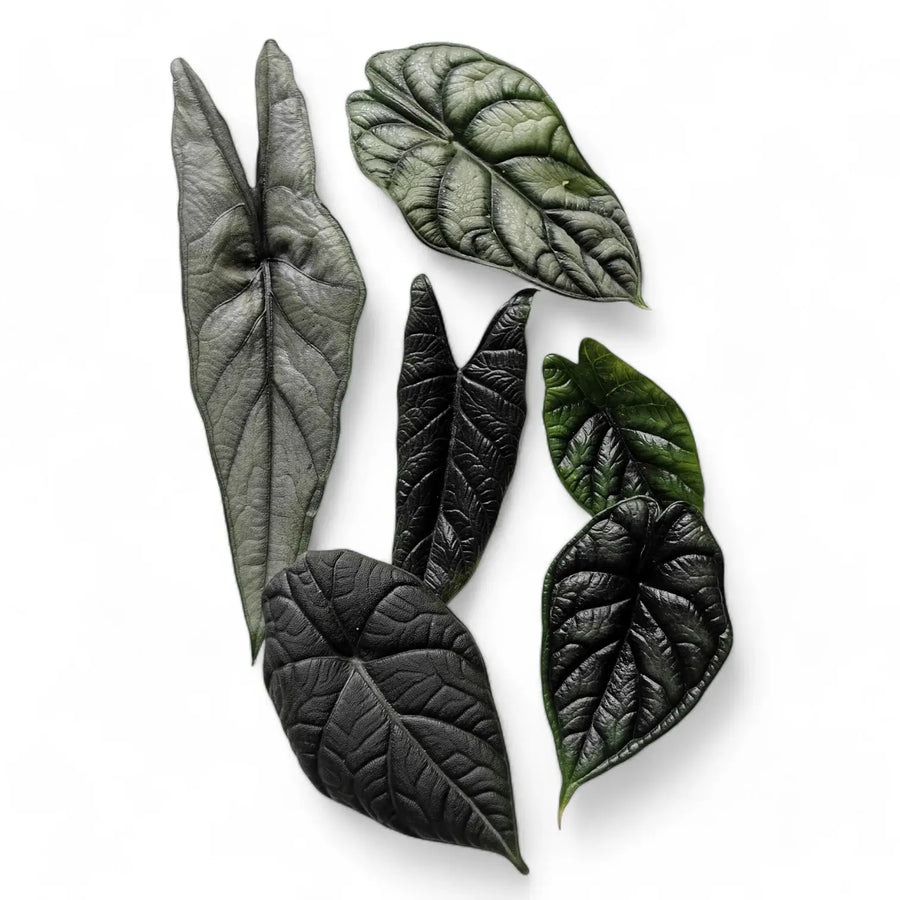
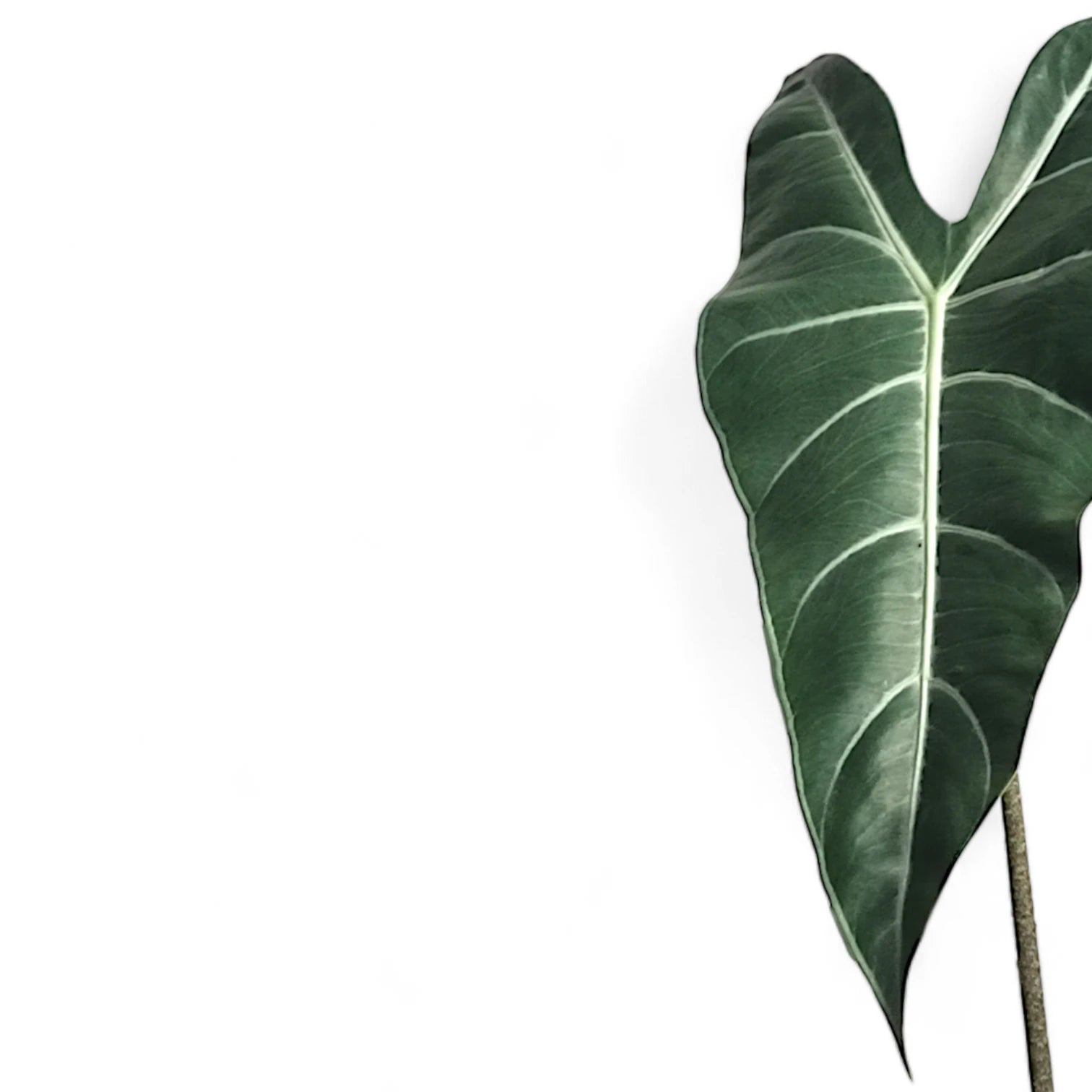
Alocasia longiloba is a variable long-lobed Alocasia with elongated leaves, pale vein contrast and a rhizome that can become visible with age. Some forms look narrow and spear-like, while others develop broader, shield-shaped blades. Mature shape becomes clearer after several leaves have hardened.
The species grows across wet tropical parts of Southeast Asia into western and central Malesia. It is found in rainforest floor conditions, swamp forest, regrowth, rocky places, ravines and forest boulder habitats. That range explains why it needs moisture, but also an open mix around the rhizome and roots.
Alocasia longiloba can range from smaller plants to robust specimens around 40–150 cm tall in species descriptions. Petioles can be long, often green, pinkish, purple-brown or mottled. Leaves are usually elongated, with a pointed front lobe and extended basal lobes near the petiole attachment.
The upper surface is usually green with pale grey-green to silvery veins. The underside may be green, purple or maroon-purple depending on the form and leaf age. The plant grows from an elongate rhizome, a thick stem-like base that may sit partly above the substrate as the plant matures.
Alocasia longiloba often grows in pauses, where one large new leaf may be followed by a slower period. The plant may pause after transport, flowering, repotting or low-light periods. During a quiet phase, the rhizome should stay firm and the petioles should remain stable.
Stress often shows first in the base and leaves:
Divide only when roots and new growth are active. Offsets, divisions or rhizome sections need firm tissue and a stable, airy mix to restart well. Fully faded leaves can be cut away, while marked green leaves should stay because each large blade still feeds the rhizome.
Alocasia longiloba can produce solitary or paired inflorescences with a spathe and spadix, followed by orange-red fruits. All parts contain calcium oxalate crystals, so keep leaves and rhizome pieces away from pets and children that may ingest plant parts. The name longiloba means long-lobed, referring to the extended lobes of the leaf blade.
Plant names, growth habits, natural habitats and indoor care guidance are checked against trusted botanical, habitat and horticultural references before publication.View our plant care resources and references.
Sign up for Foliage Factory newsletter for early access to new arrivals and practical care tips that work in real homes.