
Light
Low indirect • ≈ 1–5k lux • Grow light target: DLI 1–3


VAT included · plus
Quick overview of our standard shipping rates, free-shipping thresholds and typical transit times for the countries we currently serve. Remote-area surcharges for certain postcodes are added automatically at checkout where applicable.
For full details, winter shipping rules and packaging information, please visit our Shipping & Delivery page.
| Country | Shipping | Free from | Transit time |
|---|---|---|---|
| Austria | € 12.95 | € 100 | 2–4 working days |
| Belgium | € 8.95 | € 100 | 1–2 working days |
| Bulgaria | € 21.95 | € 300 | 5–7 working days |
| Croatia | € 29.95 | € 300 | 5–7 working days |
| Cyprus (²) | € 39.95 | No free shipping | 5–7 working days |
| Czechia | € 16.95 | € 150 | 2–4 working days |
| Denmark (¹) | € 16.95 | € 150 | 2–4 working days |
| Estonia | € 18.95 | € 200 | 2–4 working days |
| Finland | € 29.95 | € 300 | 5–7 working days |
| France (¹) | € 12.95 | € 100 | 2–4 working days |
| Germany | € 8.95 | € 70 | 1–2 working days |
| Greece (¹²) | € 29.95 | € 300 | 5–7 working days |
| Hungary | € 18.95 | € 200 | 2–4 working days |
| Ireland | € 14.95 | € 150 | 2–4 working days |
| Italy (¹) | € 14.95 | € 150 | 2–4 working days |
| Latvia | € 18.95 | € 200 | 5–7 working days |
| Lithuania | € 18.95 | € 200 | 2–4 working days |
| Luxembourg | € 12.95 | € 100 | 1–2 working days |
| Malta (²) | € 39.95 | No free shipping | 5–7 working days |
| Netherlands | € 8.95 | € 100 | 1–2 working days |
| Poland | € 12.95 | € 100 | 2–4 working days |
| Portugal (¹) | € 14.95 | € 150 | 2–4 working days |
| Romania | € 21.95 | € 300 | 5–7 working days |
| Slovakia | € 18.95 | € 200 | 5–7 working days |
| Slovenia | € 18.95 | € 200 | 5–7 working days |
| Spain (¹) | € 14.95 | € 125 | 2–4 working days |
| Sweden | € 18.95 | € 200 | 2–4 working days |
| Switzerland | € 29.95 | € 300 | 5–7 working days |
Secure shipping – carefully packed orders with safe delivery across the EU, UK and Switzerland.
28-day plant guarantee – if a plant arrives damaged or fails soon after delivery, we help you make it right.
Free returns – simple, cost-free returns according to our policy.
For full details, please see:
Light
Low indirect • ≈ 1–5k lux • Grow light target: DLI 1–3
Watering
Water when ~20–35% dry
Potting mix
Moisture-retentive + airy • Steady-moist • Organic-forward • Fine
Temperature
Ideal: 16–25 °C • Avoid below: 16 °C
Growth habit
creeping terrestrial herb
Support
none
Growth speed
Slow
Max size indoors
Max. height: 10 cm • Max. spread: 10 cm
Toxicity & safety
Non-toxic & Pet Friendly
Origin & habitat
Indo-China; wet tropical biome
These metrics are standardised reference points. We compile them by reviewing and cross-checking multiple botanical and horticultural references, then refining them through real-world growing experience. Source links: Plant Care Resources.
Please use the values as guidance. Conditions vary by home, so the same plant can respond differently. For plant-specific context, read the full product description and browse our Plant Care Guides.
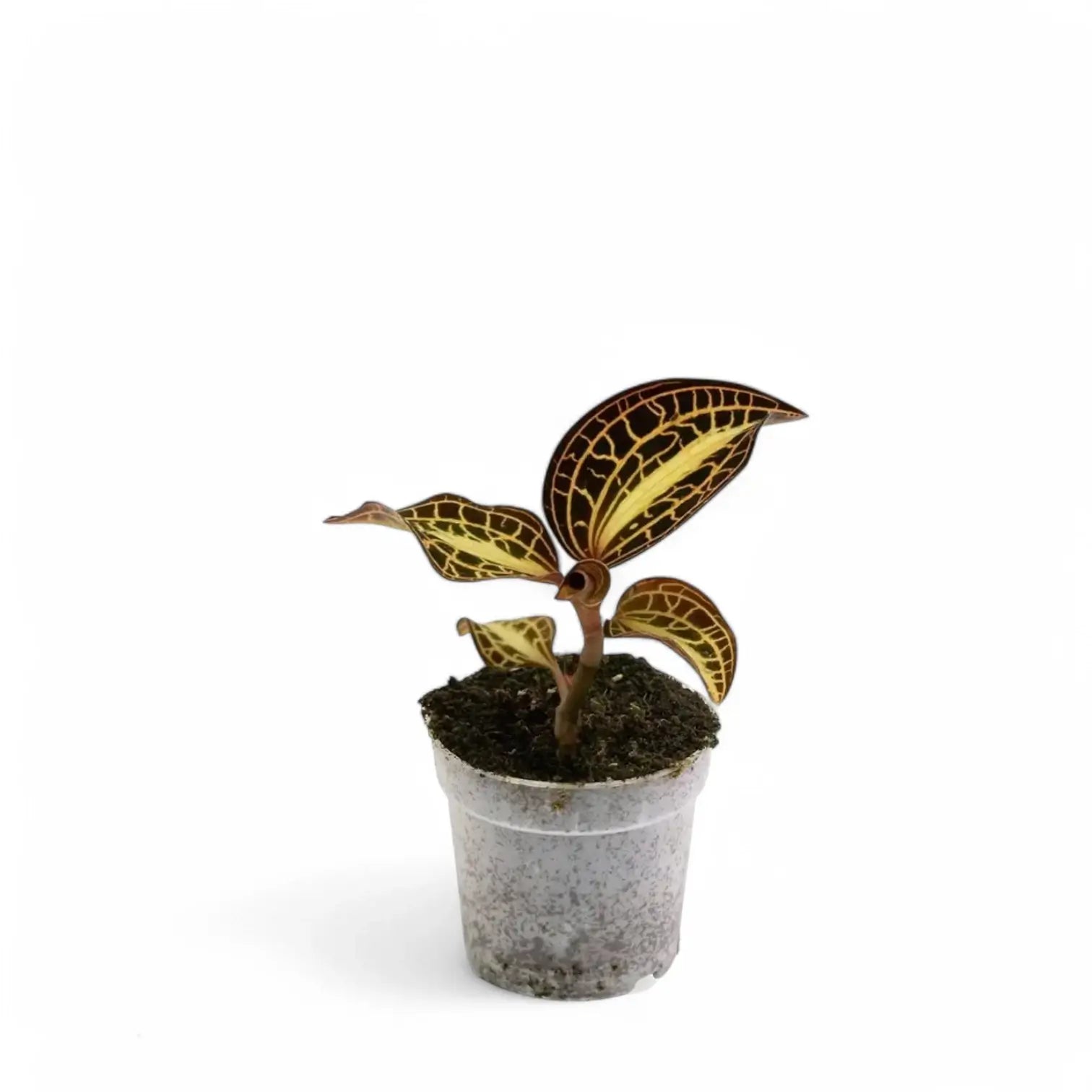
Anoectochilus albolineatus C.S.P.Parish and Rchb.f. is a rare jewel orchid from Southeast Asia, celebrated for its shimmering silver venation and compact growth. Unlike most orchids, this terrestrial species is grown for its leaves rather than its flowers, making it a centerpiece for terrariums and collectors seeking exotic foliage plants.
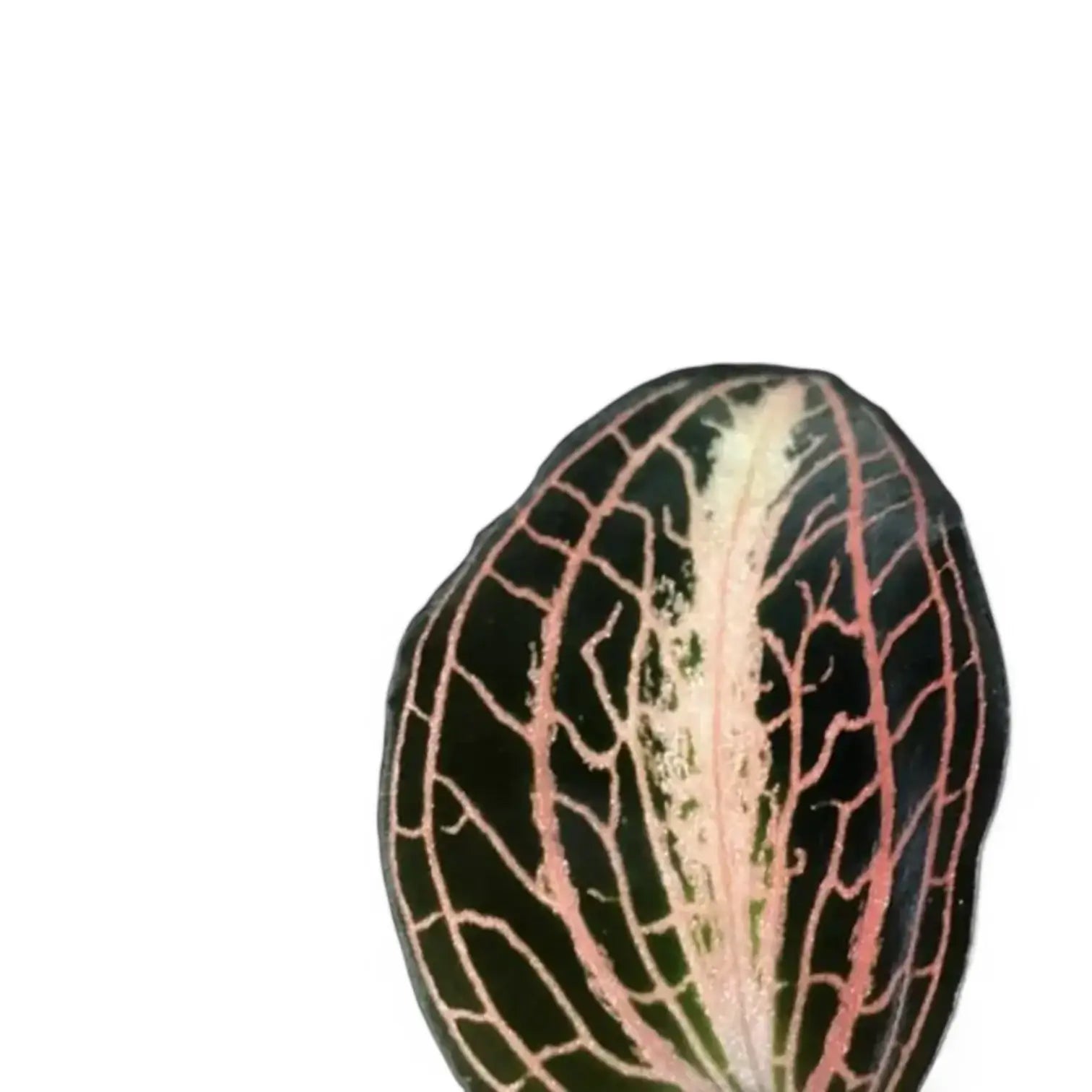
This miniature orchid showcases velvety, ovate leaves marked with a delicate silver lattice against a deep green to bronze background. Under the right light, the veins produce an iridescent effect – caused by light refraction within the leaf structure, not pigments alone. While its autumn blooms are small and white with a golden lip, the foliage is what makes this orchid a living gem.
Found on shaded forest floors in Myanmar, Thailand, Laos, Cambodia, and Vietnam at elevations of 300 – 1200 meters, Anoectochilus albolineatus grows in humus-rich, moist soils under dense canopy cover. Its natural environment is cool, humid, and low-light – conditions you should replicate indoors for success.
The metallic glow in its leaves isn’t just color – it’s an optical effect created by microscopic layers that bend light, making Anoectochilus one of the most visually striking orchids in nature.
The genus name Anoectochilus comes from Greek “anoektos” (open) and “chilos” (lip), referring to the open lip of the flower.
Your new plant has just travelled a long way and needs a calm start in its new home. For step-by-step unboxing and first-week care, check our after-delivery care guide. For deeper tips on how your plant settles in over the next weeks, read our houseplant acclimatization guide.
Please head to our FAQ Page or Contact us.
Choose options
VAT included · plus Shipping costs
Secure shipping – carefully packed orders with safe delivery across the EU, UK and Switzerland.
28-day plant guarantee – if a plant arrives damaged or fails soon after delivery, we help you make it right.
Free returns – simple, cost-free returns according to our policy.
For full details, please see:
Light
Low indirect • ≈ 1–5k lux • Grow light target: DLI 1–3
Watering
Water when ~20–35% dry
Potting mix
Moisture-retentive + airy • Steady-moist • Organic-forward • Fine
Temperature
Ideal: 16–25 °C • Avoid below: 16 °C
Growth habit
creeping terrestrial herb
Support
none
Growth speed
Slow
Max size indoors
Max. height: 10 cm • Max. spread: 10 cm
Toxicity & safety
Non-toxic & Pet Friendly
Origin & habitat
Indo-China; wet tropical biome
These metrics are standardised reference points. We compile them by reviewing and cross-checking multiple botanical and horticultural references, then refining them through real-world growing experience. Source links: Plant Care Resources.
Please use the values as guidance. Conditions vary by home, so the same plant can respond differently. For plant-specific context, read the full product description and browse our Plant Care Guides.


