
Light
Bright indirect • approx. 10,000–20,000 lux


VAT included · plus
Quick overview of our standard shipping rates, free-shipping thresholds and typical transit times for the countries we currently serve. Remote-area surcharges for certain postcodes are added automatically at checkout where applicable.
For full details, winter shipping rules and packaging information, please visit our Shipping & Delivery page.
| Country | Shipping | Free from | Transit time |
|---|---|---|---|
| Austria | € 12.95 | € 100 | 2–4 working days |
| Belgium | € 8.95 | € 100 | 1–2 working days |
| Bulgaria | € 21.95 | € 300 | 5–7 working days |
| Croatia | € 29.95 | € 300 | 5–7 working days |
| Cyprus (²) | € 39.95 | No free shipping | 5–7 working days |
| Czechia | € 16.95 | € 150 | 2–4 working days |
| Denmark (¹) | € 16.95 | € 150 | 2–4 working days |
| Estonia | € 18.95 | € 200 | 2–4 working days |
| Finland | € 29.95 | € 300 | 5–7 working days |
| France (¹) | € 12.95 | € 100 | 2–4 working days |
| Germany | € 8.95 | € 70 | 1–2 working days |
| Greece (¹²) | € 29.95 | € 300 | 5–7 working days |
| Hungary | € 18.95 | € 200 | 2–4 working days |
| Ireland | € 14.95 | € 150 | 2–4 working days |
| Italy (¹) | € 14.95 | € 150 | 2–4 working days |
| Latvia | € 18.95 | € 200 | 5–7 working days |
| Lithuania | € 18.95 | € 200 | 2–4 working days |
| Luxembourg | € 12.95 | € 100 | 1–2 working days |
| Malta (²) | € 39.95 | No free shipping | 5–7 working days |
| Netherlands | € 8.95 | € 100 | 1–2 working days |
| Poland | € 12.95 | € 100 | 2–4 working days |
| Portugal (¹) | € 14.95 | € 150 | 2–4 working days |
| Romania | € 21.95 | € 300 | 5–7 working days |
| Slovakia | € 18.95 | € 200 | 5–7 working days |
| Slovenia | € 18.95 | € 200 | 5–7 working days |
| Spain (¹) | € 14.95 | € 125 | 2–4 working days |
| Sweden | € 18.95 | € 200 | 2–4 working days |
| Switzerland | € 29.95 | € 300 | 5–7 working days |
Secure shipping – carefully packed orders with safe delivery across the EU, UK and Switzerland.
28-day plant guarantee – if a plant arrives damaged or fails soon after delivery, we help you make it right.
Free returns – simple, cost-free returns according to our policy.
For full details, please see:
Light
Bright indirect • approx. 10,000–20,000 lux
Watering
Water when ~30–50% dry
Potting mix
Airy + fast-draining • Light moisture buffer • Bark-based • Medium-chunky
Temperature
Ideal: 18–27 °C • Avoid below: 15 °C
Humidity
Moist 50–60 %
Growth habit
Unverified trade-name; bird’s-nest rosette
Support
none
Growth speed
Fast
Max size indoors
Max. height: 100 cm • Max. spread: 90 cm
Toxicity & safety
Toxic
Origin & habitat
Cultivated hybrid; no wild habitat
These metrics are standardised reference points. We compile them by reviewing and cross-checking multiple botanical and horticultural references, then refining them through real-world growing experience. Source links: Plant Care Resources.
Please use the values as guidance. Conditions vary by home, so the same plant can respond differently. For plant-specific context, read the full product description and browse our Plant Care Guides.
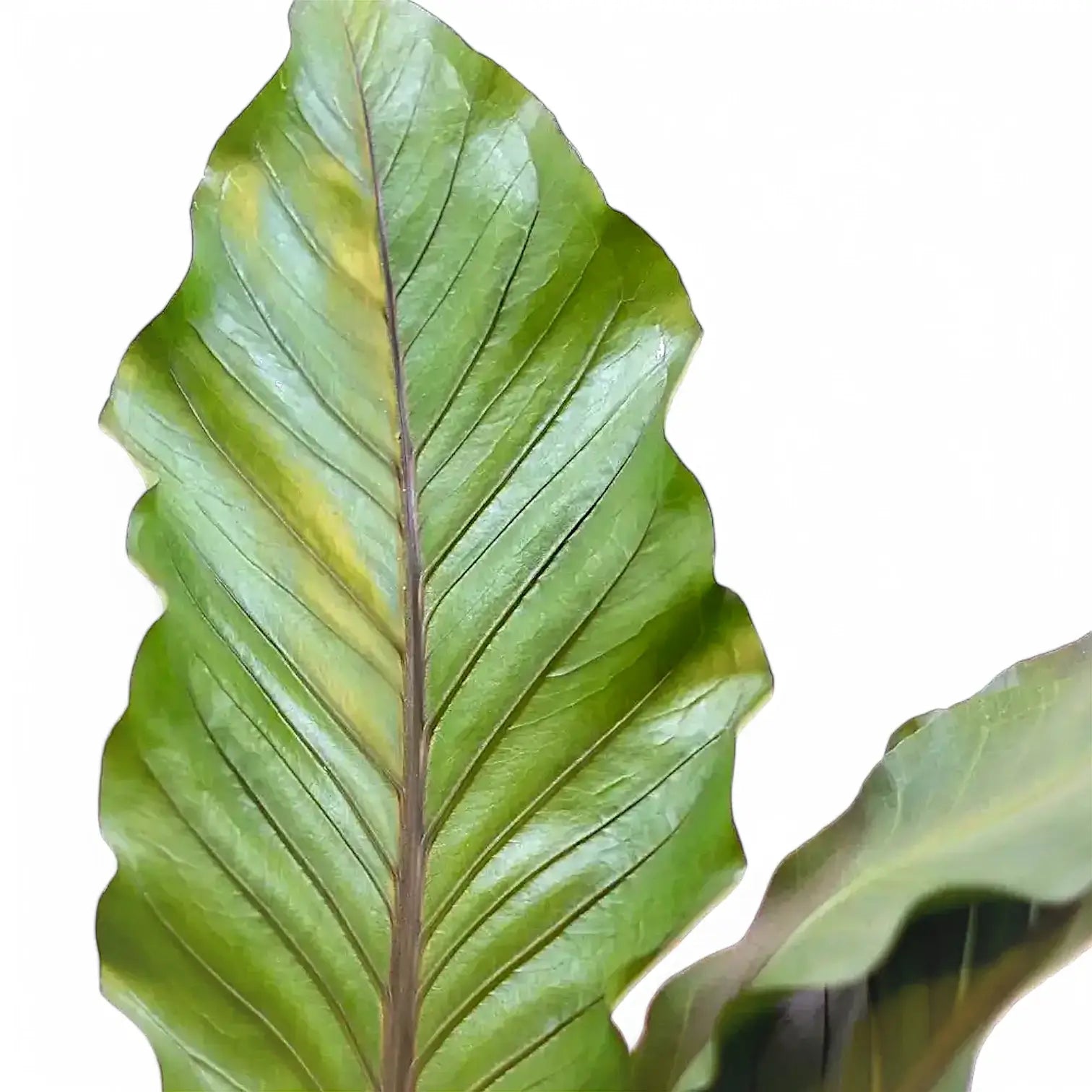
Anthurium ‘Big Red Bird’ is a bold, upright hybrid from the bird’s nest group of Anthuriums. Known for its rippled foliage and deep red venation, this cultivar makes a striking indoor statement. Its leaves emerge tightly rolled toward the midrib, then unfold into broad, undulate blades. Under strong filtered light or cooler temperatures, the foliage may develop a rich red blush that gives this hybrid its name.
‘Big Red Bird’ is an ornamental hybrid within the Anthurium section Pachyneurium, commonly referred to as bird’s nest Anthuriums. While this cultivar is not naturally occurring, its parent lineage originates from tropical forests in Central and South America, including Brazil, Ecuador, and Colombia. These plants grow terrestrially or epiphytically, forming dense, upright rosettes with spiraling leaf emergence – a trait preserved in ‘Big Red Bird.’
Use a shallow but heavy pot to highlight its wide rosette base and prevent tipping. Place it near a bright window or under grow lights to enhance the red coloration. Pair with natural textures like clay, wood, or matte black planters to emphasize the vibrant foliage. Its sculptural form works beautifully as a standalone focal point or as a vertical anchor in mixed foliage arrangements.
The genus name Anthurium comes from the Greek “ánthos” (flower) and “ourá” (tail), a reference to the spadix of its inflorescence. The cultivar name ‘Big Red Bird’ reflects both its rosette “bird’s nest” shape and the deep red hue that appears under ideal conditions. While not a registered hybrid, it has become a recognizable favorite in Anthurium collections for its dramatic foliage.
Add Anthurium ‘Big Red Bird’ to your indoor plant collection from Foliage Factory and enjoy sculptural rosette foliage with dramatic red tones – the perfect blend of structure and color.
Your new plant has just travelled a long way and needs a calm start in its new home. For step-by-step unboxing and first-week care, check our after-delivery care guide. For deeper tips on how your plant settles in over the next weeks, read our houseplant acclimatization guide.
Please head to our FAQ Page or Contact us.
Choose options
VAT included · plus Shipping costs
Secure shipping – carefully packed orders with safe delivery across the EU, UK and Switzerland.
28-day plant guarantee – if a plant arrives damaged or fails soon after delivery, we help you make it right.
Free returns – simple, cost-free returns according to our policy.
For full details, please see:
Light
Bright indirect • approx. 10,000–20,000 lux
Watering
Water when ~30–50% dry
Potting mix
Airy + fast-draining • Light moisture buffer • Bark-based • Medium-chunky
Temperature
Ideal: 18–27 °C • Avoid below: 15 °C
Humidity
Moist 50–60 %
Growth habit
Unverified trade-name; bird’s-nest rosette
Support
none
Growth speed
Fast
Max size indoors
Max. height: 100 cm • Max. spread: 90 cm
Toxicity & safety
Toxic
Origin & habitat
Cultivated hybrid; no wild habitat
These metrics are standardised reference points. We compile them by reviewing and cross-checking multiple botanical and horticultural references, then refining them through real-world growing experience. Source links: Plant Care Resources.
Please use the values as guidance. Conditions vary by home, so the same plant can respond differently. For plant-specific context, read the full product description and browse our Plant Care Guides.


