
Light
Bright indirect • approx. 10,000–20,000 lux



VAT included · plus
Quick overview of our standard shipping rates, free-shipping thresholds and typical transit times for the countries we currently serve. Remote-area surcharges for certain postcodes are added automatically at checkout where applicable.
For full details, winter shipping rules and packaging information, please visit our Shipping & Delivery page.
| Country | Shipping | Free from | Transit time |
|---|---|---|---|
| Austria | € 12.95 | € 100 | 2–4 working days |
| Belgium | € 8.95 | € 100 | 1–2 working days |
| Bulgaria | € 21.95 | € 300 | 5–7 working days |
| Croatia | € 29.95 | € 300 | 5–7 working days |
| Cyprus (²) | € 39.95 | No free shipping | 5–7 working days |
| Czechia | € 16.95 | € 150 | 2–4 working days |
| Denmark (¹) | € 16.95 | € 150 | 2–4 working days |
| Estonia | € 18.95 | € 200 | 2–4 working days |
| Finland | € 29.95 | € 300 | 5–7 working days |
| France (¹) | € 12.95 | € 100 | 2–4 working days |
| Germany | € 8.95 | € 70 | 1–2 working days |
| Greece (¹²) | € 29.95 | € 300 | 5–7 working days |
| Hungary | € 18.95 | € 200 | 2–4 working days |
| Ireland | € 14.95 | € 150 | 2–4 working days |
| Italy (¹) | € 14.95 | € 150 | 2–4 working days |
| Latvia | € 18.95 | € 200 | 5–7 working days |
| Lithuania | € 18.95 | € 200 | 2–4 working days |
| Luxembourg | € 12.95 | € 100 | 1–2 working days |
| Malta (²) | € 39.95 | No free shipping | 5–7 working days |
| Netherlands | € 8.95 | € 100 | 1–2 working days |
| Poland | € 12.95 | € 100 | 2–4 working days |
| Portugal (¹) | € 14.95 | € 150 | 2–4 working days |
| Romania | € 21.95 | € 300 | 5–7 working days |
| Slovakia | € 18.95 | € 200 | 5–7 working days |
| Slovenia | € 18.95 | € 200 | 5–7 working days |
| Spain (¹) | € 14.95 | € 125 | 2–4 working days |
| Sweden | € 18.95 | € 200 | 2–4 working days |
| Switzerland | € 29.95 | € 300 | 5–7 working days |
Secure shipping – carefully packed orders with safe delivery across the EU, UK and Switzerland.
28-day plant guarantee – if a plant arrives damaged or fails soon after delivery, we help you make it right.
Free returns – simple, cost-free returns according to our policy.
For full details, please see:
Light
Bright indirect • approx. 10,000–20,000 lux
Watering
Water when ~30–50% dry
Potting mix
Airy + fast-draining • Light moisture buffer • Bark-based • Medium-chunky
Temperature
Ideal: 18–26 °C • Avoid below: 15 °C
Humidity
Moist 50–60 %
Growth habit
epiphyte or lithophyte
Support
none
Growth speed
Average
Max size indoors
Max. height: 100 cm • Max. spread: 150 cm
Toxicity & safety
Toxic
Origin & habitat
Peru to Brazil (Mato Grosso do Sul), Paraguay; seasonally dry tropical biome
These metrics are standardised reference points. We compile them by reviewing and cross-checking multiple botanical and horticultural references, then refining them through real-world growing experience. Source links: Plant Care Resources.
Please use the values as guidance. Conditions vary by home, so the same plant can respond differently. For plant-specific context, read the full product description and browse our Plant Care Guides.
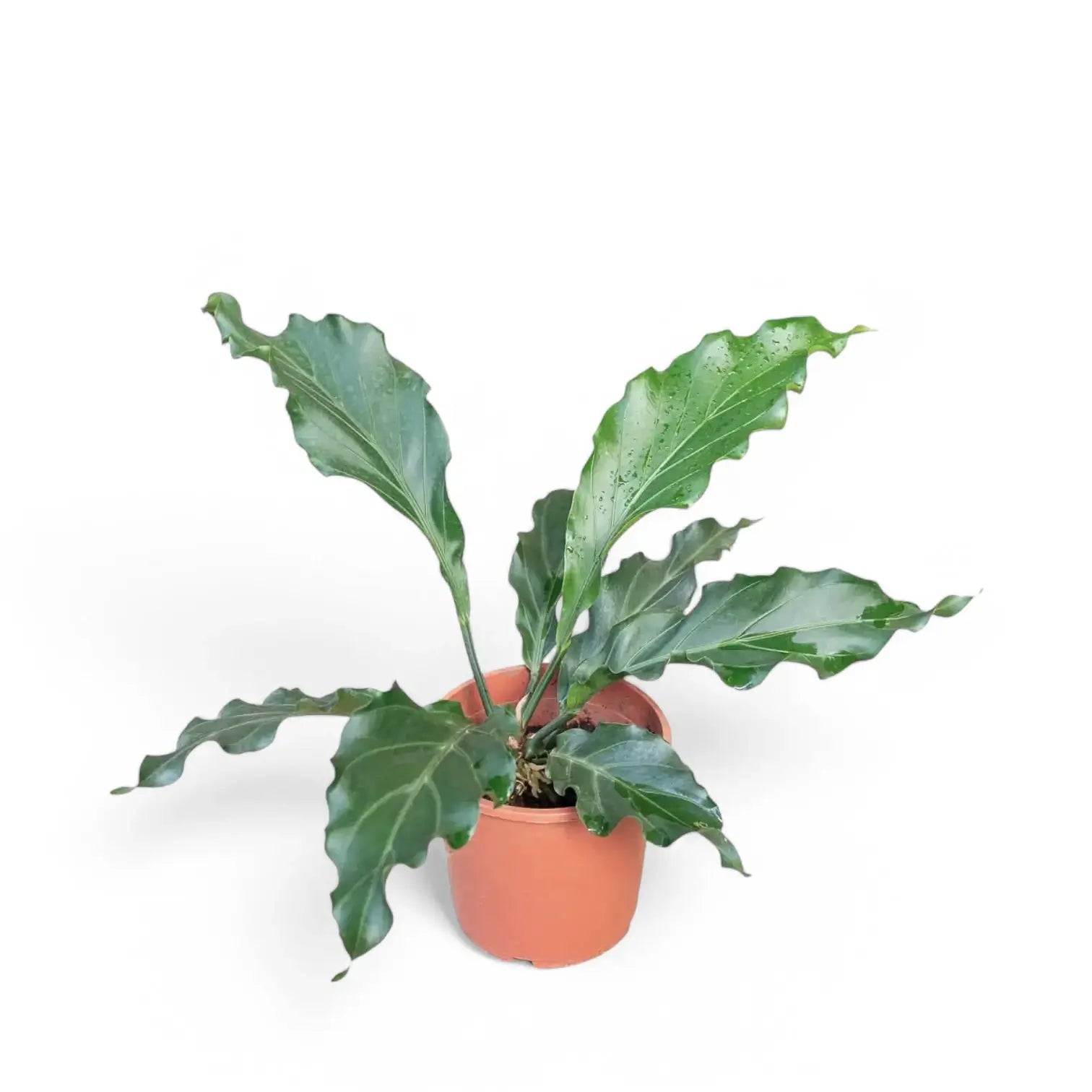
Anthurium plowmanii, commonly known as the Bird's Nest Anthurium, is a striking epiphytic plant native to South America, particularly West and North Brazil, Peru, Bolivia, and Paraguay. Its large, ruffled leaves form a rosette pattern, creating a bird's nest-like appearance. The foliage is dark green with a glossy finish, and mature leaves can reach impressive sizes, making it a standout in any indoor plant collection.
In its native environment, Anthurium plowmanii thrives as an epiphyte, growing on tree trunks in humid, tropical forests. It can also be found growing terrestrially in well-drained soils. The plant prefers warm temperatures and high humidity, mimicking the understory conditions of its natural habitat.
Anthurium plowmanii is named in honor of the American botanist Timothy Plowman, recognized for his extensive work in the field of ethnobotany. The plant's unique ruffled leaves not only add aesthetic appeal but also serve to channel water towards its roots in its natural habitat, showcasing an interesting adaptation.
Your new plant has just travelled a long way and needs a calm start in its new home. For step-by-step unboxing and first-week care, check our after-delivery care guide. For deeper tips on how your plant settles in over the next weeks, read our houseplant acclimatization guide.
Please head to our FAQ Page or Contact us.
Choose options
VAT included · plus Shipping costs
Secure shipping – carefully packed orders with safe delivery across the EU, UK and Switzerland.
28-day plant guarantee – if a plant arrives damaged or fails soon after delivery, we help you make it right.
Free returns – simple, cost-free returns according to our policy.
For full details, please see:
Light
Bright indirect • approx. 10,000–20,000 lux
Watering
Water when ~30–50% dry
Potting mix
Airy + fast-draining • Light moisture buffer • Bark-based • Medium-chunky
Temperature
Ideal: 18–26 °C • Avoid below: 15 °C
Humidity
Moist 50–60 %
Growth habit
epiphyte or lithophyte
Support
none
Growth speed
Average
Max size indoors
Max. height: 100 cm • Max. spread: 150 cm
Toxicity & safety
Toxic
Origin & habitat
Peru to Brazil (Mato Grosso do Sul), Paraguay; seasonally dry tropical biome
These metrics are standardised reference points. We compile them by reviewing and cross-checking multiple botanical and horticultural references, then refining them through real-world growing experience. Source links: Plant Care Resources.
Please use the values as guidance. Conditions vary by home, so the same plant can respond differently. For plant-specific context, read the full product description and browse our Plant Care Guides.


