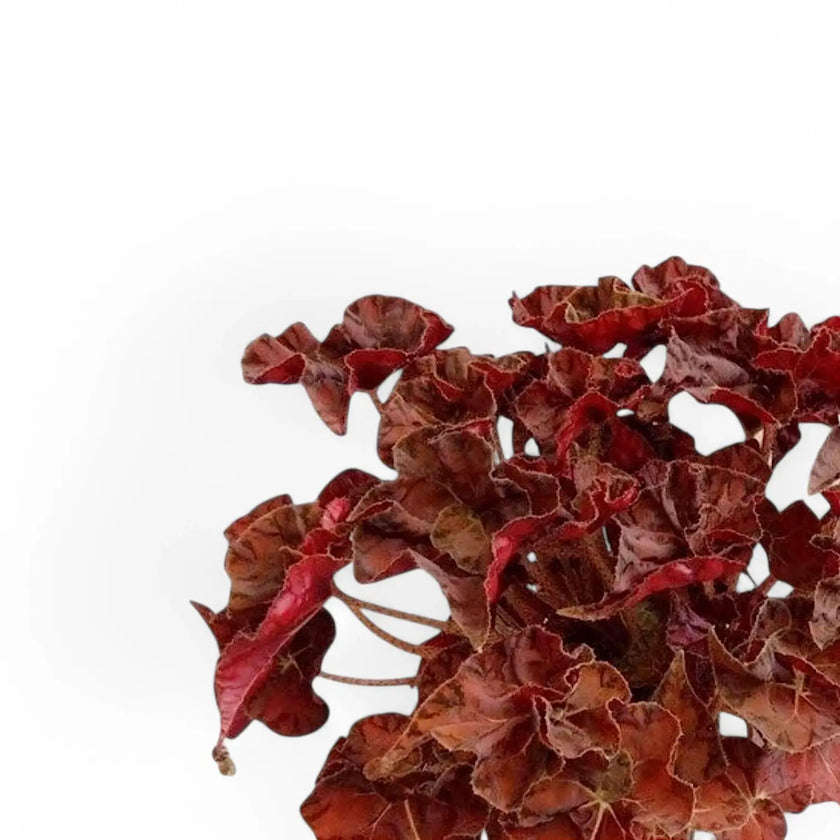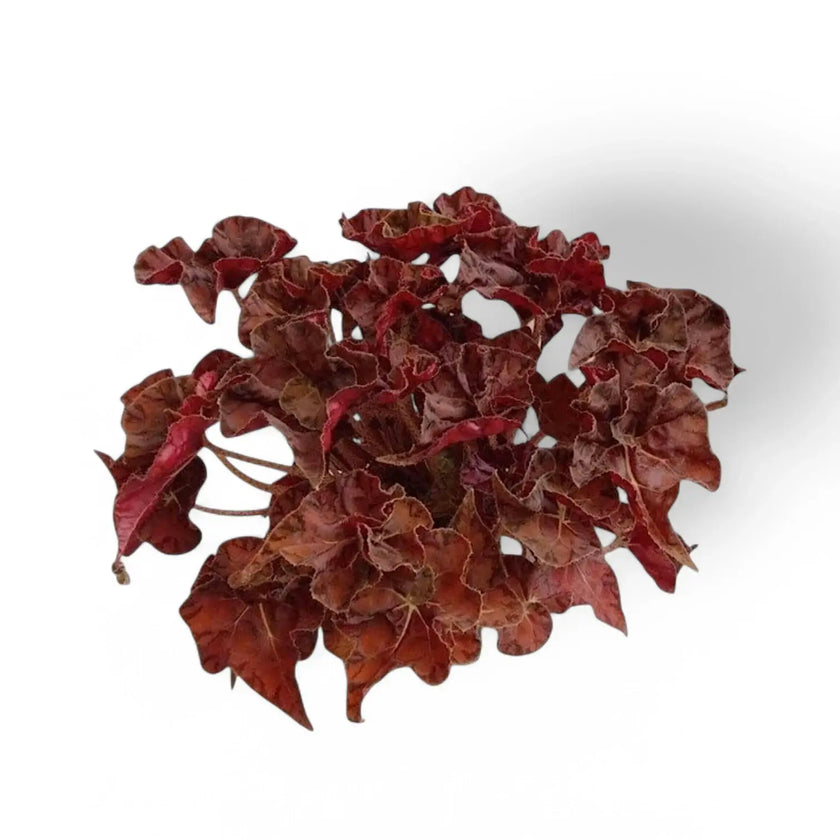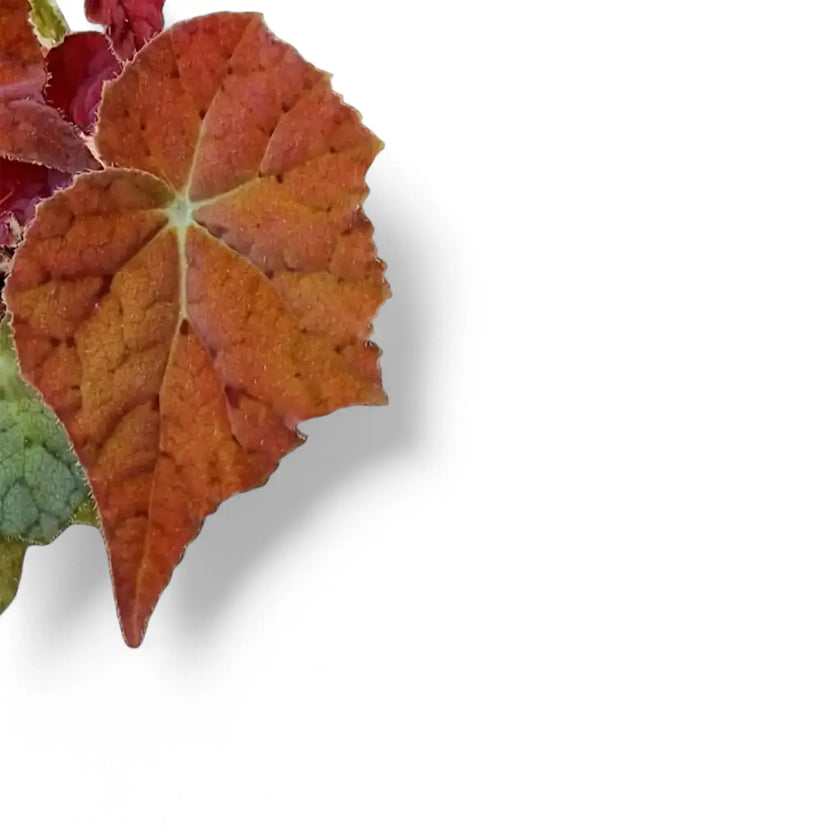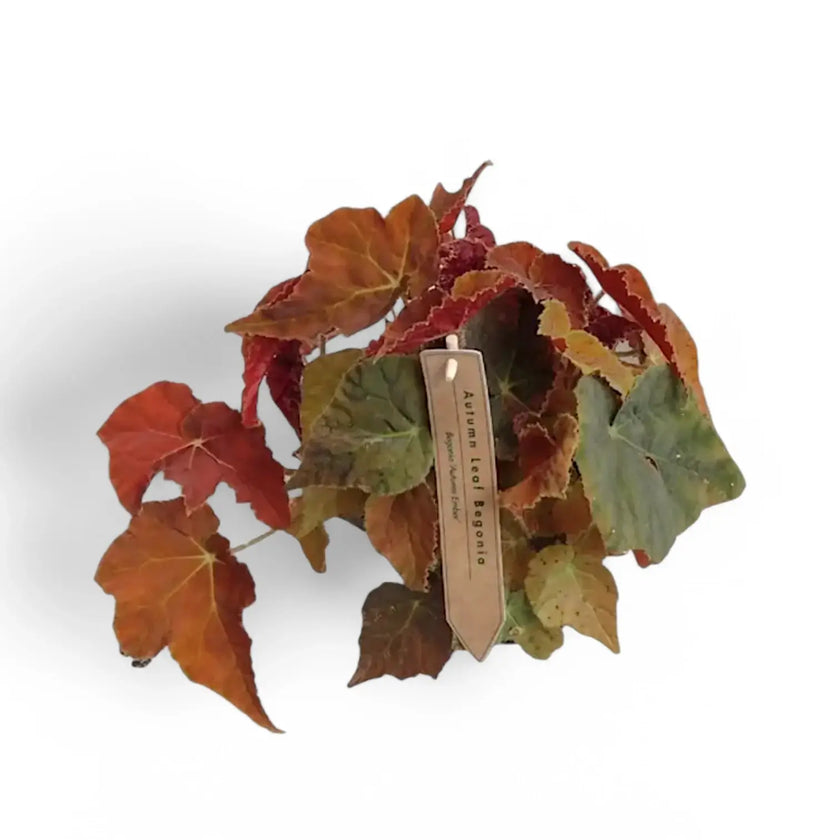
Begonia
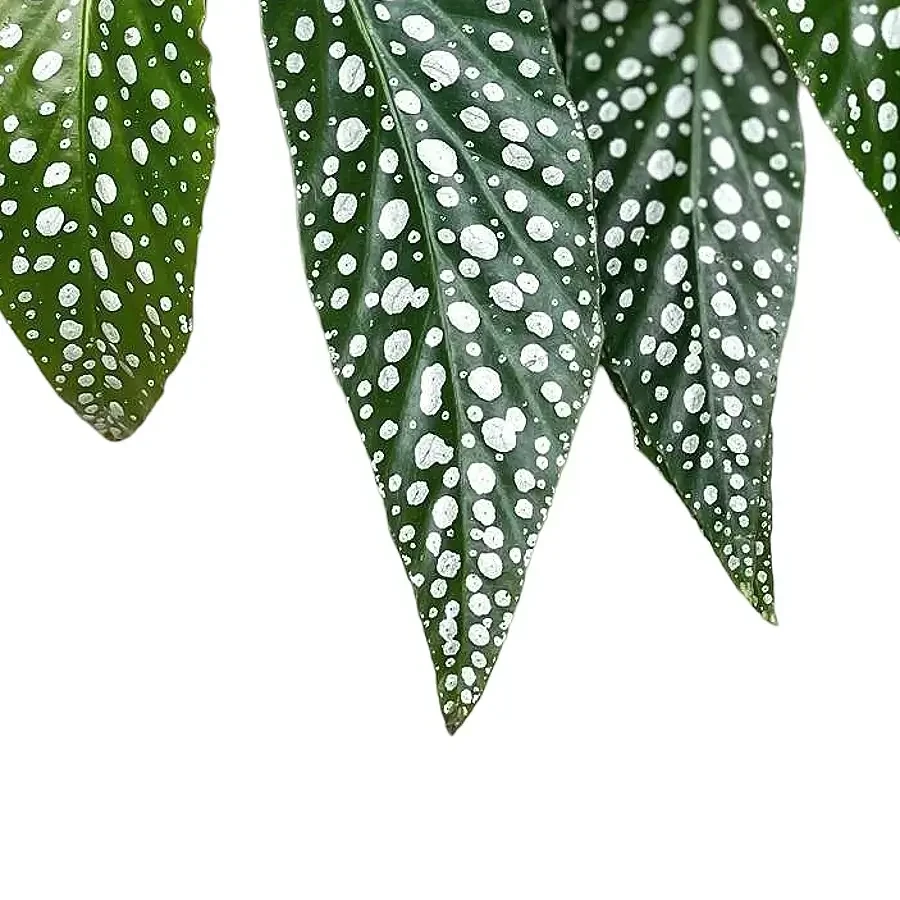
Indoor Begonia covers several very different houseplant forms, mainly cane, rex and rhizomatous types. What links them is asymmetrical foliage, strong surface character and a preference for bright filtered light, airy substrate and measured watering. Some grow upright and woody with spotted leaves, others stay low and spread through creeping rhizomes, while rex types are grown mostly for colour and texture.
This is one of the richest collections for anyone drawn to leaf pattern rather than sheer size. Begonia gives you far more variation than many genera in the same footprint, from metallic spirals to painted canes, but it rewards a careful watering rhythm and decent light much more than vague “easy houseplant” labels.

About Our Filters
Filters help you narrow things down fast and without guessing. We put a lot of time and effort into keeping filter values consistent across the shop by cross-checking references and validating them against real-world indoor growing and handling.
Use them as guidance, not guarantees. Homes vary a lot, so for the full context (and any exceptions), open the product page and read the description.
How filtering works
- Filters stack: each selection narrows results.
- Multiple picks in one filter are usually either/or within that filter.
- Undo anytime: click a selected option again (or clear filters).
Safety
- Non-toxic: not known for relevant chemical toxicity for common pets (chewing can still cause irritation).
- Non-toxic & Pet Friendly: stricter shortlist that also avoids many physical hazards like spines, sharp tips, thorns, and bristles.
Common care filters
- Light level: Low indirect → Full sun/direct.
- Water Needs: Low / Medium / High.
- Humidity Level: Normal (40–50%) / Moist (50–60%) / Humid (60–80%+).
Growth & size
- Growth Habit: climbing, trailing, crawling, upright, self-heading, clumping, rosette.
- Needs support? none / optional / needed.
- Delivered size: pot size + plant height at shipping.
- Max size indoors: realistic long-term height + spread indoors.
Looks & botanical browsing
- Leaf Shape & Size + Foliage Colour: quick visual categories.
- Plant Type / Genus / Family: browse by broad group or taxonomy.
If you want to see the references we use, Plant Care Resources is simply a curated list of source links (POWO, Kew, and more).
Sort by
Filters
Begoniaceae
Begonia
Quick Overview
Begonia (foliage types) - cane, rex & rhizomatous pointers
- Groups: covers cane Begonia, rhizomatous creepers and colourful rex types-each with different shapes but similar root needs.
- Light: bright, filtered light; poor light flattens colour and stretches stems, hard sun behind glass burns thin leaves.
- Substrate: likes a humus-rich yet airy mix that drains well; dense, soggy soil is a quick route to stem rot at the base.
- Watering: keep mix just moist with short dry phases at the surface; repeated deep drought or standing water both cause leaf loss.
- Climate: steady warmth and moderate humidity reduce crisp edges and powdery mildew; avoid cold draughts after watering.
- Pruning: regular pinching and re-rooting cuttings keeps canes and rhizomatous clumps compact and presentable.
Botanical Profile
Begonia: botanical profile for asymmetric foliage specialists
Begonia is a mega-diverse genus of mostly herbaceous perennials in Begoniaceae, containing over 2 100 accepted species plus numerous hybrids. Linnaeus established the genus in 1753, honouring French patron Michel Bégon. Growth forms range from compact rhizomatous species to cane-like shrubs and tuberous types, many with strongly asymmetric, patterned leaves that drive their ornamental use.
- Order: Cucurbitales
- Family: Begoniaceae
- Tribe: Begonieae
- Genus: Begonia L.
- Type species: Begonia obliqua L.
- Chromosomes: Diploid counts commonly around 2n = 22-26; extensive variation documented from about 2n = 18 upwards, with many polyploid and aneuploid lineages
Range & habitat: Begonia is concentrated in humid tropical and subtropical regions of Central and South America, Africa and Asia, with centres of diversity in the Andes and Southeast Asia. Species are mostly shade-adapted herbs on forest floors, stream banks and moist rock faces, often in ravines or cloud forest where diffuse light and high air humidity dominate.
- Life form: Mostly terrestrial, rhizomatous, tuberous or cane-forming perennials; a few taxa show scrambling or weakly climbing habits on rocks or low trunks.
- Leaf attachment: Typically alternate leaves on succulent petioles inserted off-centre on the lamina, producing characteristic asymmetry at the leaf base.
- Leaf size: From small understorey species with blades under 5 cm to bold types exceeding 25-30 cm in length, frequently broader than long.
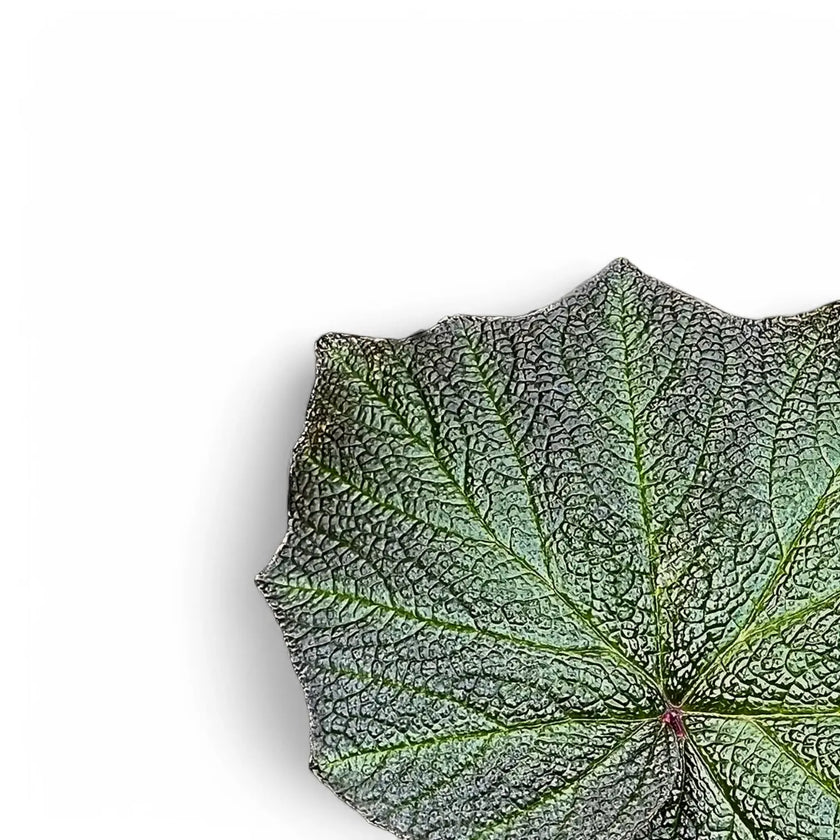
- Texture & colour: Thin to fleshy blades that may be green, bronze, silvered, spotted or zoned; many species carry hairs or crystalline deposits that influence boundary layers and reflectance.
- Notable adaptation: Strong shade tolerance coupled with morphological plasticity allows foliage to adjust size, thickness and pigment density to changing light regimes in disturbed forest edges and gaps.
Inflorescence & fruit: Begonia produces cymose inflorescences with separate male and female flowers on the same axis; male flowers usually show two conspicuous tepals, females three, with an inferior, winged ovary. Dry, dehiscent capsules with wing-like extensions release fine seeds that disperse by air currents and splashing rain along forest slopes.
Details & Care
Begonia: cane, rex & rhizome foliage without the drama
Begonia indoors-what you are really buying
Begonia is not one single plant type. In an indoor collection you mostly deal with three broad groups: cane Begonia with tall, jointed stems, low-growing rhizomatous Begonia that creep over the substrate and bold rex Begonia bred for dramatic colour and texture. Each group reacts differently to light, water and pot choice, even though all sit under the same genus.
In our Begonia range you will mostly find foliage-focused houseplants rather than bedding or tuberous types grown for a single outdoor season. These Begonia are meant to stay in pots for years, changing shape over time and rewarding good care with stronger colour and denser crowns of leaves.
Cane, rex and rhizomatous Begonia: choosing the right style
- Cane Begonia: upright, bamboo-like stems with leaves held out along each segment. Need good light to stay sturdy and benefit from regular pinching to avoid bare lower sections.
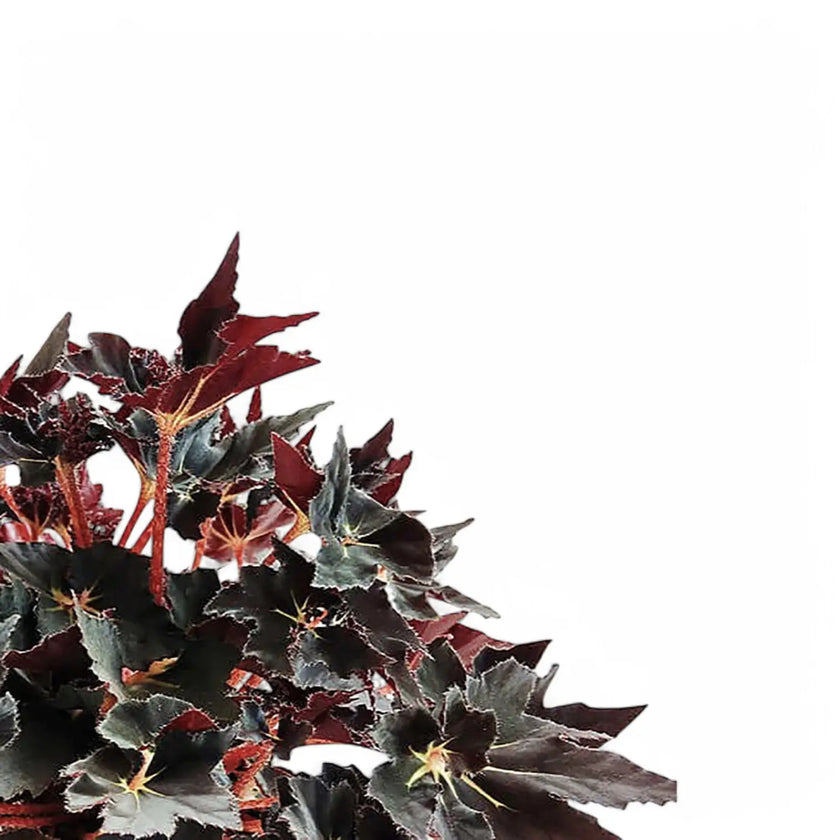
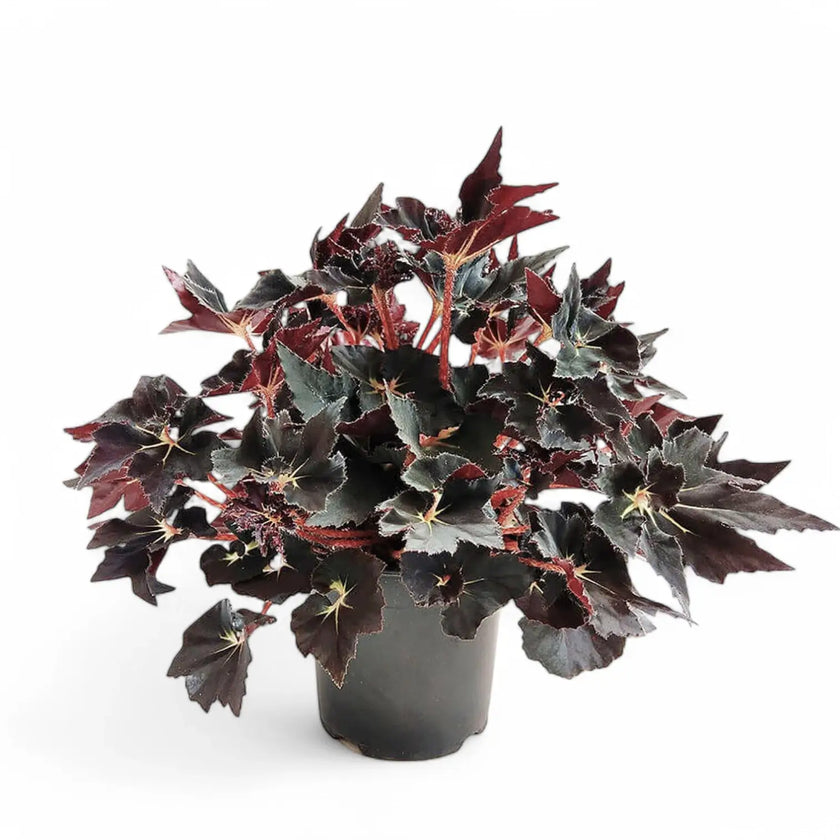
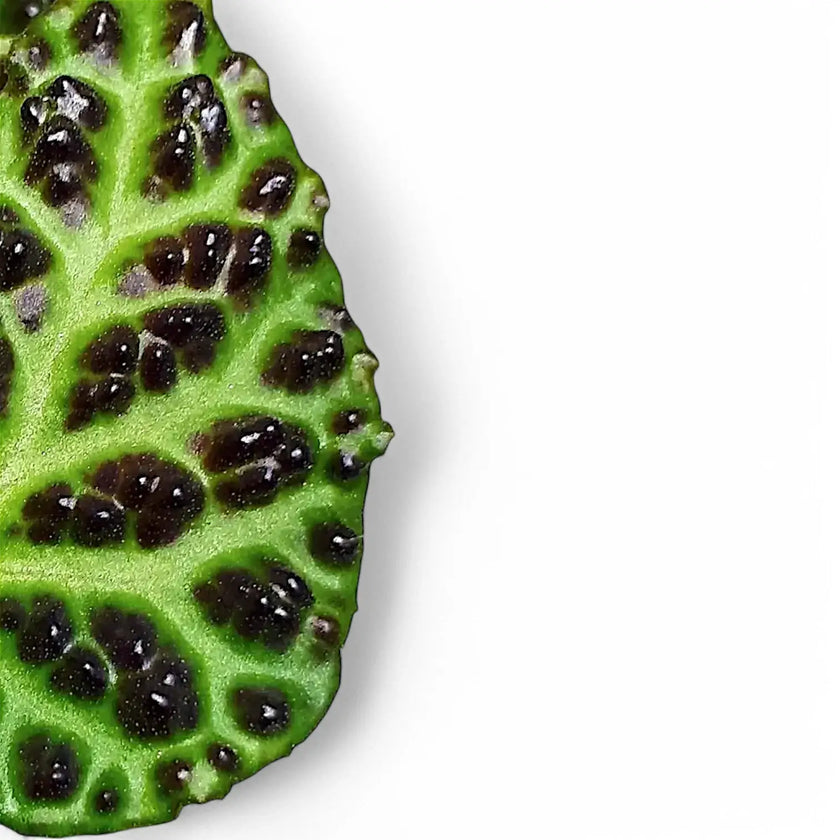
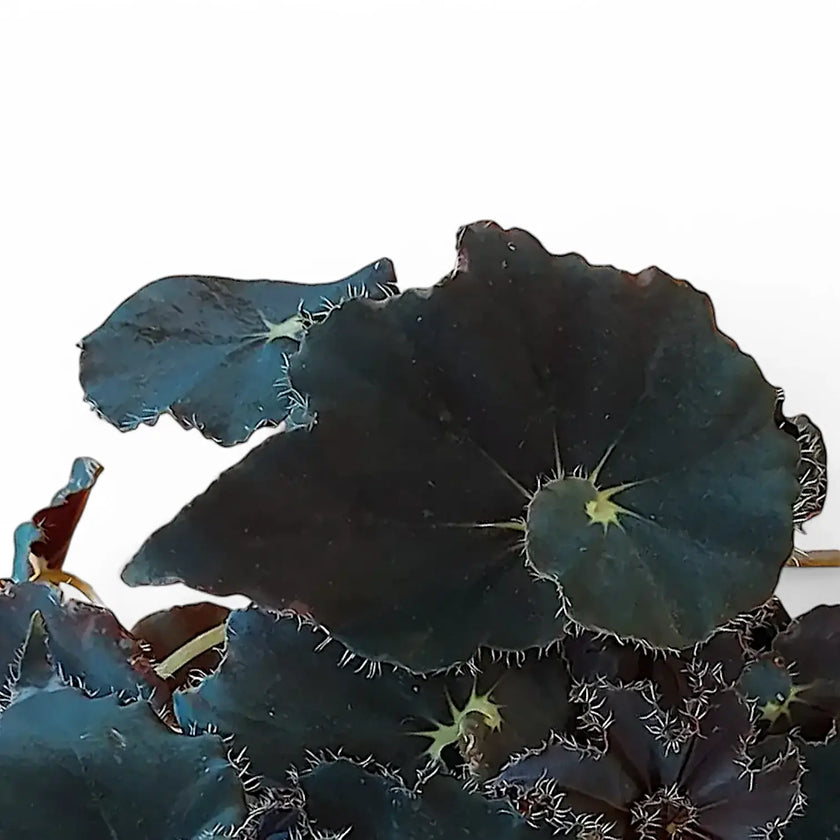
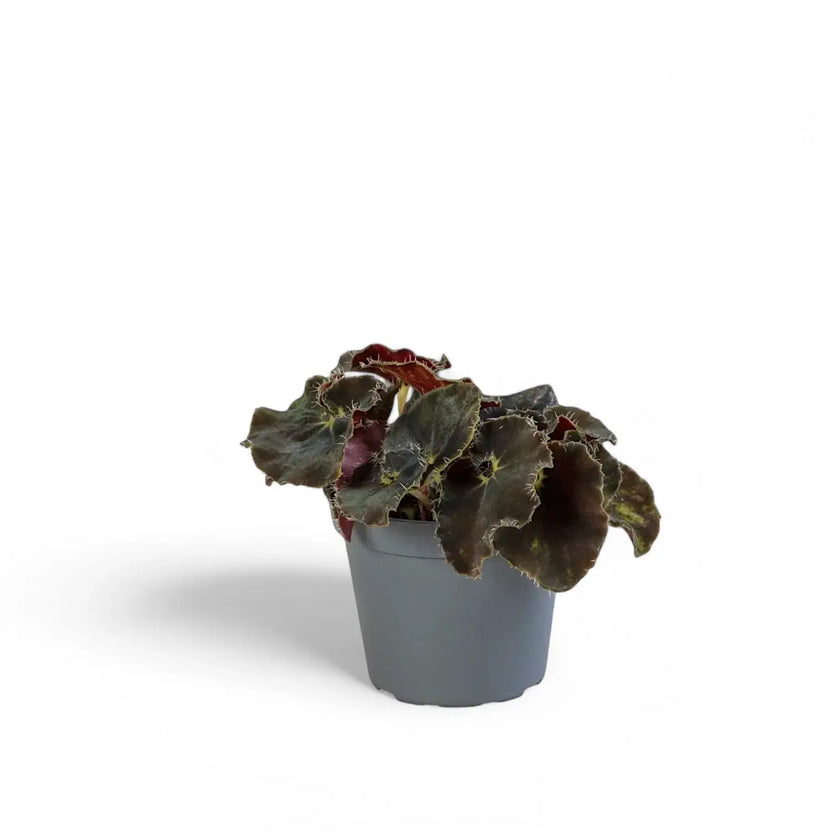
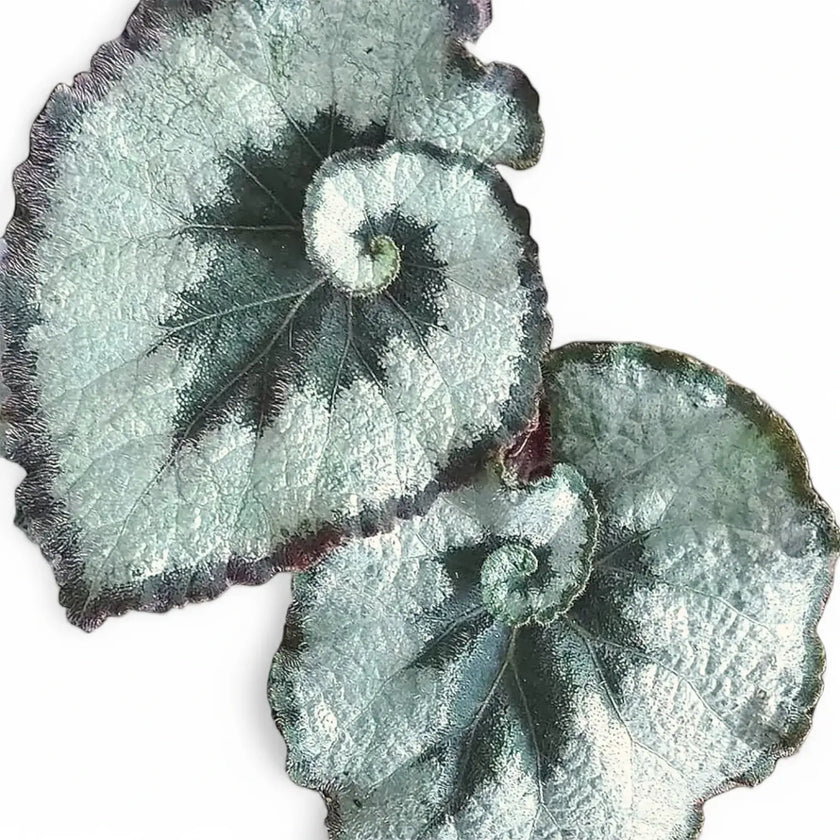
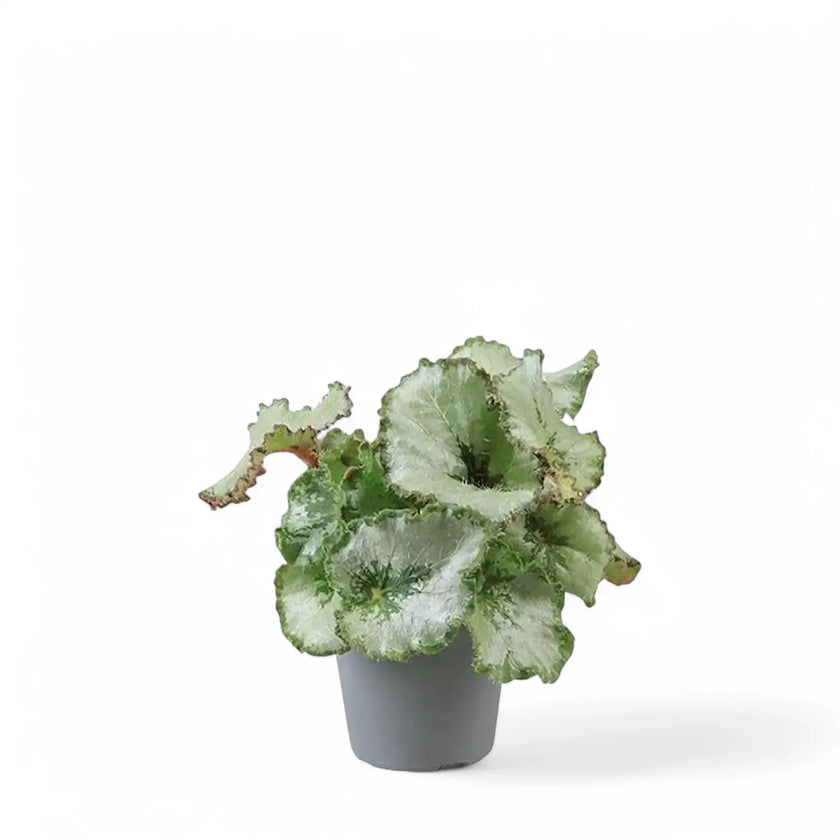
- Rex Begonia: compact, often spiralled foliage with metallic or patterned surfaces. Leaf blades are thinner and roots are shallow, so shifts in moisture and humidity show up quickly.
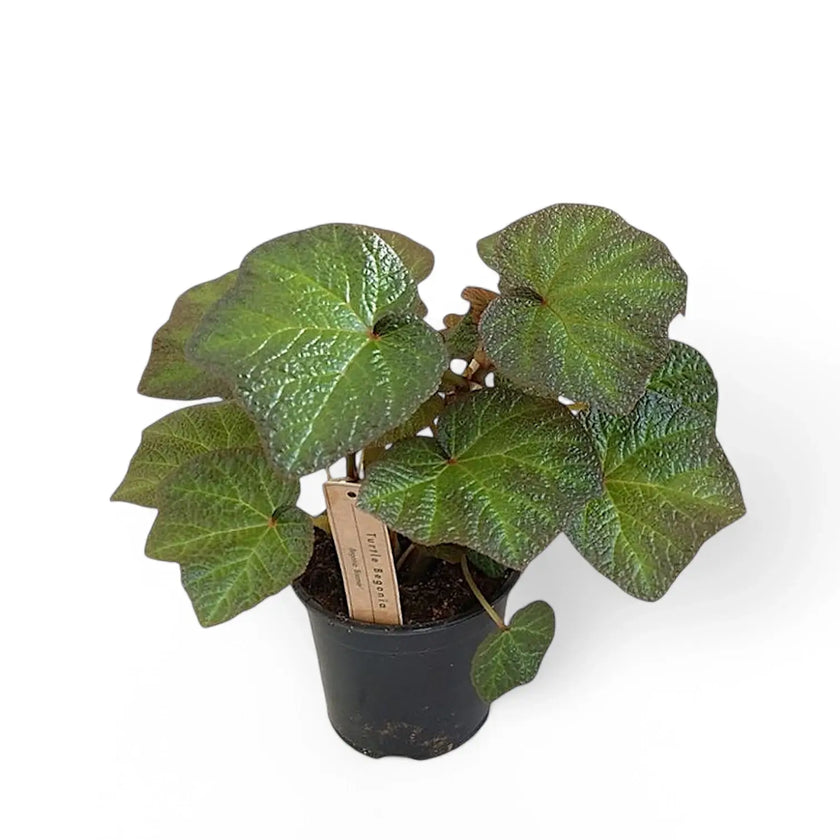
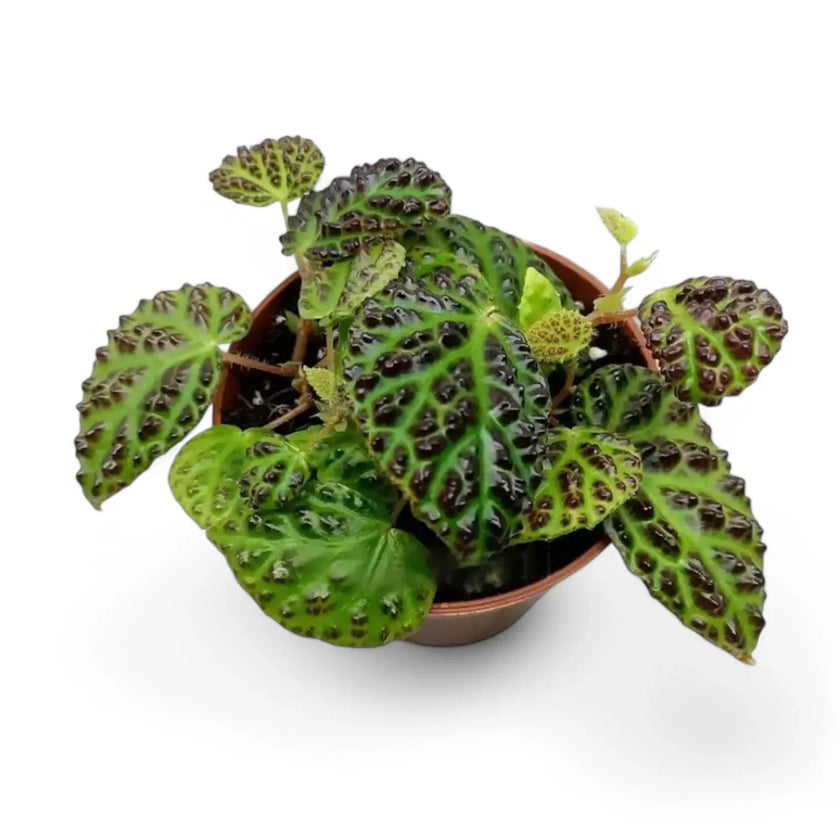
- Rhizomatous Begonia: thick, creeping stems that sit on or just under the substrate and push leaves outward. Prefer wide, shallow pots and a mix that never turns into a soggy slab.
Before adding Begonia to a cart, match the type to your setup. Tall cane Begonia ask for more vertical space and stronger light; rex and rhizomatous Begonia suit shelves, cases and wider, low containers where humidity stays a little higher.
Light and placement for Begonia houseplants
Most indoor Begonia stay compact and colourful in bright, filtered light rather than in harsh beams. A position near an east window, just back from a south exposure or to the side of a bright west window is usually enough. Leaves should feel cool to the touch even in the middle of the day.
Cane Begonia in too little light run upwards, with long bare sections between leaves. Rex and rhizomatous Begonia in the same conditions fade and flatten, with patterns that look washed out. In overly strong sun, all groups risk pale, papery scorch patches. If you want a more objective sense of which window suits Begonia, compare your room to the examples in our bright-indirect light guide and pick a placement from the medium to higher end of that range.
Begonia potting mix, pots and watering habits
Roots of Begonia are fine and dislike sitting in heavy, stagnant substrate. A practical indoor Begonia potting mix combines a humus-rich base with plenty of structure: think quality houseplant soil blended with perlite or pumice, fine bark and a little fibrous material such as coconut chips. When you squeeze a handful, it should hold shape briefly then spring apart, not smear into a paste-the principles in our substrates guide are directly relevant here.
Water once the upper few centimetres of mix feel dry and the pot is noticeably lighter than just after watering. Then water slowly until liquid runs out of the drainage holes and tip away anything that collects in a cachepot. Cane types grown in strong light and warmer rooms dry out faster; rex and rhizomatous Begonia in cooler, lower positions often need more time between waterings even in the same pot size.
Very deep drought leads to crisp edges, dropped older leaves and slow recovery, but permanently wet mix is worse. Mushy stems at soil level, a sour smell and grey or black roots point to ongoing oversaturation. For a deeper look at how to balance moisture and airflow in containers, see our watering guide.
Temperature, humidity and airflow around Begonia
Warm, steady rooms suit Begonia best. Temperatures between about 18 and 26 °C keep growth moving. Chilly spells below roughly 15 °C, especially right after watering, can trigger leaf drop and stem collapse, so avoid cold window ledges or draughty doorways in winter.
Moderate humidity, around 50-70 %, keeps foliage more stable and reduces edge crisping, particularly for rex Begonia. Very dry air from heaters encourages spider mites and tired-looking leaves. Misting gives only short-lived relief and can help powdery mildew spread if foliage stays damp. It is more effective to raise background humidity slightly, group plants and make sure a gentle air current passes through the area so leaves dry after watering.
Long-term growth, shaping and feeding Begonia
Begonia often grow in bursts. A cane Begonia might push several leaves on one stem, then pause, while a rhizomatous plant thickens its stem and sends new points around the pot rim. Rex Begonia tend to stay compact but replace older leaves fairly regularly once established.
Shaping depends on type. Cane Begonia look better if you pinch or cut tips above a node to force side shoots rather than letting a single stem run tall and bare. Rhizomatous and rex Begonia can be refreshed by cutting and replanting healthy rhizome sections closer to the pot edge, which encourages a broader crown of leaves instead of a single congested centre.
During active growth, a balanced, well-diluted fertiliser every few waterings is enough. Apply only onto already moist substrate. Heavy feeding in poor light, or into constantly wet mix, does more harm than good; burnt tips and dull, tired foliage usually point to salt build-up rather than a lack of nutrients.
Typical Begonia problems and what they often signal
- Stems at soil level turning soft and dark: usually a sign of rot from waterlogged, airless mix. Remove damaged sections, improve drainage and let the remaining mix dry closer to “lightly moist” before watering again.
- Brown, crispy leaf margins on many leaves: commonly tied to irregular watering or very dry air. Review your watering rhythm, flush the pot thoroughly with room-temperature water and move Begonia away from radiators or hot air vents.
- Pale, stretched growth with large gaps between leaves: indicates that light is insufficient. Shift Begonia nearer to a suitable window or adjust curtains so plants receive more hours of indirect brightness.
- White, powdery coating on leaf surfaces: typical powdery mildew, encouraged by stagnant air and foliage that stays damp. Increase airflow, remove badly affected leaves and avoid overhead watering.
- Sudden leaf drop after a cold night: often follows temperature shock combined with wet substrate. Move the plant to a more stable, warm position, let the mix dry slightly and wait for new buds before cutting back hard.
Toxicity and handling Begonia safely indoors
Begonia is generally treated as toxic if eaten. Underground parts in particular can contain irritating oxalate crystals that upset the mouth and digestive system of pets and people. Place pots where cats, dogs and children are unlikely to chew leaves or dig in the substrate, and wash hands after handling roots or larger broken stems.
How Begonia usually behaves after shipping
After a spell in a dark box, Begonia can look sulky: some older leaves may yellow, a few petioles can droop, and patterns might appear slightly dull. This does not automatically mean poor health; plants are responding to transport and a sudden change in climate.
Once unpacked, move Begonia straight into its intended bright, indirect position. Check the rootball; if the upper layer is still clearly moist and the pot feels heavy, wait before watering. If mix has dried during transit, water slowly once and let excess drain completely. Delay major repotting until you see fresh, stable growth, unless substrate is obviously collapsing or sour.
Back to top and choose between cane, rex and rhizomatous Begonia forms and pick the one that fits your light and routine ↑
Frequently Asked Questions About Begonia
Are Begonias grown for flowers or foliage indoors?
Both. Indoor Begonia can include foliage-first groups such as rex and rhizomatous types, cane types with decorative leaves and flowers, and florist-style begonias grown mainly for bloom. That range is part of the appeal, but it also means not every begonia behaves in exactly the same way.
Do all Begonias want the same care indoors?
No. Cane, rex, rhizomatous, tuberous, and bedding-type begonias do not all behave the same way. What many share is a dislike of heavy, soggy mix, harsh sun, and water sitting on crowns or in leaf axils for too long.
What light do indoor Begonias need?
Most do best in medium to bright indirect light. Cane and waxy types often take a bit more gentle sun, while rex and many thinner-leaved types scorch faster and usually prefer filtered light.
How should I water indoor Begonias?
Let roughly the top 15–30% of the mix dry before watering again, then water thoroughly and let excess drain. Exact timing depends on the group: rex and rhizomatous types resent cold, soggy mix and wet crowns, while cane types are often a little more forgiving.
Are Begonias safe around pets?
No. Begonia are toxic to cats and dogs, and the underground parts are the most dangerous.
Limited discounts, extras, and bundle deals for subscribers.
Get points with every order to redeem them for discounts.
Give your friends 10 € off and get 200 Foliage Points.
Use your 10% code on plants when you're ready to order.