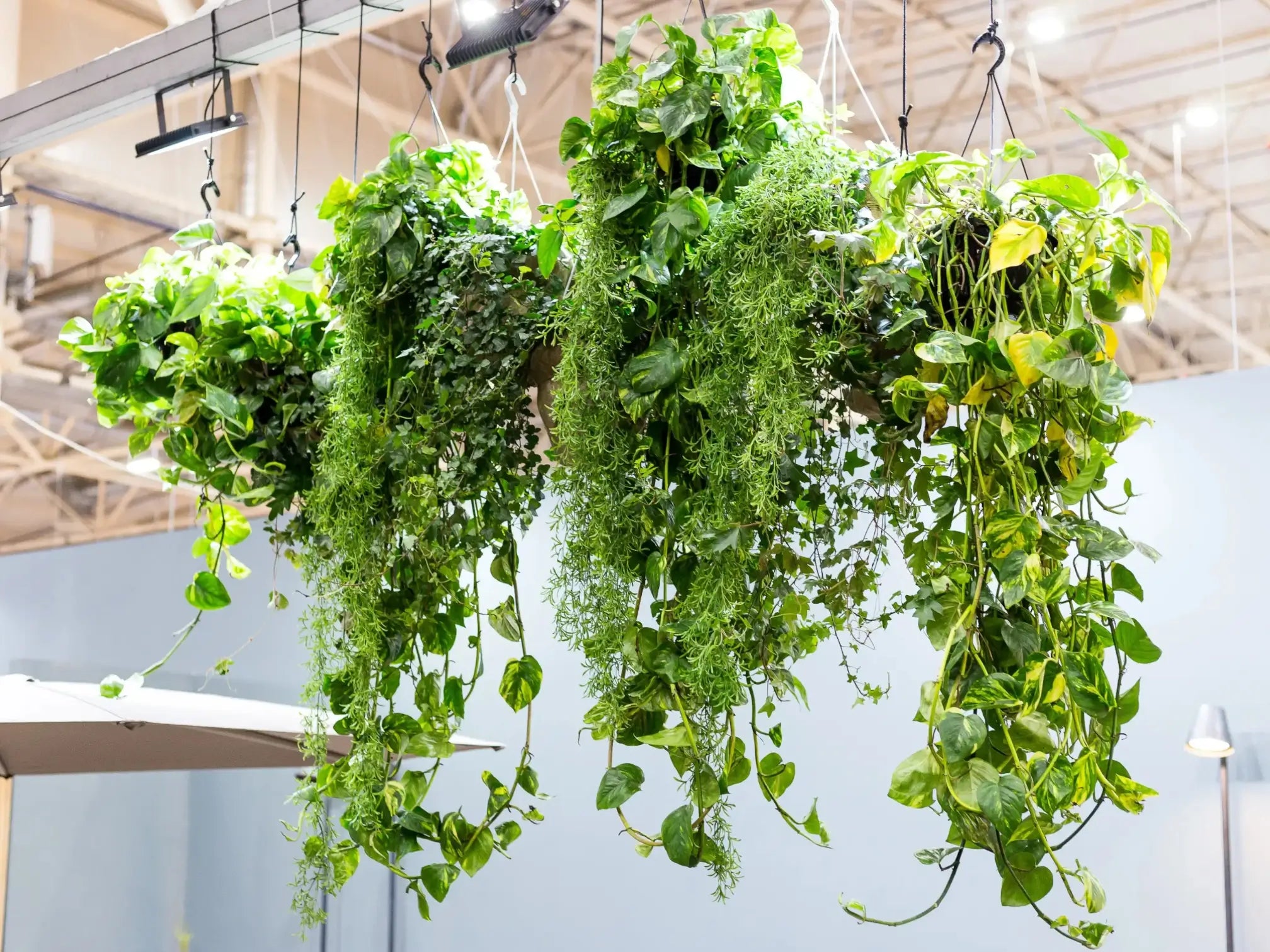

Etiolation — Or Why Is My Plant So Leggy?
Why Is My Plant So Leggy? - Causes, Prevention and Fixes Without Chopping Everything Off
Have you ever looked at your houseplant and wondered why it’s all stem and no leaves? Maybe it used to be compact and lush, but now it’s tall, scraggly, and top-heavy. If that sounds familiar, you're dealing with what growers call leggy growth.
Legginess isn’t just about looks — it’s a plant’s way of saying something’s not right. And if you don’t catch it early, it can spiral into weak stems, dropped leaves, and even collapse. But here's the good news: you don’t always need to hack your plant down to fix it. Whether you're brand new to houseplants or a long-time collector, this guide breaks down exactly what causes legginess, how to stop it from happening again, and how to get your plant back into shape without cutting it to a stump.
Let’s get into the why, how and what-now — using science-backed tips and real-world strategies that actually work.

Contents:
What Is Leggy Growth in Houseplants?
Leggy growth means a plant is growing long, thin stems with lots of space between the leaves. Instead of looking full and leafy, it looks stretched out, with leaves mostly at the tips. In many cases, the stems become so weak they bend or flop over. Sometimes, the leaves even turn pale or drop off.
Legginess is a growth pattern that usually shows up when the plant is trying to compensate for something it’s missing. Think of it like a plant’s version of stretching toward the sun. It’s especially common in:
- Vining plants like pothos and philodendron
- Fast growers like coleus or basil
- Light-loving species kept in darker rooms
Even low-light plants can get leggy if they’re too far from a window or jammed in with other plants. It’s not just about how much a plant grows, but how it grows — and legginess is usually the first visible clue that the setup needs work.
What Causes Legginess in Houseplants?
There’s more than one reason a plant can go leggy, but light is almost always part of the problem. Below are the main triggers that lead to stretched-out stems and leaf drop.
➜ Low Light and Etiolation
The number one reason for legginess is insufficient light. When plants don’t get enough light, they go into survival mode. The stems start growing longer and thinner in an attempt to reach a light source — this is called etiolation.
In nature, a plant might stretch toward a clearing in the canopy. Indoors, it stretches toward the window or the ceiling light. The result is longer spaces between leaves (internodes), smaller and paler leaves, and often a tilted or lopsided plant.
Common signs of light-related legginess:
- Long stems with 10+ cm gaps between leaves
- Leaves getting smaller or turning yellow
- One-sided growth (plant leaning toward the window)
Even “shade-tolerant” plants need more light than people think. When in doubt, more light (indirect or grow lights) usually means stronger, denser growth.

➜ Light Quality and Crowding
It’s not just the amount of light, but also the quality and how it's distributed.
When plants grow in tight groups or in cluttered spaces, they shade each other. Light that filters through leaves has more far-red than red light, and plants sense this as competition — prompting them to stretch up fast.
This is known as a shade-avoidance response. Studies in greenhouse environments show that when plants are grown too close together, they all stretch toward the same light source and lose lower leaves. That’s why shelf setups or windowsills crowded with plants often lead to legginess, especially for younger specimens that can’t reach above their neighbors.
➜ Overfeeding and Nitrogen Imbalance
Fertilizer is food — but too much of a good thing can cause problems. In particular, excess nitrogen (especially the ammonium type) leads to fast, floppy growth. The stems get longer but don’t thicken properly, and the plant ends up weak.
Think of it as a sugar rush: fast energy with no structure.
In contrast, nitrate-heavy fertilizers tend to produce compact, stronger stems. If you’re feeding your plants weekly with a high-nitrogen liquid fertilizer, especially in winter when light is low, you may be pushing them into unnatural stretch mode.
Symptoms of fertilizer-induced legginess:
- Long, thin new growth with soft stems
- Leaf size increases but structure weakens
- Growth appears “too fast to handle”
Balance is everything. Less is more when light is limited.
➜ Heat and Seasonal Stretch
Warm temperatures accelerate growth — that’s usually good, right? Yes, but only if there’s enough light to match. Warmth without proper light pushes the plant to grow fast, but not strong.
This issue gets worse in winter. Indoor heating keeps rooms warm, but days are short and windows let in weak light. Many houseplants stretch out during these months unless they’re given supplemental light.
Even experienced growers notice this: in colder months, some plants grow faster but look weaker. That’s a signal that heat and light are out of sync.
➜ Natural Growth Habits and No Pruning
Some plants just grow that way. Vining species naturally send out long stems. Upright growers like ficus or dracaena will continue straight up unless we intervene.
That’s where pruning comes in. When we never pinch or trim our plants, we allow them to grow tall and bare, especially if older leaves drop. Without shaping, the plant won’t branch — it’ll keep doing what it’s programmed to do: reach higher.
If your plant is leggy but still alive and rooted, it probably just needs a little guidance — and maybe a haircut.

How to Prevent Leggy Growth Before It Starts
The best way to deal with leggy growth? Don’t let it happen in the first place. Most legginess is easy to avoid with a few small changes to light, layout and care routines. Whether you’re growing trailing plants, upright shrubs or compact species, the following tips will help keep your plants sturdy, leafy and full from base to tip.
💡 Give Each Plant the Light It Actually Needs
Light is the single most important factor. Legginess is almost always a plant’s way of telling you it needs more light — and not just any light, but the right kind.
Here’s how to match your plant to your space:
- South- or west-facing window? Ideal for most sun-loving houseplants. Even indirect sun from these directions works wonders for growth.
- North- or east-facing window? Great for lower light species like ZZ plants or some ferns — but most variegated or colorful foliage plants will struggle here without extra help.
- Interior rooms or wintertime? Use full-spectrum grow lights. Even a few hours a day of supplemental light can prevent stretching and support compact, healthy growth.
Don’t rely on guesswork. If you’re unsure how much light a spot gets, try this test: hold your hand about 20 cm above the plant at midday. If it casts a sharp shadow, that’s bright light. Blurry shadow? That’s medium to low. No shadow? Not enough light.
Also, rotate your plants every one to two weeks. Otherwise, they’ll lean toward the light and grow unevenly.
Quick Tip: If a plant starts producing smaller, paler leaves with longer gaps between them — move it closer to the light before it stretches more.
📌 Still not sure what counts as bright indirect light?
Check out our deep dive: So how Much Light is "Plenty of Bright, Indirect Light" EXACTLY?
📌Want to make the most of your windows?
Explore: Understanding Window Orientations And Houseplants: A Complete Guide To Thriving Indoor Greenery
💡 Fertilizer Isn’t a Quick Fix — Use It Wisely
Too much nitrogen can push your plant to grow too fast, especially when light and warmth don’t keep up. That’s a one-way ticket to floppy stems and weak structure.
Instead of feeding heavily, follow this basic approach:
Season |
Fertilizing Advice |
|---|---|
Spring/Summer |
Use diluted liquid fertilizer every 2–4 weeks |
Autumn/Winter |
Reduce or pause feeding unless under grow lights |
Look for balanced fertilizers or blends with slightly more potassium and phosphorus. Avoid anything that promotes “fast green growth” — that’s code for high nitrogen.
If you’re using slow-release pellets, don’t add extra liquid fertilizer unless the plant clearly needs it. More food doesn’t always mean more health — especially in low light.
📌 Want a full breakdown of what, when and how to feed your plants the right way — without overdoing it?
Check out: The Ultimate Guide to Fertilizing Houseplants: From Soil to Semi-Hydroponics
💡 Make Space, Avoid Crowding and Shuffle Often
Plants need breathing room — not just for air, but for light distribution. If your shelf or windowsill is packed edge to edge, chances are some of your plants are shading the others.
When plants are too close together:
- Light gets blocked and filtered
- Stems lean or stretch to escape shade
- Lower leaves yellow and drop off
Solution?
Rearrange regularly. Every two weeks, rotate your plant placements so each gets equal time in the best spot. For shelf setups or indoor green walls, consider installing reflective surfaces or LED strip grow lights to reach shaded corners.
Vining plants also benefit from being trained upward rather than trailing off into space. A moss pole or trellis helps distribute light evenly across the stem and encourages tighter, leafier growth.
💡 Temperature Should Match Light – Not Fight It
Most plants do well at typical indoor temps (18–24°C). But warm rooms with weak lighting — especially in winter — can encourage fast, leggy growth. This happens a lot with radiators, fireplaces or heat mats.
Here’s the science: warm air speeds up metabolic activity. If light is limited, the plant still grows fast, but without the energy it needs to support that growth properly. That’s why stems get thin and leaves shrink.
Best practices:
- Avoid placing plants right above heaters
- Lower room temps slightly at night if possible
- Use grow lights in warm, low-light spaces
- Keep humidity in check – dry heat adds stress
Think of it as a balance game. A cooler room with bright light usually produces compact growth.
Warm + bright = fast and lush.
Warm + dim = leggy.
💡 Start Pruning Early to Shape Growth
Don’t wait until your plant looks like a giraffe in a turtleneck. Regular, early pruning is the easiest way to stop legginess before it starts.
Two small techniques go a long way:
- Pinching tips – Just use your fingers to remove the very tip of a stem. This encourages the plant to branch from lower nodes instead of continuing upward.
- Shaping cuts – Use clean scissors or pruners to trim back overly long stems. Cut just above a node to trigger new shoots.
Benefits of light pruning:
- Encourages fuller, bushier shape
- Activates dormant buds
- Prevents top-heaviness
- Redirects growth energy lower down
Some plants, like Coleus or Tradescantia, respond immediately. Others, like rubber plants or Dracaenas, take a few weeks but still benefit massively from early shaping.
And no — pruning doesn't hurt your plant. It actually mimics what would happen in the wild when wind, animals or falling debris “trim” the tips. Indoors, it just needs to come from you.

How to Fix a Leggy Plant Without Cutting Everything Off
So your plant has stretched. Maybe it’s leaning toward the window, has one lonely leaf on a meter-long stem, or just looks tired and sparse. Don’t panic. Most leggy houseplants can be recovered — and no, you don’t always need to chop it down to soil level.
Here’s how to fix legginess without overdoing it.
Step 1 – Improve the Light First
Before you touch a pair of scissors, fix the environment. In most cases, legginess started because your plant was in the wrong spot.
Here’s what to do:
- Move it to a brighter location – ideally near a south- or west-facing window with indirect sun.
- Avoid sudden direct sun exposure – if the plant was in deep shade, transition slowly to avoid leaf burn.
- Use a grow light if natural light isn’t strong enough or if you're in a darker season.
- Rotate the plant weekly so all sides receive equal light and new growth comes in straight.
If you improve the light, the next new leaves will already start coming in more compact. This is key: no pruning can help if the environment stays wrong.
Tip: If your plant hasn’t made any new growth in weeks, give it light and time before you trim. Pruning a struggling plant too soon can stress it further.
Step 2 – Use Strategic, Not Drastic Pruning
Once the light is sorted and the plant is stable, it’s time to reshape it. But don’t go wild with the scissors. Instead, be selective.
Here’s how:
- Target the longest, barest stems first – leave the healthier parts alone.
- Trim back to a point just above a node – this encourages new growth from that node.
- Don’t remove more than 30% of the plant at once – over-pruning can shock it.
What is a node? It’s the small bump where a leaf grows from the stem — and it’s where new shoots or roots will form. Pruning just above a node tells the plant to activate that spot.

If you’re not sure where to cut:
- Look for the last healthy leaf
- Go 2–3 cm above it
- Make a clean, angled cut with sharp scissors
Step 3 – Activate Nodes for Fresh Growth
This part matters more than most people realize.
Only nodes can produce new shoots.
The smooth parts of a stem (internodes) won’t sprout — ever.
If your plant has a long bare stem, you need to:
- Cut just above a visible node
- Make sure the node is still alive (not dried out or mushy)
- Expose that node to light and air
In response, the plant will:
- Send out a new branch from that node
- Or produce a cluster of leaves if it's a clumping type
If you're nervous about cutting too low, start higher. You can always prune more later once new growth starts.
Pro tip for woody or slow growers: Use a technique called notching. This means making a shallow cut just above a node to interrupt the hormone flow and encourage that node to activate — without removing the whole stem.
Step 4 – Propagate the Cuttings (Optional, But Smart)
Why waste healthy stem tips? You can turn most cuttings into new plants — or even replant them in the same pot to bulk up the base.
Here’s how:
- Cut just below a node (where roots will grow)
- Strip off the lower leaves
- Place in water or moist soil
- Wait 2–4 weeks for roots to develop
Plants that root easily from cuttings:
- Pothos
- Philodendron
- Tradescantia
- Begonias
- Coleus
Once rooted, you can pot them on their own or pop them into the same container to create a fuller look. This works especially well for hanging plants that lost leaves near the base.
Bonus: You now have backup plants in case your original doesn’t bounce back.

Step 5 – Train Long Stems With Supports
If some stems are too thin to stand up on their own but still have healthy leaves, use this moment to train them vertically.
Use:
- Bamboo stakes
- Moss poles
- Wire trellises
Gently tie the stem using soft twine or Velcro plant tape. This does two things:
- Keeps the stem from bending or breaking
- Encourages upward growth with better light exposure
Trailing plants can also be looped back into the pot. Each node that touches soil may root and sprout — turning a leggy vine into a dense cluster.
Step 6 – Give It Time and Don’t Overcorrect
New growth won’t appear overnight. After pruning, plants take time to wake up dormant buds and form new shoots.
In the meantime:
- Keep the light consistent
- Don’t overwater or overfertilize
- Watch for swelling nodes or new baby leaves
Most healthy plants will show signs of recovery within 2–4 weeks. If nothing happens after 6–8 weeks, reassess the light or consider applying a cytokinin-based product (like keiki paste) to encourage bud break — especially for tougher species.
Also, know when to stop. Don’t keep cutting week after week. Let the plant recover and react before doing more shaping.
Recap: Fixing a Leggy Plant Step by Step
Step |
What to Do |
Why It Matters |
|---|---|---|
1 |
Improve light |
Stops future legginess |
2 |
Prune above a node |
Triggers new branch or leaf |
3 |
Activate and expose nodes |
Only nodes can regrow |
4 |
Propagate trimmed tips |
Bonus plants, bushier base |
5 |
Support weak stems |
Prevents flopping, improves light access |
6 |
Be patient and watch for signs |
Growth takes time, not instant |

Tips to Avoid Repeat Legginess
So you've fixed your plant — now how do you keep it from going leggy again? The trick is to build better habits into your care routine. Here’s a checklist to help you stay ahead of the stretch.
✔ Light Comes First, Always
- Reevaluate plant placement every season — sun angles change
- Use grow lights if you're dealing with dark corners or long winters
- Rotate plants weekly for even exposure
- Clean windows and dust leaves so plants can absorb more light
✔ Feed, But Don’t Force It
- Only fertilize during active growth periods
- Use balanced formulas or those lower in nitrogen
- Skip the "every week" schedule unless light and warmth support that kind of growth
✔ Give Your Plants Personal Space
- Avoid packing plants tightly on shelves or windowsills
- Group by light needs — don’t mix shade-lovers with sun-seekers in the same area
- Use tiered stands or reflective surfaces to avoid blocking light
✔ Pinch, Prune and Shape Regularly
- Don’t wait until it’s a problem — pinch growing tips to encourage fullness
- Cut above a node, not randomly along a stem
- Use pruning as a habit, not a fix-it-later tool
✔ Watch How Your Plant Responds
- Snap a photo every month to track changes
- If new growth starts looking sparse or small, that’s your early warning sign
- Check nodes — the health of a node often tells you how well the plant can bounce back
Common Questions About Leggy Plants
Common Questions About Leggy Plants
Leggy growth can be fixed, but recovery isn’t instant. These FAQs cover what to expect after pruning, how to use grow lights effectively, and when a bare stem is still worth saving.
What if a node never sprouts after I cut?
It happens. Some nodes are too old, too depleted, or were compromised while the plant was stretching for months. If a stem has been bare for a long time, it may not have enough stored energy left to push out a new shoot.
If a node stays inactive:
- Try a different cut above a healthier node further down.
- Increase light and keep conditions steady (warmth + bright light, not heat + dim).
- If you use it, apply a cytokinin-based paste sparingly to encourage bud break on viable nodes.
If nothing happens after 8 weeks and the stem looks weak or dry, remove that stem and rebuild the plant using propagated cuttings.
Will a grow light fix all legginess problems?
It can prevent future stretch, but it won’t magically “fill in” bare sections of old stems by itself. Light corrects the cause going forward—structure still needs shaping.
For best results:
- Use a bright, full-spectrum white LED (daylight-style).
- Run it for 10–12 hours per day.
- Place it about 30–50 cm above the plant (adjust if leaves bleach or scorch).
Combine improved light with strategic pruning above nodes to trigger branching and rebuild density.
Can I save a completely bare stem?
Sometimes—if the nodes are still alive. A bare stem can still rebound if there’s viable tissue and dormant buds left.
Quick reality check:
- Gently scratch the stem with a fingernail.
- Green underneath: tissue is alive and a node may still activate with better light.
- Brown, mushy, hollow, or papery: that section is dead and won’t sprout.
If the stem is alive but won’t bud after improved light and time, your fastest “fix” is usually to propagate healthy tips and replant them to rebuild the base.
How long does it take to see improvement?
Timing depends on species, light, and how depleted the plant was. Typical recovery timeline:
- 2–3 weeks: nodes may swell; growth tips start moving again.
- 4–6 weeks: new leaves develop (fast growers show change first).
- 8+ weeks: woody or slow plants begin noticeable rebound.
Keep light consistent, avoid overwatering during recovery, and don’t keep cutting week after week—make one set of changes, then let the plant respond.
Final Thoughts — Leggy Isn’t the End
Leggy growth might look rough, but it’s not a death sentence. It's feedback — your plant is telling you it needs something different. And the truth is, most legginess is fixable with:
- Better light
- Strategic pruning
- Time and care
Don’t be afraid to experiment, especially with propagation. And remember — the goal isn’t perfection. A little character, a few odd stems, a weird lean toward the window? Totally normal. That’s plant life indoors.
Give your plant what it’s asking for and it’ll reward you with stronger, bushier growth from the inside out.
Need a quick reset?
- Start with light.
- Then prune above a node.
- Watch. Wait. Repeat. It’s not about drastic change — it’s about small, smart moves over time.
Sources and further reading:
- Jedynak, P., Trzebuniak, K. F., Chowaniec, M., Zgłobicki, P., Banaś, A. K., & Mysliwa-Kurdziel, B. (2022). Dynamics of Etiolation Monitored by Seedling Morphology, Carotenoid Composition, Antioxidant Level, and Photoactivity of Protochlorophyllide in Arabidopsis thaliana. Frontiers in Plant Science, 12. https://doi.org/10.3389/fpls.2021.772727
- Nagatani, A. (2017). Photomorphogenesis. In: Encyclopedia of Applied Plant Sciences (2nd ed.), Volume 1, pp. 442–447. Elsevier. https://doi.org/10.1016/B978-0-12-394807-6.00106-4
- O’Brien, T., Beall, F. D., & Smith, H. (1985). De-Etiolation and Plant Hormones. In: Pharis, R. P. & Reid, D. M. (Eds.), Hormonal Regulation of Development III. Encyclopedia of Plant Physiology, Vol. 11. Springer. https://doi.org/10.1007/978-3-642-67734-2_9
- Kusnetsov, V., & Doroshenko, A. S. (2020). Role of Phytohormones and Light in De-Etiolation. Russian Journal of Plant Physiology, 67(6), 971–984. https://www.researchgate.net/publication/346304948_Role_of_Phytohormones_and_Light_in_De-etiolation
- Agrios, G. N. (2005). Environmental Factors That Cause Plant Diseases. In: Plant Pathology (5th ed.), pp. 357–384. Academic Press. https://doi.org/10.1016/B978-0-08-047378-9.50016-6
- Kendrick, R. E., & Weller, J. L. (2003). Regulators of Growth: Photomorphogenesis. In: Thomas, B. (Ed.), Encyclopedia of Applied Plant Sciences, pp. 1069–1076. Elsevier. https://doi.org/10.1016/B0-12-227050-9/00072-7
- Armarego-Marriott, T., Sandoval-Ibañez, O., & Kowalewska, Ł. (2019). Beyond the Darkness: Recent Lessons from Etiolation and De-Etiolation Studies. Journal of Experimental Botany, 71(4), 1215–1225. https://doi.org/10.1093/jxb/erz496