
Light
Bright indirect • approx. 10,000–20,000 lux


VAT included · plus
Quick overview of our standard shipping rates, free-shipping thresholds and typical transit times for the countries we currently serve. Remote-area surcharges for certain postcodes are added automatically at checkout where applicable.
For full details, winter shipping rules and packaging information, please visit our Shipping & Delivery page.
| Country | Shipping | Free from | Transit time |
|---|---|---|---|
| Austria | € 12.95 | € 100 | 2–4 working days |
| Belgium | € 8.95 | € 100 | 1–2 working days |
| Bulgaria | € 21.95 | € 300 | 5–7 working days |
| Croatia | € 29.95 | € 300 | 5–7 working days |
| Cyprus (²) | € 39.95 | No free shipping | 5–7 working days |
| Czechia | € 16.95 | € 150 | 2–4 working days |
| Denmark (¹) | € 16.95 | € 150 | 2–4 working days |
| Estonia | € 18.95 | € 200 | 2–4 working days |
| Finland | € 29.95 | € 300 | 5–7 working days |
| France (¹) | € 12.95 | € 100 | 2–4 working days |
| Germany | € 8.95 | € 70 | 1–2 working days |
| Greece (¹²) | € 29.95 | € 300 | 5–7 working days |
| Hungary | € 18.95 | € 200 | 2–4 working days |
| Ireland | € 14.95 | € 150 | 2–4 working days |
| Italy (¹) | € 14.95 | € 150 | 2–4 working days |
| Latvia | € 18.95 | € 200 | 5–7 working days |
| Lithuania | € 18.95 | € 200 | 2–4 working days |
| Luxembourg | € 12.95 | € 100 | 1–2 working days |
| Malta (²) | € 39.95 | No free shipping | 5–7 working days |
| Netherlands | € 8.95 | € 100 | 1–2 working days |
| Poland | € 12.95 | € 100 | 2–4 working days |
| Portugal (¹) | € 14.95 | € 150 | 2–4 working days |
| Romania | € 21.95 | € 300 | 5–7 working days |
| Slovakia | € 18.95 | € 200 | 5–7 working days |
| Slovenia | € 18.95 | € 200 | 5–7 working days |
| Spain (¹) | € 14.95 | € 125 | 2–4 working days |
| Sweden | € 18.95 | € 200 | 2–4 working days |
| Switzerland | € 29.95 | € 300 | 5–7 working days |
Secure shipping – carefully packed orders with safe delivery across the EU, UK and Switzerland.
28-day plant guarantee – if a plant arrives damaged or fails soon after delivery, we help you make it right.
Free returns – simple, cost-free returns according to our policy.
For full details, please see:
Light
Bright indirect • approx. 10,000–20,000 lux
Watering
Water when ~5–15% dry
Potting mix
Moisture-retentive + airy • Steady-moist • Organic-forward • Fine
Temperature
Ideal: 20–30 °C • Avoid below: 10 °C
Humidity
Humid 60–80 % +
Growth habit
clumping tuberous geophyte herb
Support
none
Growth speed
Average
Max size indoors
Max. height: 150 cm • Max. spread: 120 cm
Toxicity & safety
Toxic
Origin & habitat
India to S. China and Sumatera; wet tropical biome
These metrics are standardised reference points. We compile them by reviewing and cross-checking multiple botanical and horticultural references, then refining them through real-world growing experience. Source links: Plant Care Resources.
Please use the values as guidance. Conditions vary by home, so the same plant can respond differently. For plant-specific context, read the full product description and browse our Plant Care Guides.
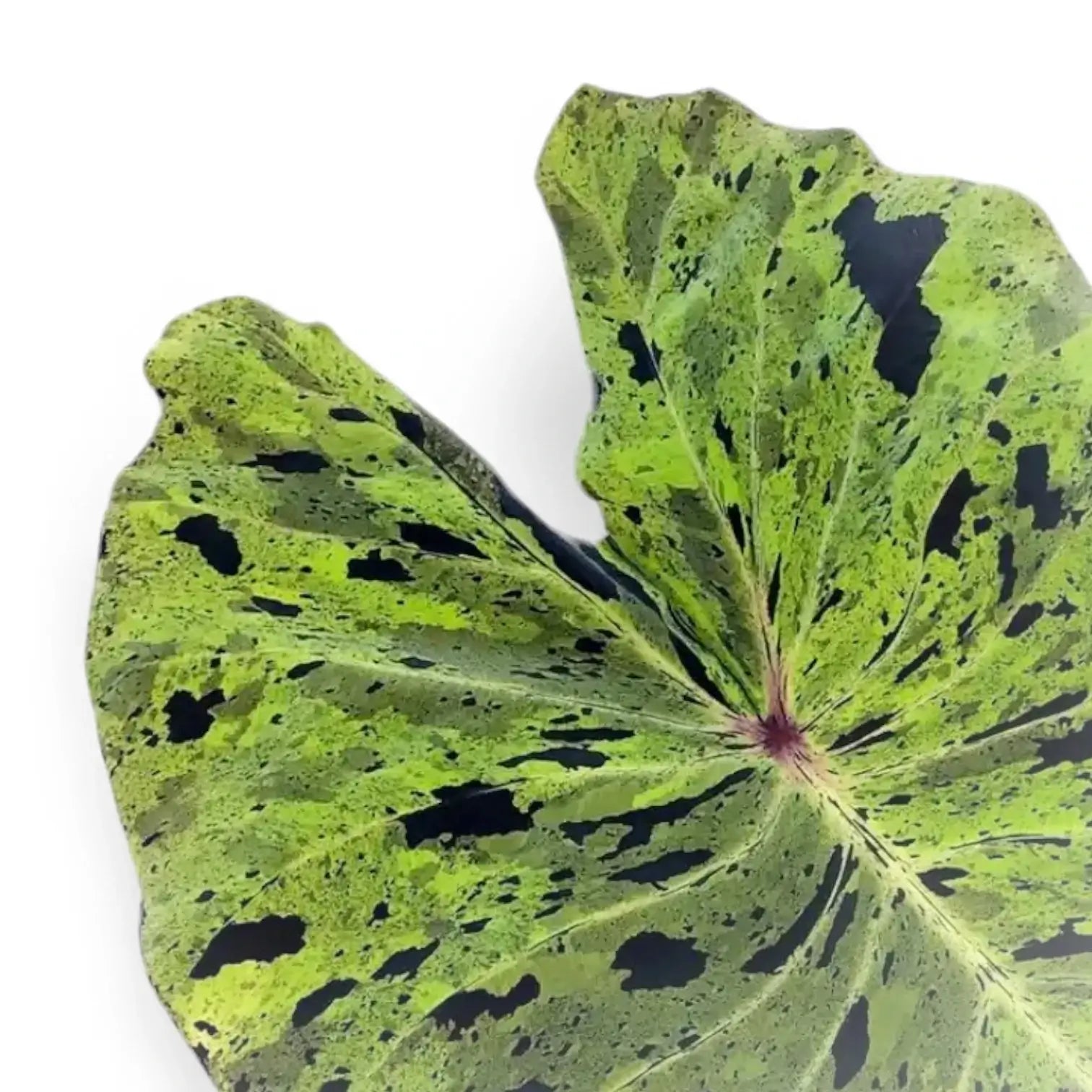
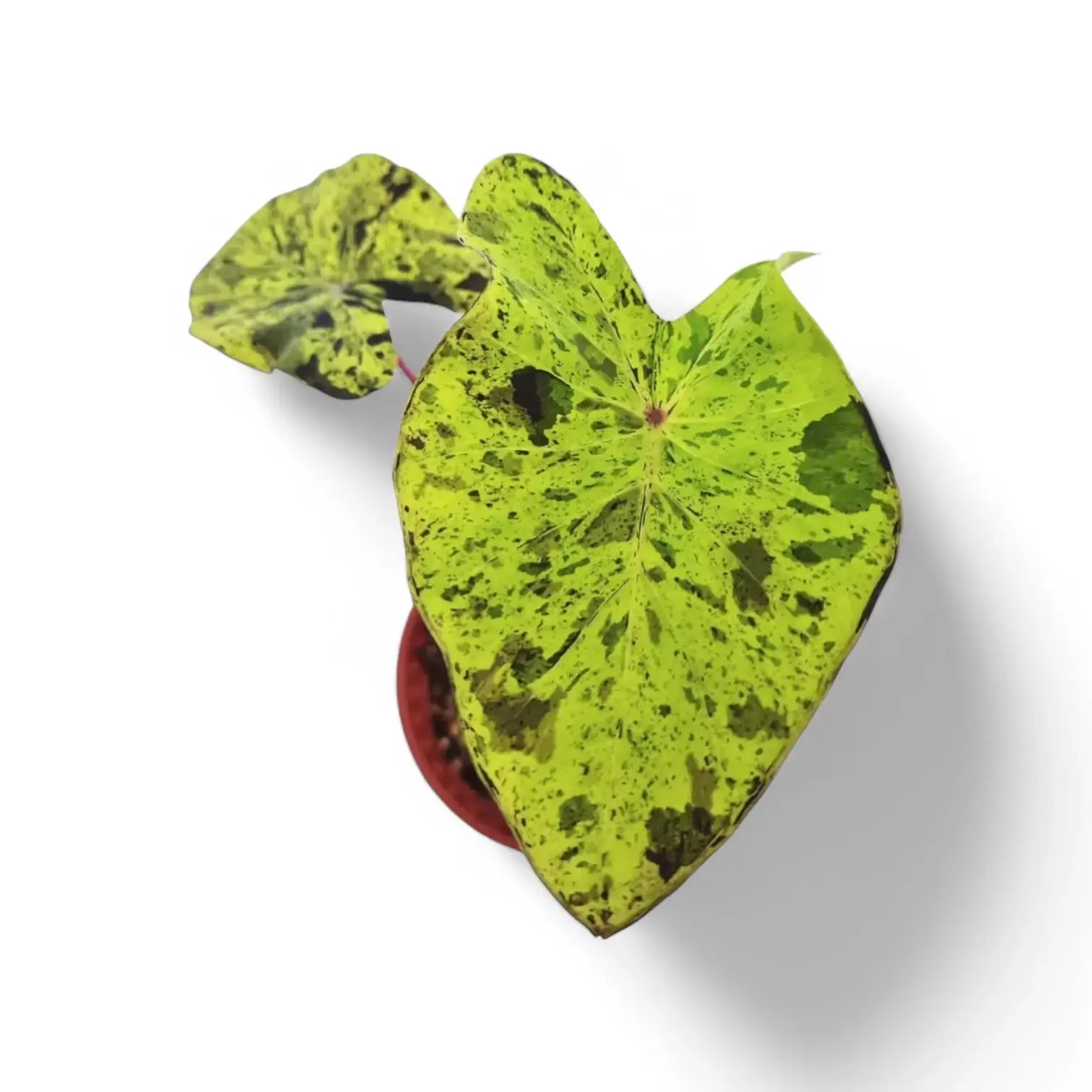
Colocasia esculenta 'Mojito' delivers lime-green leaves spattered with irregular black to deep purple markings, each blade uniquely patterned. Originating as a colourful tissue-culture mutation discovered by Ty Strode in Florida, this ornamental taro brings instant tropical drama to borders, patio containers, and shallow water features. Petioles range from pale white to blush pink with dark streaks, amplifying contrast and collector appeal.
Colocasia esculenta (L.) Schott is native to tropical Asia (Indo-Malayan region) and has been cultivated for millennia as taro. It is now grown and naturalised across humid tropics worldwide. ‘Mojito’ is an ornamental cultivar of this species and is not intended for food use.
Colocasia derives from Greek kolokasion, historically used for edible aroid roots; esculenta means “edible.” ‘Mojito’ refers to the cocktail’s lime-green colour palette, reflecting leaf tone rather than flavour.
Contains insoluble calcium oxalates; irritating if ingested. Keep away from pets and children.
Make a bold statement with lime-green foliage and inky black marbling. Colocasia esculenta ‘Mojito’ brings reliable tropical impact with straightforward care. Add to Cart and transform summer plantings with a collector-grade elephant ear.
Your new plant has just travelled a long way and needs a calm start in its new home. For step-by-step unboxing and first-week care, check our after-delivery care guide. For deeper tips on how your plant settles in over the next weeks, read our houseplant acclimatization guide.
Please head to our FAQ Page or Contact us.
Choose options
VAT included · plus Shipping costs
Secure shipping – carefully packed orders with safe delivery across the EU, UK and Switzerland.
28-day plant guarantee – if a plant arrives damaged or fails soon after delivery, we help you make it right.
Free returns – simple, cost-free returns according to our policy.
For full details, please see:
Light
Bright indirect • approx. 10,000–20,000 lux
Watering
Water when ~5–15% dry
Potting mix
Moisture-retentive + airy • Steady-moist • Organic-forward • Fine
Temperature
Ideal: 20–30 °C • Avoid below: 10 °C
Humidity
Humid 60–80 % +
Growth habit
clumping tuberous geophyte herb
Support
none
Growth speed
Average
Max size indoors
Max. height: 150 cm • Max. spread: 120 cm
Toxicity & safety
Toxic
Origin & habitat
India to S. China and Sumatera; wet tropical biome
These metrics are standardised reference points. We compile them by reviewing and cross-checking multiple botanical and horticultural references, then refining them through real-world growing experience. Source links: Plant Care Resources.
Please use the values as guidance. Conditions vary by home, so the same plant can respond differently. For plant-specific context, read the full product description and browse our Plant Care Guides.


