Zum Inhalt springen

Warenkorb

Dein Warenkorb ist leer

Sukkulenten (ohne Kakteen)

Sukkulenten ohne Kakteen speichern Wasser in BlÀttern, Trieben oder Wurzeln, aber sie verhalten sich drinnen nicht alle gleich. Viele brauchen starkes Licht, sehr durchlÀssiges Substrat und eine echte Trockenphase, wÀhrend manche ihre Form bei hellem indirektem Licht besser halten als bei ganztÀgiger harter Sonne hinter Glas.

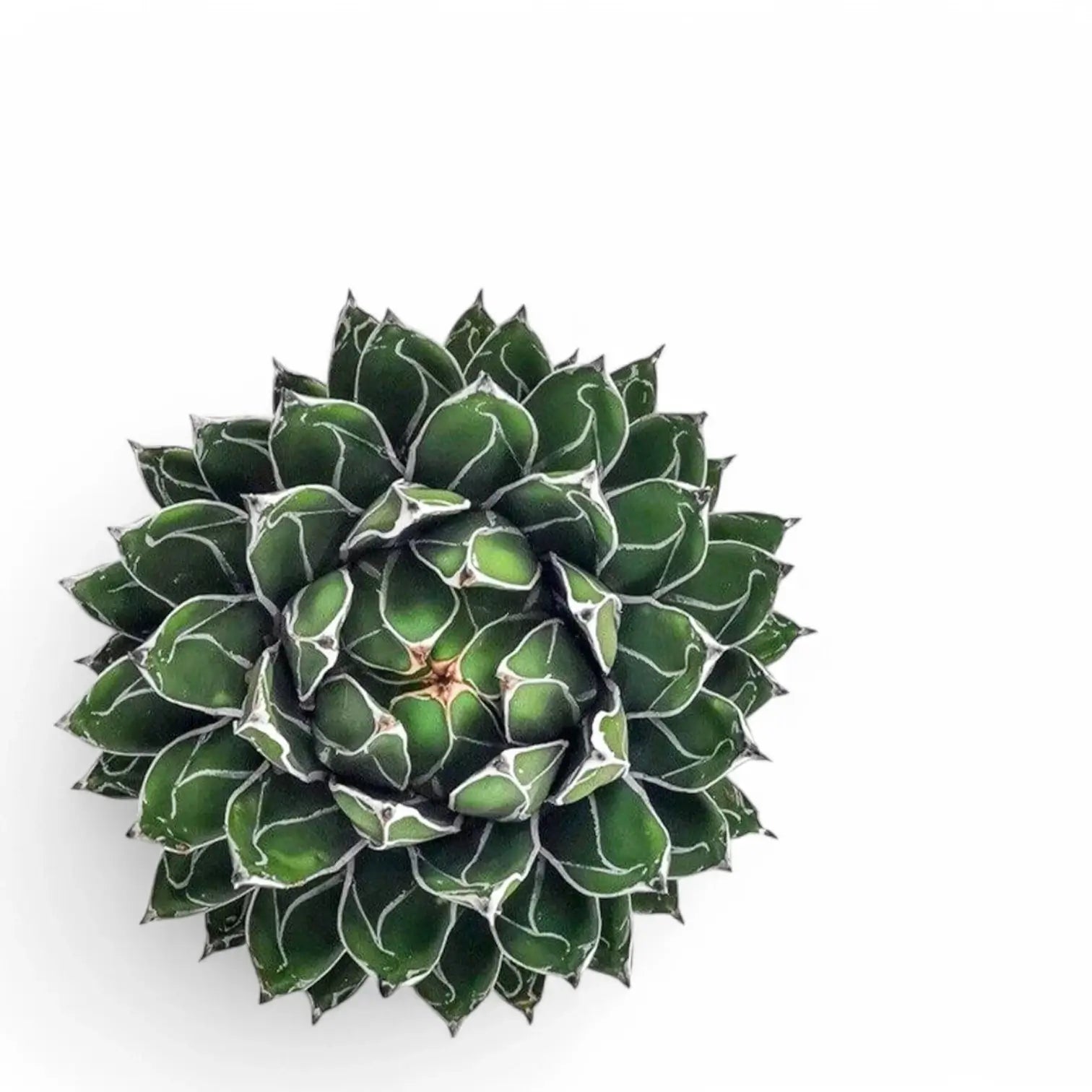
Agave victoriareginae

Sortieren nach:

Filter

Aloe 'Pink Blush' – Blattdetail vor weißem Hintergrund..Aloe 'Pink Blush' Zimmerpflanze im Anzuchttopf vor weißem Hintergrund, Produktfoto 2.
Aloe 'Pink Blush' Ausverkauft
Aloe bakeri – Blattdetail vor weißem Hintergrund..Aloe bakeri Zimmerpflanze im Anzuchttopf vor weißem Hintergrund, Produktfoto 2.
Aloe Bakeri Ausverkauft
Aloe comosa – Blattdetail vor weißem Hintergrund..Aloe comosa Zimmerpflanze im Anzuchttopf vor weißem Hintergrund, Produktfoto 2.
Aloe comosa Ausverkauft
Aloe dorotheae 'Crimson' – Blattdetail vor weißem Hintergrund..Aloe dorotheae 'Crimson' Zimmerpflanze im Anzuchttopf vor weißem Hintergrund, Produktfoto 2.
Aloe perfoliata – Nahaufnahme eines Blatts vor weißem Hintergrund.Aloe perfoliata – Topfpflanze im Kulturtopf vor weißem Hintergrund, Produktfoto 2.
Aloe perfoliata Price€7,75
Aloe vera – Nahaufnahme eines Blatts vor weißem Hintergrund.Aloe vera – Topfpflanze im Kulturtopf vor weißem Hintergrund, Produktfoto 3.
Aloe vera PriceFrom €15,25
Aloe ‘DZ’ – Blattdetail vor weißem Hintergrund..Aloe ‘DZ’ Zimmerpflanze im Anzuchttopf vor weißem Hintergrund, Produktfoto 2.
Aloe ‚DZ‘ Ausverkauft
Aloidendron dichotomum (Aloe dichotoma) – Blattdetail vor weißem Hintergrund..Aloidendron dichotomum (Aloe dichotoma) Zimmerpflanze im Anzuchttopf vor weißem Hintergrund, Produktfoto 2.
Anacampseros rufescens f. variegata – Blattdetail vor weißem Hintergrund..Anacampseros rufescens f. variegata Zimmerpflanze im Anzuchttopf vor weißem Hintergrund, Produktfoto 2.
Aristaloe aristata – Blatt-Detailaufnahme auf weißem Hintergrund.Aristaloe aristata – Zimmerpflanze im Kulturtopf auf weißem Hintergrund, Produktfoto 2.
Aristaloe aristata Price€5,75
Avonia papyracea – Blattdetail vor weißem Hintergrund..Avonia papyracea Zimmerpflanze im Anzuchttopf vor weißem Hintergrund, Produktfoto 2.
Avonia papyracea Ausverkauft
Bacurio delphinatifolius (Senecio peregrinus) – Blattdetail vor weißem Hintergrund..Bacurio delphinatifolius (Senecio peregrinus) – Zimmerpflanze im Kulturtopf auf weißem Hintergrund, Produktfoto 2.
Ceropegia woodii – Blatt-Detailaufnahme auf weißem Hintergrund.Ceropegia woodii – Zimmerpflanze im Kulturtopf auf weißem Hintergrund, Produktfoto 3.
Ceropegia woodii PriceFrom €10,75
Ceropegia woodii in Kokodama – Blatt-Detailaufnahme auf weißem Hintergrund.Ceropegia woodii in Kokodama – Zimmerpflanze im Kulturtopf auf weißem Hintergrund, Produktfoto 2.
Ceropegia woodii im Kokodama Price€28,25
Ceropegia woodii variegata – Blattdetail vor weißem Hintergrund..Ceropegia woodii variegata – Zimmerpflanze im Kulturtopf auf weißem Hintergrund, Produktfoto 3.
Ceropegia woodii variegata PriceFrom €11,00
Crassula ovata 'Horn Tree' – Nahaufnahme eines Blatts vor weißem Hintergrund.Crassula ovata 'Horn Tree' – Topfpflanze im Kulturtopf vor weißem Hintergrund, Produktfoto 2.
Crassula ovata 'Minor' – Nahaufnahme eines Blatts vor weißem Hintergrund.Crassula ovata 'Minor' – Topfpflanze im Kulturtopf vor weißem Hintergrund, Produktfoto 2.
Crassula rupestris subsp. marnieriana 'Hottentot' – Blattdetail vor weißem Hintergrund..Crassula rupestris subsp. marnieriana 'Hottentot' Zimmerpflanze im Anzuchttopf vor weißem Hintergrund, Produktfoto 2.
Curio hallianus – Nahaufnahme eines Blatts vor weißem Hintergrund.Curio hallianus – Topfpflanze im Kulturtopf vor weißem Hintergrund, Produktfoto 2.
Curio hallianus Ausverkauft
Curio herreianus 'Purple flush' – Nahaufnahme eines Blatts vor weißem Hintergrund.Curio herreianus 'Purple flush' – Topfpflanze im Kulturtopf vor weißem Hintergrund, Produktfoto 3.
Curio herreianus 'Purple flush' PriceFrom €7,50
Curio radicans 'Blue Pickle' – Blattdetail vor weißem Hintergrund..Curio radicans 'Blue Pickle' Zimmerpflanze im Anzuchttopf vor weißem Hintergrund, Produktfoto 2.
Curio rowleyanus – Blattdetail vor weißem Hintergrund..Curio rowleyanus – Topfpflanze im Kulturtopf vor weißem Hintergrund, Produktfoto 3.
Curio rowleyanus PriceFrom €7,50
Curio rowleyanus variegata – Nahaufnahme eines Blatts vor weißem Hintergrund.Curio rowleyanus variegata – Topfpflanze im Kulturtopf vor weißem Hintergrund, Produktfoto 3.
Curio rowleyanus variegata PriceFrom €8,00
Cyanotis beddomei ‘Brown Hill’ – Nahaufnahme eines Blatts vor weißem Hintergrund.Cyanotis beddomei ‘Brown Hill’ – Topfpflanze im Kulturtopf vor weißem Hintergrund, Produktfoto 2.

Succulents: water-storing plants with dry-down habits

  • Light: bright light is the baseline; some tolerate medium light, but growth slows.
  • Watering: water deeply, then allow a full dry-down; avoid keeping the mix slightly damp.
  • Substrate: chunky, oxygen-rich and fast draining.
  • Pots: drainage holes are strongly recommended; shallow pots often improve stability.
  • Growth style: many stay compact; others branch, offset or form rosettes.
  • Display role: useful for small surfaces, grouped arrangements and cleaner silhouettes.
Agave victoriareginae

Gut zu wissen: Falten bedeutet meist Durst; durchsichtiges, weiches Gewebe bedeutet meist das Gegenteil — zu lange zu feucht.

Succulents (non-cactus) - water-storing plants for bright windows and faster dry-downs

What belongs in this Succulents collection

Succulents store water in leaves, stems or roots, but they are not one single plant family and they do not all behave the same way indoors, especially once you move them between very different rooms. Here you can compare the non-cactus side of that group: rosettes, clumps, branching forms and trailing plants that keep reserves in fleshy tissue without belonging to Cactaceae.

Most need far more light than ordinary foliage plants and a faster dry-down than tropical pot plants. That does not make them difficult. It just means they do better with a brighter window, a looser substrate and less frequent watering.

Light that keeps succulents compact

Most non-cactus succulents do best in very bright light, often with some direct sun indoors once acclimated. Rosette-forming types especially lose shape in weak light, opening up and stretching instead of staying dense and symmetrical. Grey, silver or powdery leaves often point to plants that want especially bright conditions.

Some genera accept strong filtered light better than others, but low light is rarely a good long-term fit. If your windows are not strong enough, use our grow lights guide rather than asking light-hungry plants to adapt indefinitely.

Watering and substrate-dry enough, but not neglected

Most plants in this group should be watered thoroughly only once the mix has dried most or all of the way through, then allowed to drain completely. How fast that happens depends on pot size, substrate, temperature and species, but the general rule stays the same: soak, drain, then wait until roots have air again.

Constant moisture causes root loss and soft tissue. Long neglect can shrink roots, stall growth and exhaust lower leaves, especially in small pots. A fast-draining mix with plenty of mineral structure makes that balance easier to manage. For broader dry-down logic, see our watering guide.

How non-cactus succulents differ from Cacti

Many succulents are softer-bodied, less heavily armed and more leaf-driven than true cacti. That often makes them easier to place and handle, but it can also mean they show overwatering faster through translucent leaves, crown softness or stem collapse. Some also mark more easily if moved too suddenly into hard sun.

Best approach is simple: treat them as bright, fast-draining houseplants with stored reserves, not as decor that can survive endless neglect.

How to narrow it down

  • Rosette succulents: good for tight form and strong windowsill impact.
  • Clumping or structural people: better if you want shape, height or a more architectural look.
  • Trailing or offsetting types: useful for shelves, hanging positions or if you like plants that spread over time.

What you may notice after shipping

Succulents usually travel better than soft tropical foliage plants, but they can still arrive dusty, slightly wrinkled or with marked outer leaves after transit. That is usually cosmetic if the plant still feels firm and the growth point looks healthy.

After unboxing, place the plant in bright light, but avoid an instant jump into the harshest sun if it has spent days in darkness. Check that the mix is actually dry before watering. Many succulents need light more urgently than they need immediate moisture after shipping. For general settling-in advice, see our acclimatisation guide.

Succulent troubleshooting-common early signs

  • Rosettes opening up or leaning: usually not enough light.
  • Soft, translucent lower leaves: excess moisture is the usual cause.
  • Wrinkled leaves with a dry pot: thirst is likely, provided roots are still healthy.
  • Brown dry patches after moving closer to the glass: sun stress from a sudden jump in intensity.
  • Stalled growth in a bright spot: often points to dense substrate or damaged roots rather than lack of fertiliser.

Back to top and choose the succulent form that suits your light and the way you actually water ↑

Frequently Asked Questions About Succulents

Lesenswert: