
Light
Bright indirect • ≈ 10–20k lux • Grow light target: DLI 6–12


VAT included · plus
Quick overview of our standard shipping rates, free-shipping thresholds and typical transit times for the countries we currently serve. Remote-area surcharges for certain postcodes are added automatically at checkout where applicable.
For full details, winter shipping rules and packaging information, please visit our Shipping & Delivery page.
| Country | Shipping | Free from | Transit time |
|---|---|---|---|
| Austria | € 12.95 | € 100 | 2–4 working days |
| Belgium | € 8.95 | € 100 | 1–2 working days |
| Bulgaria | € 21.95 | € 300 | 5–7 working days |
| Croatia | € 29.95 | € 300 | 5–7 working days |
| Cyprus (²) | € 39.95 | No free shipping | 5–7 working days |
| Czechia | € 16.95 | € 150 | 2–4 working days |
| Denmark (¹) | € 16.95 | € 150 | 2–4 working days |
| Estonia | € 18.95 | € 200 | 2–4 working days |
| Finland | € 29.95 | € 300 | 5–7 working days |
| France (¹) | € 12.95 | € 100 | 2–4 working days |
| Germany | € 8.95 | € 70 | 1–2 working days |
| Greece (¹²) | € 29.95 | € 300 | 5–7 working days |
| Hungary | € 18.95 | € 200 | 2–4 working days |
| Ireland | € 14.95 | € 150 | 2–4 working days |
| Italy (¹) | € 14.95 | € 150 | 2–4 working days |
| Latvia | € 18.95 | € 200 | 5–7 working days |
| Lithuania | € 18.95 | € 200 | 2–4 working days |
| Luxembourg | € 12.95 | € 100 | 1–2 working days |
| Malta (²) | € 39.95 | No free shipping | 5–7 working days |
| Netherlands | € 8.95 | € 100 | 1–2 working days |
| Poland | € 12.95 | € 100 | 2–4 working days |
| Portugal (¹) | € 14.95 | € 150 | 2–4 working days |
| Romania | € 21.95 | € 300 | 5–7 working days |
| Slovakia | € 18.95 | € 200 | 5–7 working days |
| Slovenia | € 18.95 | € 200 | 5–7 working days |
| Spain (¹) | € 14.95 | € 125 | 2–4 working days |
| Sweden | € 18.95 | € 200 | 2–4 working days |
| Switzerland | € 29.95 | € 300 | 5–7 working days |
Secure shipping – carefully packed orders with safe delivery across the EU, UK and Switzerland.
28-day plant guarantee – if a plant arrives damaged or fails soon after delivery, we help you make it right.
Free returns – simple, cost-free returns according to our policy.
For full details, please see:
Light
Bright indirect • ≈ 10–20k lux • Grow light target: DLI 6–12
Watering
Water when ~10–25% dry
Potting mix
Moisture-retentive + airy • Steady-moist • Organic-forward • Fine
Temperature
Ideal: 20–28 °C • Avoid below: 15 °C
Growth habit
understory subshrub
Support
none
Growth speed
Slow
Max size indoors
Max. height: 30 cm • Max. spread: 30 cm
Toxicity & safety
Unknown – not confirmed on ASPCA/reliable vet sources
Origin & habitat
Origin uncertain (trade Labisia); cultivated
These metrics are standardised reference points. We compile them by reviewing and cross-checking multiple botanical and horticultural references, then refining them through real-world growing experience. Source links: Plant Care Resources.
Please use the values as guidance. Conditions vary by home, so the same plant can respond differently. For plant-specific context, read the full product description and browse our Plant Care Guides.
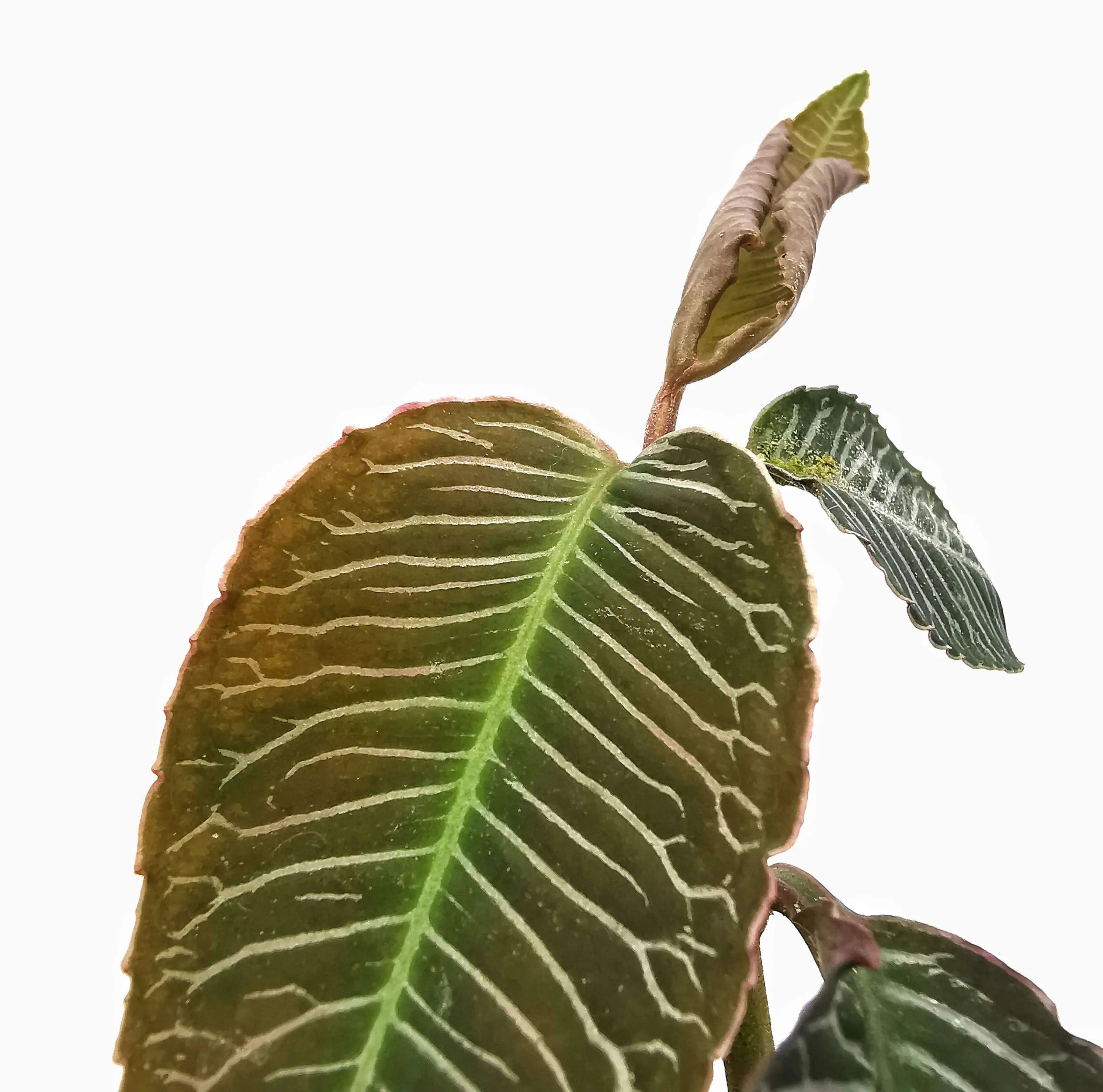
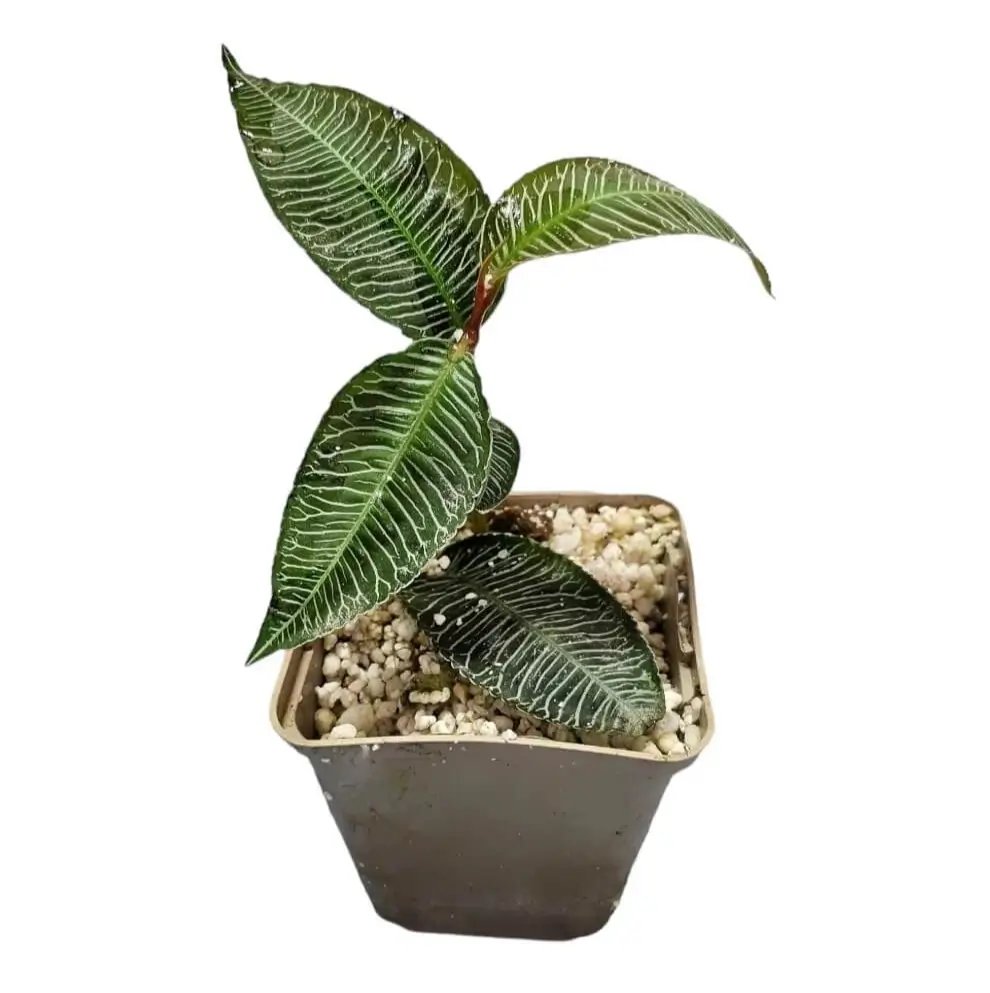
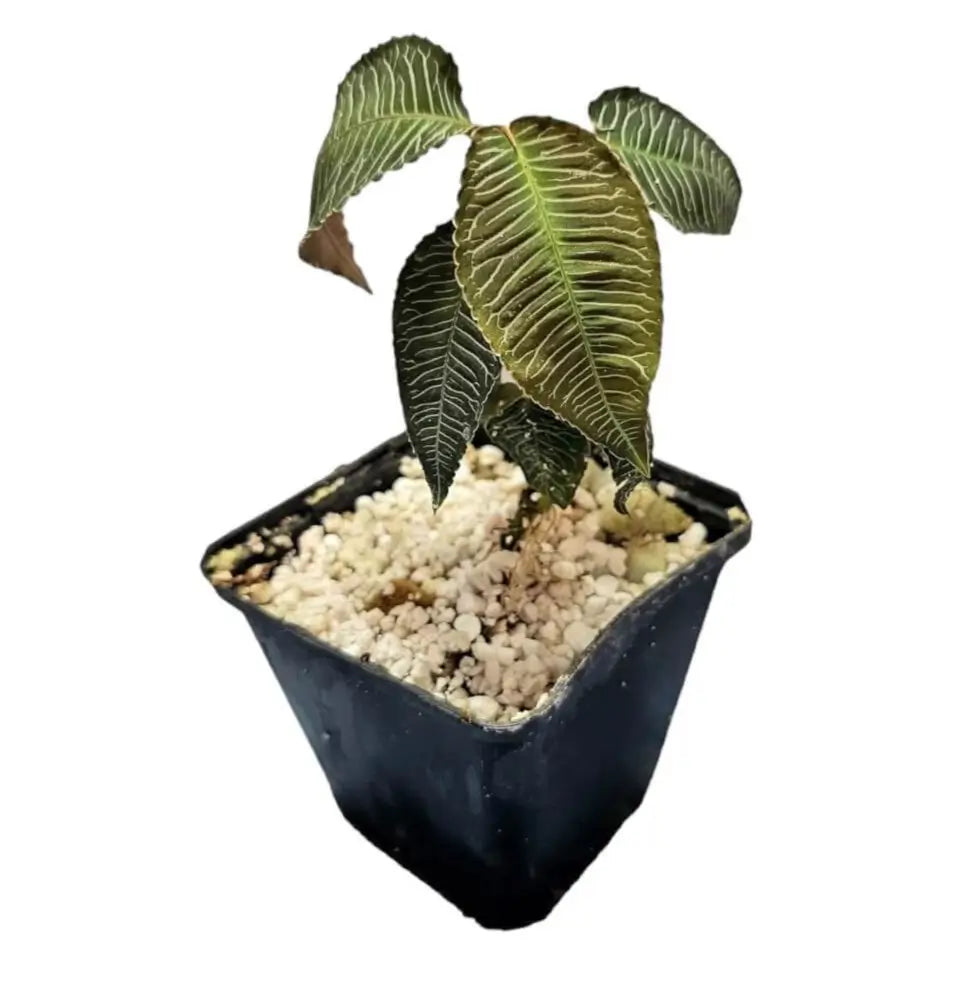
Labisia sp. 'Pink Vein' is a rare, small-stature tropical species prized for its rich foliage and intricate venation. The leaves are velvety and ovate, with a deep, earthy green background and a web of vivid pink veins running through the surface. As the plant matures, the contrast becomes even more striking, especially under consistent humidity and good lighting. This Labisia stays compact and grounded, forming dense clumps of low growth that give it a jewel-like quality. It’s an excellent choice for collectors looking to expand into less mainstream genera without compromising on visual drama.
This plant belongs to the genus Labisia, native to the humid tropical forests of Southeast Asia, particularly Malaysia and Borneo. In its natural habitat, it grows as a low-lying understory herb in dense shade, surrounded by thick leaf litter and consistently high moisture levels. Temperatures in these environments range between 23 – 28 °C, with relative humidity often exceeding 80% and rainfall distributed evenly throughout the year.
Labisia sp. 'Pink Vein' maintains a compact, ground-hugging form indoors. It's slow to establish but responds well to stable humidity and warmth. While not commonly toxic, there is limited safety data on this genus – so best to keep it away from pets and children until more is known.
This plant is best grown in a stable microclimate – think plant cabinet, closed terrarium, or a warm, shaded shelf with constant moisture. Labisia sp. 'Pink Vein' does not like change and reacts poorly to environmental shifts, so avoid moving it too often. Recreating the still, moist undergrowth of Southeast Asian jungles will help you succeed long-term. Once stable, its growth – though slow – is steady and visually rewarding. Taking time to understand where and how it grows in nature pays off indoors.
The name Labisia is believed to derive from Malay or Greek roots, though the exact etymology is unclear due to limited historical documentation. The genus includes several medicinal and ornamental species, with most still under taxonomic review. As this is an unnamed species in cultivation (denoted by sp. ), its formal botanical identity is not yet described. The cultivar name 'Pink Vein' refers to the plant’s distinctive vein coloration.
Looking for something truly unique and compact? Labisia sp. 'Pink Vein' brings velvety texture and bold contrast into your indoor jungle. Order today and grow a plant that’s as rare as it is rewarding.
Your new plant has just travelled a long way and needs a calm start in its new home. For step-by-step unboxing and first-week care, check our after-delivery care guide. For deeper tips on how your plant settles in over the next weeks, read our houseplant acclimatization guide.
Please head to our FAQ Page or Contact us.
Choose options
VAT included · plus Shipping costs
Secure shipping – carefully packed orders with safe delivery across the EU, UK and Switzerland.
28-day plant guarantee – if a plant arrives damaged or fails soon after delivery, we help you make it right.
Free returns – simple, cost-free returns according to our policy.
For full details, please see:
Light
Bright indirect • ≈ 10–20k lux • Grow light target: DLI 6–12
Watering
Water when ~10–25% dry
Potting mix
Moisture-retentive + airy • Steady-moist • Organic-forward • Fine
Temperature
Ideal: 20–28 °C • Avoid below: 15 °C
Growth habit
understory subshrub
Support
none
Growth speed
Slow
Max size indoors
Max. height: 30 cm • Max. spread: 30 cm
Toxicity & safety
Unknown – not confirmed on ASPCA/reliable vet sources
Origin & habitat
Origin uncertain (trade Labisia); cultivated
These metrics are standardised reference points. We compile them by reviewing and cross-checking multiple botanical and horticultural references, then refining them through real-world growing experience. Source links: Plant Care Resources.
Please use the values as guidance. Conditions vary by home, so the same plant can respond differently. For plant-specific context, read the full product description and browse our Plant Care Guides.


