Selenicereus anthonyanus – night-blooming cactus with spectacular flowers
Selenicereus anthonyanus (Alexander) D.R.Hunt, formerly known as Cryptocereus anthonyanus, is a perennial climbing cactus with uniquely notched, flat stems. Often compared to Epiphyllum anguliger or Weberocereus imitans, this species stands apart for its distinctive floral structure: enormous, fragrant, night-blooming flowers in shades of white, pink, and red. While flowering is rare in cultivation, it is highly rewarding when achieved.
● Why Selenicereus anthonyanus is special
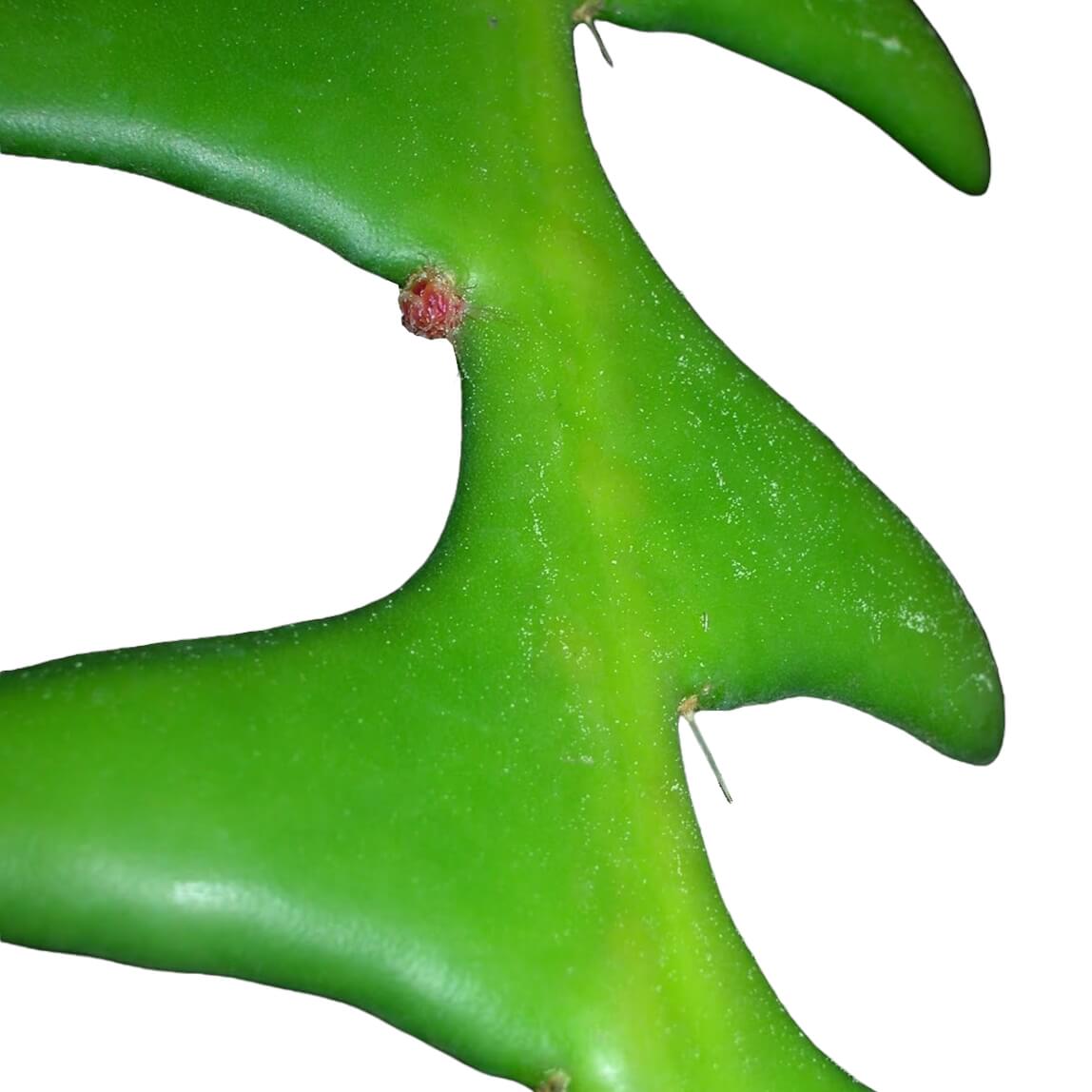
The stems are flattened and leaf-like, growing up to 50 cm or more, with alternating lobes along the edges that curve downwards over time. Small adventitious roots develop on the stem surface, allowing the plant to climb trees in its native rainforest habitat. The flowers are among the largest in the cactus family: buds can reach 10 cm long, while open blooms span 15 cm or more across, with a rich fragrance that intensifies at night.
● Taxonomic background
This species was first collected on February 9, 1951, in the Selva Negra region of Chiapas, Mexico, by Scottish botanist Thomas MacDougall. The plant was brought to Edward Johnston Alexander at the New York Botanic Garden, where it first flowered in 1954 and was published as Cryptocereus anthonyanus in 1956. In 2003, Myron Kimnach reassigned it to the genus Selenicereus. It is considered an isolated species within the genus, with Selenicereus chrysocardium as its closest known relative.
● Natural distribution and ecology
Selenicereus anthonyanus is native to the tropical rainforests of Chiapas, Mexico, where it grows as an epiphyte or sometimes terrestrially. It is relatively common in habitat but not abundant. The main threat to its survival is deforestation for cattle ranching, though current levels of habitat loss have not warranted threatened status. Its night-blooming flowers are adapted for pollination by nocturnal insects and possibly bats.
● How to care for Selenicereus anthonyanus
- Light: Bright, indirect light is ideal. Tolerates filtered sun but avoid harsh midday rays.
- Water: Water thoroughly, then allow the substrate to dry partially. Do not leave roots in standing water.
- Substrate: Use a loose, well-draining mix suited for epiphytic cacti (orchid bark, pumice, perlite blended with organic matter).
- Temperature and humidity: Prefers 18 – 28 °C with moderate to high humidity. Protect from temperatures below 10 °C.
- Fertilizer: Apply diluted cactus or orchid fertiliser every 3 – 4 weeks during active growth. Avoid feeding during winter rest.
- Support: Provide a trellis, hoop, or hanging basket to accommodate long cascading stems.
Common issues
- No flowering: Often due to insufficient maturity, inadequate light, or lack of seasonal temperature fluctuation.
- Stem yellowing: Caused by overwatering or poor drainage. Adjust substrate and watering routine.
- Stunted growth: May result from too little light or compact soil. Provide more indirect light and repot into a looser mix.
- Pests: Watch for mealybugs and scale; treat early with insecticidal soap.
● Notes for collectors
This species is often confused with Epiphyllum anguliger due to its notched stems, but can be distinguished by its shorter floral tubes and bristly pericarpels. It is prized among cactus and epiphyte collectors for its unusual form and spectacular, if rare, blooms. While slow to flower indoors, mature plants with seasonal cues can reward growers with unforgettable night-blooming displays.
● Etymology
The genus name Selenicereus combines Greek Selene, the moon goddess, referring to its nocturnal flowers, and Latin cereus (“candle”), a name used for tall, candle-like cacti. The species epithet anthonyanus honours Harold Ernest Anthony, an American naturalist. Its former name Cryptocereus reflected its once uncertain taxonomic placement.
● Questions about Selenicereus anthonyanus
How large does Selenicereus anthonyanus grow?
Stems can reach over 50 cm long and often trail or cascade. With support, it may climb to greater lengths.
When does it flower?
Flowers appear rarely in cultivation, typically on mature plants given bright light and seasonal temperature variation. They open at night and last only a single night.
Is it easy to grow indoors?
Yes — it adapts well to indoor culture if given bright, indirect light and well-draining soil, though flowering indoors can be a challenge.
How is it different from Epiphyllum anguliger?
While both have notched, flat stems, Selenicereus anthonyanus has stouter flowers with shorter tubes and a bristly ovary, compared to the longer-tubed blooms of Epiphyllum anguliger.
● Add Selenicereus anthonyanus to your collection
Looking for a rare, sculptural cactus with legendary night blooms? Order Selenicereus anthonyanus today and experience one of the most remarkable epiphytic cacti ever cultivated.
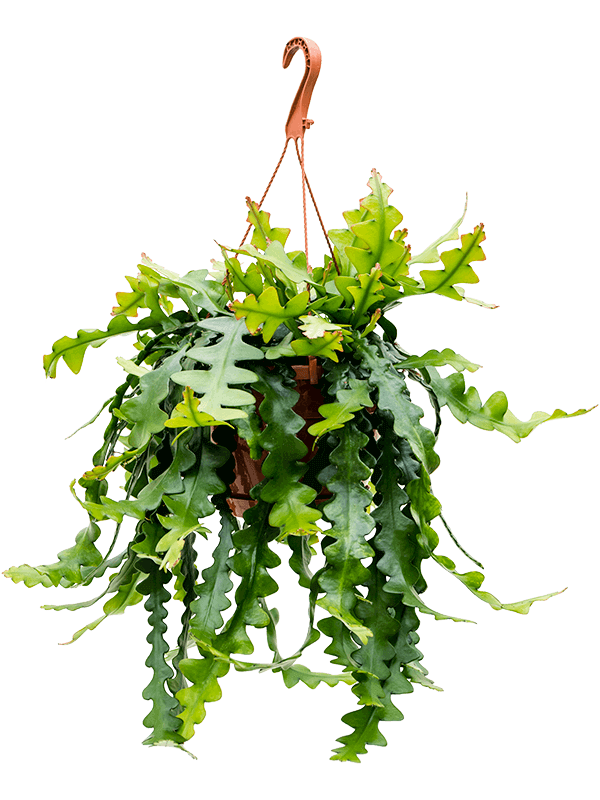
Selenicereus anthonyanus
Selenicereus anthonyanus is approximately 60 cm long and comes in a ø 17 cm hanging pot.