
Light
Bright indirect • approx. 10,000–20,000 lux


VAT included · plus
Quick overview of our standard shipping rates, free-shipping thresholds and typical transit times for the countries we currently serve. Remote-area surcharges for certain postcodes are added automatically at checkout where applicable.
For full details, winter shipping rules and packaging information, please visit our Shipping & Delivery page.
| Country | Shipping | Free from | Transit time |
|---|---|---|---|
| Austria | € 12.95 | € 100 | 2–4 working days |
| Belgium | € 8.95 | € 100 | 1–2 working days |
| Bulgaria | € 21.95 | € 300 | 5–7 working days |
| Croatia | € 29.95 | € 300 | 5–7 working days |
| Cyprus (²) | € 39.95 | No free shipping | 5–7 working days |
| Czechia | € 16.95 | € 150 | 2–4 working days |
| Denmark (¹) | € 16.95 | € 150 | 2–4 working days |
| Estonia | € 18.95 | € 200 | 2–4 working days |
| Finland | € 29.95 | € 300 | 5–7 working days |
| France (¹) | € 12.95 | € 100 | 2–4 working days |
| Germany | € 8.95 | € 70 | 1–2 working days |
| Greece (¹²) | € 29.95 | € 300 | 5–7 working days |
| Hungary | € 18.95 | € 200 | 2–4 working days |
| Ireland | € 14.95 | € 150 | 2–4 working days |
| Italy (¹) | € 14.95 | € 150 | 2–4 working days |
| Latvia | € 18.95 | € 200 | 5–7 working days |
| Lithuania | € 18.95 | € 200 | 2–4 working days |
| Luxembourg | € 12.95 | € 100 | 1–2 working days |
| Malta (²) | € 39.95 | No free shipping | 5–7 working days |
| Netherlands | € 8.95 | € 100 | 1–2 working days |
| Poland | € 12.95 | € 100 | 2–4 working days |
| Portugal (¹) | € 14.95 | € 150 | 2–4 working days |
| Romania | € 21.95 | € 300 | 5–7 working days |
| Slovakia | € 18.95 | € 200 | 5–7 working days |
| Slovenia | € 18.95 | € 200 | 5–7 working days |
| Spain (¹) | € 14.95 | € 125 | 2–4 working days |
| Sweden | € 18.95 | € 200 | 2–4 working days |
| Switzerland | € 29.95 | € 300 | 5–7 working days |
Secure shipping – carefully packed orders with safe delivery across the EU, UK and Switzerland.
28-day plant guarantee – if a plant arrives damaged or fails soon after delivery, we help you make it right.
Free returns – simple, cost-free returns according to our policy.
For full details, please see:
Light
Bright indirect • approx. 10,000–20,000 lux
Watering
Water when ~30–50% dry
Potting mix
Aerated • Moisture-buffered • Balanced organic + mineral • Medium
Temperature
Ideal: 18–27 °C • Avoid below: 15 °C
Growth habit
climbing/trailing vine
Support
optional
Growth speed
Fast
Max size indoors
Max. height with support: 150 cm • Max. spread: 70 cm
Toxicity & safety
Toxic
Origin & habitat
Horticultural cultivar (Syngonium); cultivated
These metrics are standardised reference points. We compile them by reviewing and cross-checking multiple botanical and horticultural references, then refining them through real-world growing experience. Source links: Plant Care Resources.
Please use the values as guidance. Conditions vary by home, so the same plant can respond differently. For plant-specific context, read the full product description and browse our Plant Care Guides.
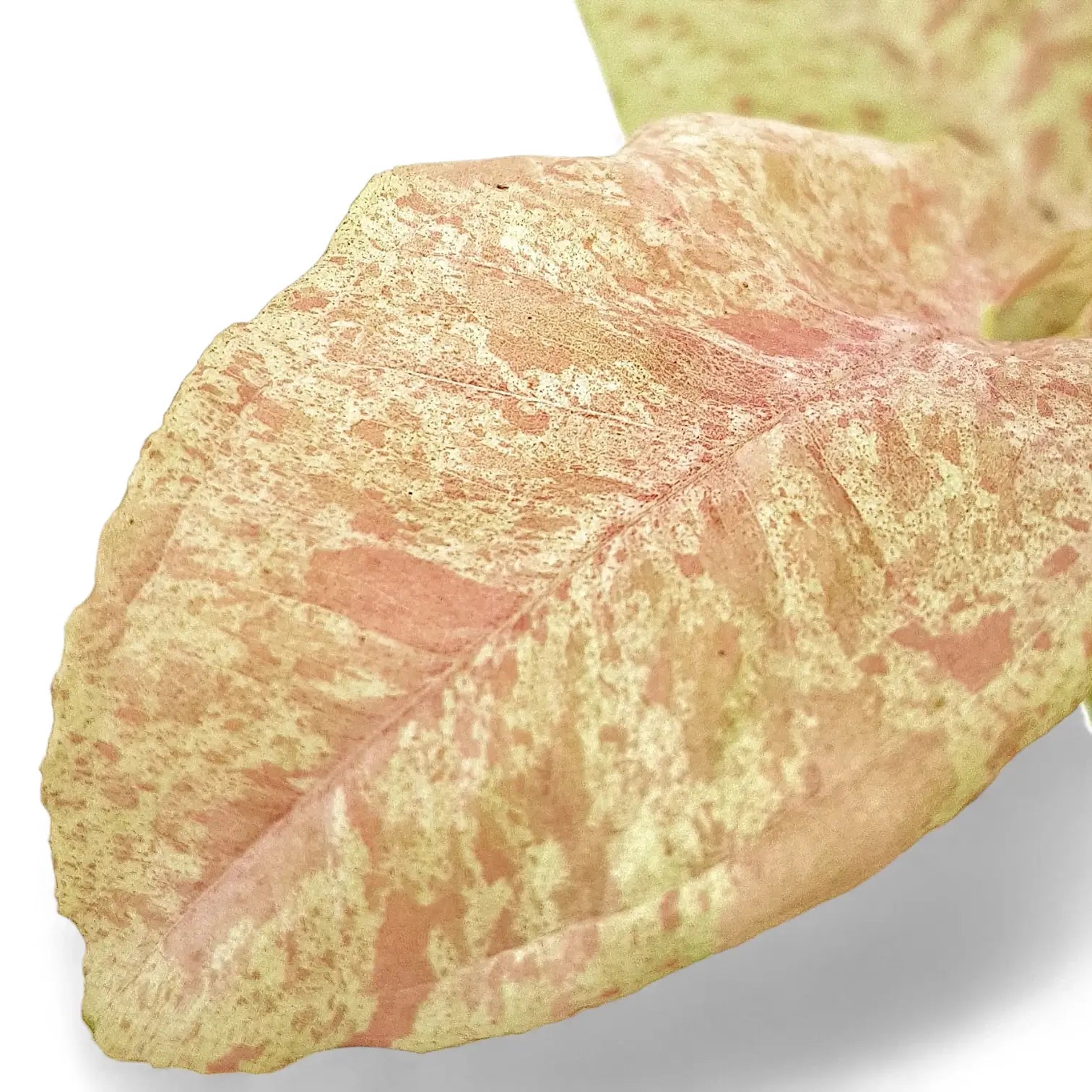
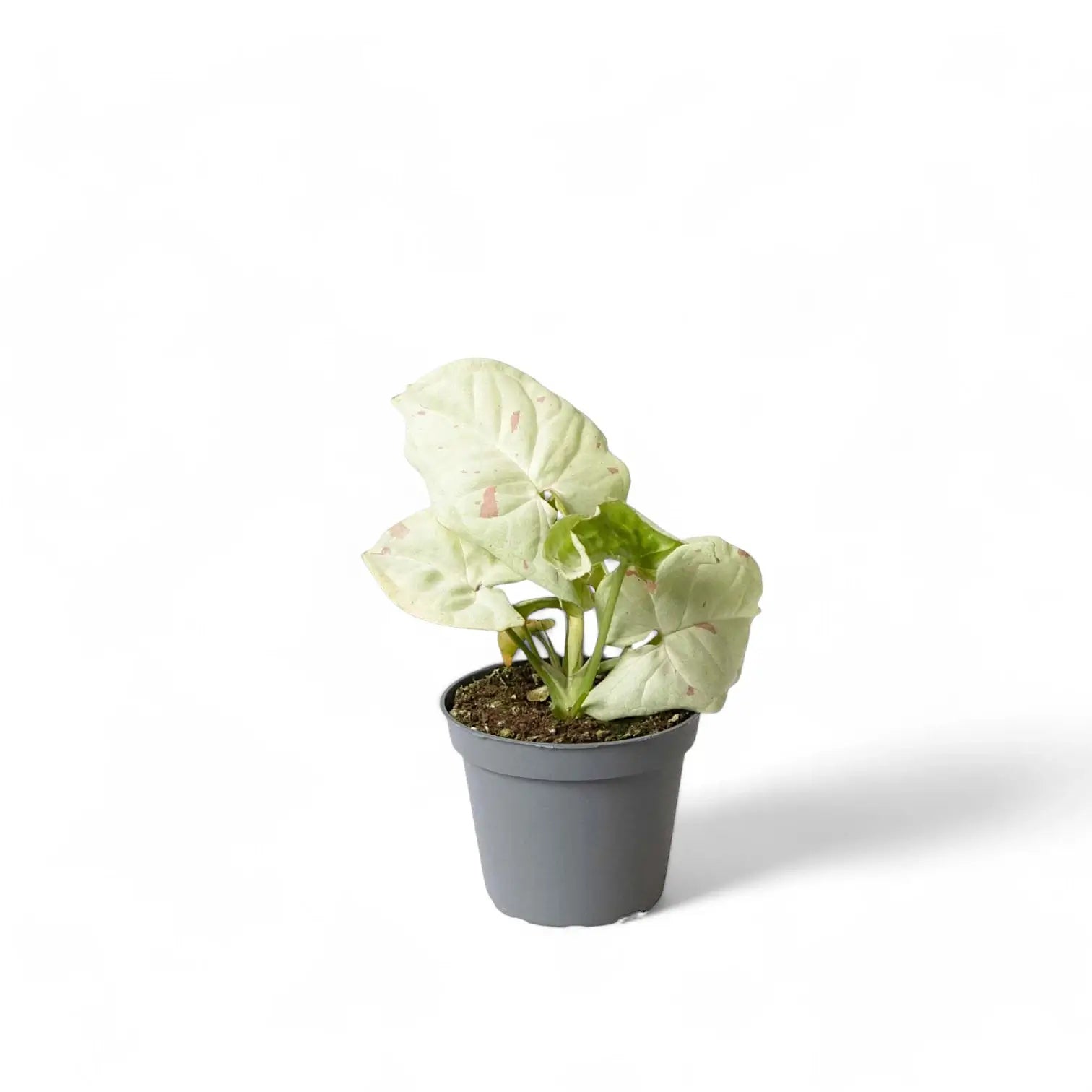
Syngonium ‘Milk Confetti’ brings soft, milky splashes and tiny pink freckles to arrow-shaped leaves – a fresh, collectible look without fussy care. If you want a compact climber/trailer that stands out on a shelf or pole, this is a strong pick.
Juvenile leaves are neat, arrow-shaped with fine petioles and a pale green base patterned by white speckles and occasional blush tones. With support, plants can shift toward slightly more lobed blades as they mature. Texture is thin and smooth, so foliage looks crisp and “clean” in bright, indirect light. Overall habit is tidy but vigorous on a small stake or as a trailing plant.
‘Milk Confetti’ is a cultivated selection of Syngonium podophyllum, a hemiepiphytic aroid native from Mexico through tropical Central and South America. In nature it roots at the base of trees and climbs using adventitious aerial roots through warm, humid understory conditions. Indoors, mimic that bright, filtered light and steady warmth for best results.
Sap contains calcium oxalate; keep away from pets and children. Suits inert/mineral semi-hydro systems if oxygen around roots is maintained. Compared with green forms of Syngonium podophyllum, growth indoors is moderate but steady under good light and consistent moisture.
Syngonium podophyllum Schott – first published in Botanische Zeitung (Berlin) 9: 85 (1851). “Syngonium” refers to “fused reproductive parts”; “podophyllum” means “foot-like leaf,” nodding to the lobed blade seen with maturity. ‘Milk Confetti’ is a horticultural cultivar selected for its pale, speckled patterning.
Ready for soft, speckled foliage that looks fresh year-round? Secure Syngonium ‘Milk Confetti’ now – a refined, easy companion for your indoor jungle.
Your new plant has just travelled a long way and needs a calm start in its new home. For step-by-step unboxing and first-week care, check our after-delivery care guide. For deeper tips on how your plant settles in over the next weeks, read our houseplant acclimatization guide.
Please head to our FAQ Page or Contact us.
Choose options
VAT included · plus Shipping costs
Secure shipping – carefully packed orders with safe delivery across the EU, UK and Switzerland.
28-day plant guarantee – if a plant arrives damaged or fails soon after delivery, we help you make it right.
Free returns – simple, cost-free returns according to our policy.
For full details, please see:
Light
Bright indirect • approx. 10,000–20,000 lux
Watering
Water when ~30–50% dry
Potting mix
Aerated • Moisture-buffered • Balanced organic + mineral • Medium
Temperature
Ideal: 18–27 °C • Avoid below: 15 °C
Growth habit
climbing/trailing vine
Support
optional
Growth speed
Fast
Max size indoors
Max. height with support: 150 cm • Max. spread: 70 cm
Toxicity & safety
Toxic
Origin & habitat
Horticultural cultivar (Syngonium); cultivated
These metrics are standardised reference points. We compile them by reviewing and cross-checking multiple botanical and horticultural references, then refining them through real-world growing experience. Source links: Plant Care Resources.
Please use the values as guidance. Conditions vary by home, so the same plant can respond differently. For plant-specific context, read the full product description and browse our Plant Care Guides.


