top of page

Brown Leaf Tips on Houseplants: All Real Causes and Fixes Explained

So you thought brown leaf tips just meant your air was too dry?


Buckle up — there’s a whole underground world of causes waiting to crisp up your plants.


It’s Not Just the Air

Brown, crispy leaf tips are one of the most common — and most misunderstood — houseplant issues.


You water consistently. You mist the leaves. Maybe you even moved your plant to a brighter room or added a humidifier. But still, the tips turn dry and brown.


The usual advice? “Raise humidity.”


But here’s the problem: brown tips are rarely about humidity alone. Overfixing that one factor — without understanding the real cause — often leads to new problems: overwatering, salt damage, root stress.


So if your plant keeps developing brown leaf tips no matter what you try, it’s time to stop guessing.


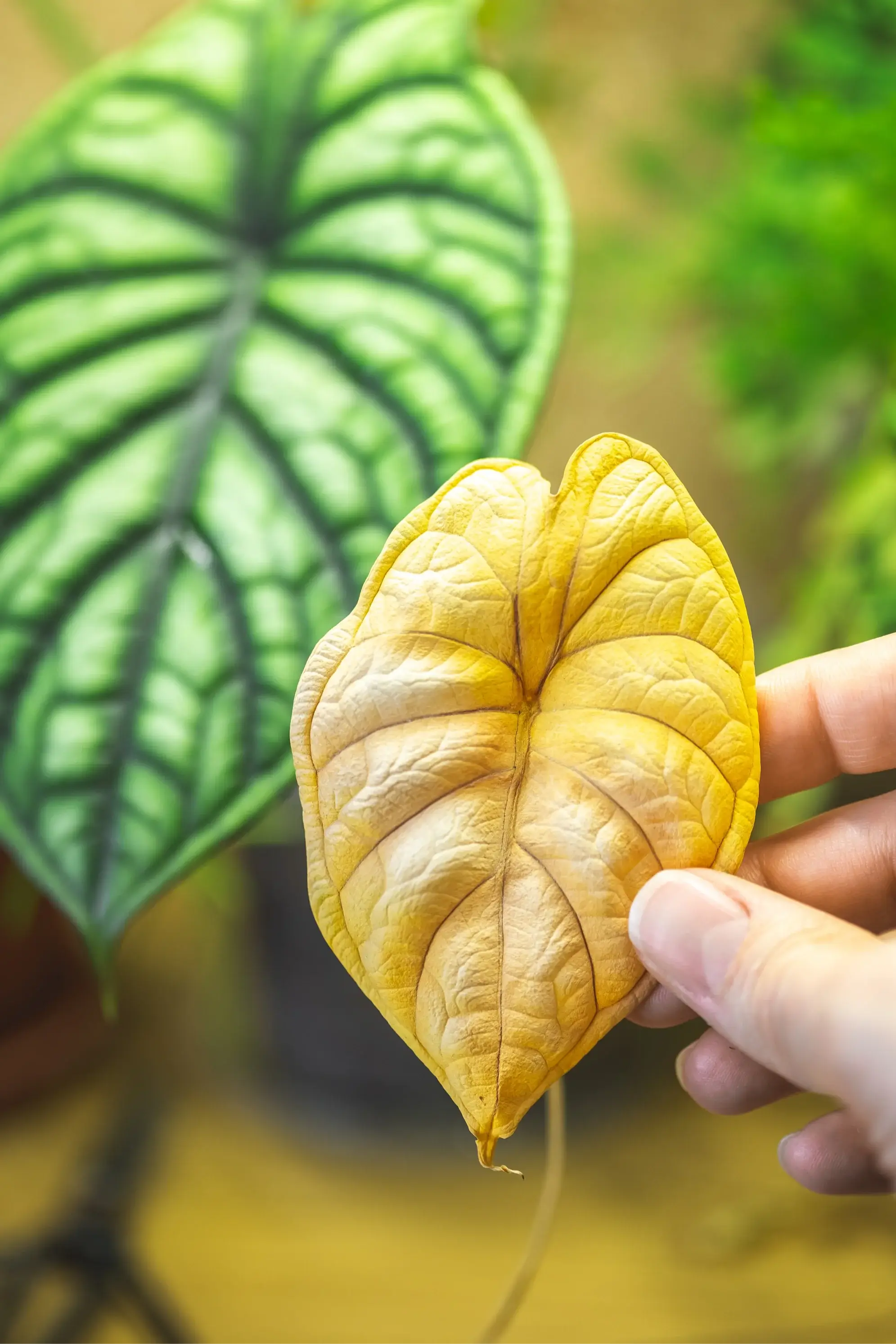
Close-up of Monstera esqueleto leaf with brown, dried tip and edges on a white background
Even rare beauties like Monstera esqueleto aren’t immune — brown tips are a common symptom across many houseplants.

This guide breaks it all down:


1. What Brown Tips Really Mean

Brown Tips = Tissue Death

Let’s start with what’s actually happening in the leaf.

When the edges or tips of your plant’s leaves turn brown, it means those cells have died — a condition known as leaf tip necrosis. That tissue isn’t just dry. It’s permanently damaged.


Why the tips and edges? Because they’re at the very end of the plant’s hydraulic system — the farthest point water and minerals reach. Any disruption in that system — whether from salts, underwatering, damaged roots, or environmental stress — shows up there first.


It’s a Symptom, Not the Cause

Think of brown tips like a warning light. The visible damage is just the result. The actual problem usually lies beneath the soil, in the water you use, or in how the plant processes nutrients and moisture.


Sometimes it’s minor — a one-off dry spell, or a bit of tap water damage. Other times, it’s a sign your plant is struggling more seriously.


Is It Always a Problem?

Not necessarily.

Some plants — like spider plants, dracaenas, calatheas, and ferns — are more prone to tip browning, especially when grown in dry indoor air or with hard water. In these cases, a few brown tips on mature leaves aren’t cause for panic.


But if you see:


  • Tip browning on new growth

  • Browning that spreads along the leaf edges or inward

  • Symptoms paired with wilting, curling, or yellowing


➜ it’s time to investigate. In most cases, the plant is trying to tell you something.


Monstera deliciosa leaf showing dry, brown tips on a white background
Brown tips may look minor on Monstera deliciosa — but they often signal deeper issues in watering, roots, or water quality.


  1. What Causes Brown Leaf Tips?

Brown tips might look the same — dry, crispy, discolored edges — but the causes behind them are diverse and often layered. Most people assume it’s humidity. In reality, brown leaf tips can result from stress related to water quality, watering habits, substrate issues, nutrient problems, root dysfunction, or environmental extremes.


In this section, we’ll break down each cause group by group — and explain how to recognize the difference in symptoms.


2.1 Watering and Substrate Mistakes

Watering problems are one of the most common — and most misdiagnosed — causes of brown tips. But “too much” or “too little” isn’t the full picture. It’s also about consistency, drainage, and the substrate’s physical properties.


Inconsistent Watering


Plants don’t like surprises. When the substrate swings between bone dry and soggy, the plant’s water transport system becomes stressed. This often leads to osmotic shock, especially in young leaves, and results in tip browning.


Typical symptoms:

  • Tips brown even though plant is watered regularly — but not evenly

  • Leaf edges may feel tough, curled, or crispy

  • Browning worsens during heat or sunlight exposure


Chronic Underwatering


When plants are left too dry for too long, they go into water conservation mode. This cuts off flow to the tips first — leading to desiccation.


What to look for:

  • Tips dry out first, especially on larger leaves

  • Leaf feels thin, limp, or wrinkled

  • Soil pulls away from the edge of the pot


Chronic Overwatering


Too much water can be just as dangerous — because it suffocates roots. Without oxygen, roots lose their ability to absorb water and nutrients, causing stress in the upper parts of the plant. Brown tips in this case result from root dysfunction, not dehydration.


Key indicators:

  • Brown tips appear despite consistently moist soil

  • Leaves may yellow or wilt at the same time

  • Pot feels heavy, and soil stays wet for days

  • Foul odor or blackened roots if unpotted


📌 Still not sure if you're watering the right way — or just confusing your plant?

Check out our full guide:The Ultimate Guide to Watering Houseplants — it’s packed with clear answers for every skill level.


Poor Substrate Structure


The wrong soil can be just as harmful as bad watering. Compact, soggy, or peat-heavy mixes hold excess water and exclude oxygen — both of which damage roots and interrupt nutrient flow.


Warning signs:

  • Slow growth, even in bright conditions

  • Browning combined with pale or faded new leaves

  • Soil stays wet but plant shows signs of drought


💡 Pro tip: Check your substrate. If it’s dense, clumpy, or takes forever to dry out — it may be the cause.


📌 If your soil stays soggy, dries in a day, or just looks… tired — the issue might lie in the mix itself.

Find out what your plant actually needs in The Ultimate Guide to Houseplant Substrates.


Close-up of Monstera 'Thai Constellation' leaf with dry, brown tips and edges on a white background
Even well-cared-for variegated plants like Monstera 'Thai Constellation' can develop tip burn from poor water quality or mineral buildup.

2.2 Water Quality Issues — Fluoride, Salt, and pH Trouble

Even if you’re watering correctly, what’s in the water can quietly harm your plants. Many houseplants are sensitive to minerals and additives commonly found in tap water — especially fluoride, chlorine, sodium, and lime. Over time, these can build up in the substrate, interfere with nutrient uptake, and burn delicate leaf tips.


Fluoride Toxicity


Municipal water in many regions contains added fluoride. For humans, it helps prevent tooth decay — but for plants, it’s a toxin. Certain tropical species are particularly sensitive, including:


  • Chlorophytum comosum (Spider Plant)

  • Dracaena spp.

  • Calathea and Maranta spp.

  • Aspidistra elatior


Fluoride accumulates in the tips and margins of leaves — areas where water exits during transpiration. Once it reaches toxic levels, it causes cell death at the edges, leading to dry, brown, papery tips.


Clues to watch for:

  • Brown tips or margins on otherwise healthy leaves

  • No improvement even with perfect watering

  • More severe on older leaves (accumulated exposure)

  • Occurs even when humidity and light are ideal


Solution: Use filtered, distilled, or rainwater for fluoride-sensitive plants. Avoid superphosphate fertilizers, which contain additional fluoride.


Chlorine and Chloramine


Chlorine is another additive in most drinking water. Unlike fluoride, it usually evaporates when water is left to sit out. But many municipalities now use chloramine (chlorine + ammonia), which does not dissipate easily — and is more persistent in damaging plant roots.


💡 Tip damage from chlorine is rare in isolation, but it can worsen existing stress — especially if combined with salts or poor drainage.


What helps:

  • Use a carbon filter or let tap water sit for 24+ hours (if chlorine, not chloramine)

  • For chloramine, only filters or dechlorinating drops (sold for aquariums) will remove it


Hard Water and Lime Buildup


Hard water contains high levels of calcium and magnesium carbonates. While not immediately toxic, it causes:


  • Lime scale in soil and pots

  • pH drift that reduces nutrient availability

  • Salt crusts that dry out root hairs and tips


Hard water also locks out iron, contributing to chlorosis in new leaves.


Signs to watch for:

  • White or yellow crust on soil surface or pot rim

  • Stunted growth despite bright light

  • Brown tips combined with yellowing between veins


Fix: Flush soil monthly with distilled water. Repot every 6–12 months. Switch to filtered water or mix tap with rainwater if possible.


Softened Water (Sodium Toxicity)


Water from home softening systems often contains sodium, which replaces calcium and magnesium. This sodium slowly accumulates in the root zone, pulling moisture out of plant cells and causing osmotic burn — often seen as tip browning or leaf curling.


Red flags:

  • Tips brown and curl inwards

  • Leaf edges dry even in good humidity

  • No pests or watering issues — but slow decline over time


Important: Never water houseplants with softened water. Use filtered, reverse-osmosis, or bypass systems if needed.


2.3 Fertiliser and Salt Accumulation — When Nutrients Turn Toxic

Most houseplants don’t suffer because they lack nutrients — they suffer because the nutrients aren’t balanced, or because salts from fertilisers build up over time. This accumulation creates osmotic stress in the root zone, pulling water out of the plant instead of letting it in. The result? Brown, burned-looking tips.


Even “organic” fertilisers or slow-release granules can cause this if:


  • The plant is overfed

  • The substrate is never flushed

  • Watering is irregular (causing salt concentration spikes)


Overfertilisation (Nutrient Burn)

The most obvious — and most common — source of salt stress is simply using too much fertiliser.


Symptoms of fertiliser burn:

  • Brown or blackened leaf tips that feel brittle

  • White salt crusts on the soil surface

  • Slow or stunted new growth

  • Tips browning shortly after a feeding


💡 This can happen even with balanced fertilisers if the plant is under-watered, stressed, or exposed to high light — which increases transpiration and uptake of excess salts.


What to do:

  • Flush the soil with clean water until it runs freely from the bottom (this helps wash salts out)

  • Pause feeding for 4–6 weeks

  • Resume with half-strength or quarter-strength solution


Salt Buildup Over Time


Even if you fertilise lightly, salts from tap water, fertilisers, or even decomposing organic matter can slowly accumulate in the root zone — especially in containers with poor drainage or no flushing routine.


This is particularly problematic in:

  • Self-watering pots

  • Semi-hydro or leca setups that aren’t regularly rinsed

  • Plants watered with hard water


How to spot chronic salt buildup:

  • Brown tips on otherwise healthy plants, often recurring

  • Salt crust visible on soil, pot rim, or leca

  • Lower leaves dropping prematurely

  • pH test strips may show alkaline shift (above pH 7.5)


What helps:

  • Regularly flush the substrate every 4–6 weeks with clean, low-mineral water

  • Repot annually or renew the top layer of soil

  • Switch to a fertiliser with lower EC (electrical conductivity) and no added urea or ammonia


💡 Bonus: Tipburn vs. Fertiliser Toxicity

Not all tip browning is “burn” from fertiliser. Calcium deficiency, poor drainage, or even low humidity can make plants more sensitive to regular feeding. This is why salt damage often appears in combination with other stressors.


📌 Feeling unsure about when and how much to feed your plant?


Potted Ctenanthe oppenheimiana on a table with dry, crispy brown leaf tips
Nutrient imbalance or inconsistent watering can lead to the signature crisped edges seen here on Ctenanthe oppenheimiana.

2.4 Nutrient Deficiencies and Imbalances — Not Just a Lack of Food

While overfertilisation can cause brown tips through salt stress, certain nutrient deficiencies can also cause similar symptoms — especially at the leaf edges and tips, where water and mineral delivery is weakest.


But here’s the nuance: not all deficiencies look the same. Some affect new growth, others old leaves. Some show up as browning, others as yellowing first. Understanding which nutrients are involved — and how the plant reacts — helps pinpoint whether the problem is in the availability, mobility, or balance of nutrients.


Calcium Deficiency (Ca) — The Classic Tipburn Trigger


Calcium is vital for cell wall integrity, but it’s immobile — once a leaf has formed, it can’t get more calcium. This means fast-growing leaves under high transpiration (e.g. in bright light or low humidity) are prone to localized tip and margin necrosis when calcium supply is interrupted.


Common in:

  • Lettuce, cabbage, spinach (agriculture)

  • Tropical aroids, calatheas, and ferns (indoor plants)


Symptoms:

  • Brown tips on newest leaves, often with distorted edges

  • Occurs even in well-fed plants

  • No visible pest or watering issue

  • Often seen in high-light setups with dry air


Fixes:

  • Check humidity and temperature — reduce VPD (vapor pressure deficit)

  • Ensure pH is in the right range (Ca is best absorbed around pH 6.0–6.5)

  • Use a complete fertiliser with calcium (avoid urea-based only)

  • Avoid overwatering, which can block calcium movement from roots


Potassium Deficiency (K) — Margins Brown from the Outside In


Potassium regulates stomatal activity and water balance. When levels run low, older leaves — where K is pulled from first — begin to show symptoms.


Key indicators:

  • Margins of older leaves turn yellow, then brown

  • Leaf edges may curl upward

  • New growth is usually unaffected — until deficiency is advanced


Often triggered by:

  • Overwatering (leaches K from soil)

  • Infrequent feeding

  • Excess nitrogen blocking potassium uptake


Fixes:

  • Use a balanced liquid fertiliser with good potassium content (look for higher second number in NPK)

  • Avoid overwatering and improve drainage

  • Don’t rely on compost alone — it may lack sufficient K


Magnesium Deficiency (Mg) — Yellowing Between Veins + Tip Browning


Magnesium is central to chlorophyll production. When deficient, plants start to yellow between the veins, usually on older leaves, before browning begins.


Telltale signs:

  • Interveinal yellowing on lower leaves

  • Brown patches appear later near edges

  • Leaf may feel thin or papery


Fixes:

  • Add magnesium sulphate (Epsom salt) as a foliar spray or root drench

  • Maintain slightly acidic pH for better Mg availability

  • Avoid competing excesses of calcium or potassium, which can suppress Mg uptake


📌 Wondering which fertiliser is actually best — and which ones to skip?


We’ve tested and broken it all down for you in Best Fertilizer for Houseplants — What Works and Why.


Nutrient Lockout from pH Imbalance


Sometimes, the nutrients are in the soil — but the plant can’t access them.

When pH drifts too high (often due to hard water or lime buildup), key nutrients like calcium, magnesium, iron, and manganese become unavailable. This leads to false deficiency symptoms, including tip browning, chlorosis, and stalled growth.


Clues:

  • General decline despite regular feeding

  • Yellowing and browning without clear deficiency pattern

  • Soil pH consistently over 7.2


Fixes:

  • Test pH with strips or a probe

  • If alkaline, flush with distilled or rainwater

  • Repot into fresh, slightly acidic mix (ideal range: 5.5–6.5 for most tropicals)


Anthurium leaf with brown, crispy tips and edges caused by low humidity
Dry air is often an amplifier, not the sole cause — but humidity stress still hits plants like Anthurium hard.

2.5 Environmental Stress — Humidity, Temperature, and Light Extremes

Even if you’re watering perfectly and feeding correctly, your plant can still develop brown tips if its environment isn’t right. Indoor conditions — especially in heated or air-conditioned homes — often expose plants to dry air, sudden drafts, temperature swings, and intense light, all of which disrupt how water and nutrients move through the plant.


Environmental stress often amplifies other causes. For example, low humidity can make a mild salt problem worse, or high light can trigger calcium-related tip burn in fast-growing foliage.


Let’s break it down.


Low Humidity — The Most Overhyped Yet Real Cause


Low indoor humidity is frequently blamed — and often oversimplified. While it isn’t the only cause, relative humidity under 40% can significantly speed up water loss from leaf surfaces, especially in thin-leaved species like calathea, maranta, and ferns.


? What happens:

  • Water evaporates faster than roots can replace it

  • Tips and margins dry out

  • If minerals are already present (from fertiliser or tap water), they concentrate at the edges and intensify the burn


Signs of low humidity stress:

  • Brown tips with thin papery edges

  • Leaf edges may curl inward

  • Damage increases in winter (dry heated air) or summer (strong light + airflow)


Solutions:

  • Increase ambient humidity with grouped plants or pebble trays (without soaking the pot)

  • Avoid direct airflow from heaters, AC units, or fans

  • Choose humidity-tolerant species for dry spaces


Note: Misting does not raise ambient humidity significantly unless done constantly. It may help temporarily with delicate leaves, but it is not a substitute for environmental control.


📌 Yes, humidity matters — but only when you understand how and when.

Before investing in a humidifier, read this first: Mastering Humidity for Healthier Houseplants — what really works indoors.


📌 Still misting daily to “fix” brown tips?

Before you reach for the spray bottle again, read: To Mist or Not to Mist? Misting Houseplants Pros & Cons — and when it actually helps.


High VPD and Transpiration Stress


In bright light, warm temperatures, and dry air, your plant transpires more rapidly. This increases nutrient flow but also puts strain on calcium transport, especially to fast-growing leaf tips. The result is classic tipburn on new growth, even if conditions seem “healthy.”


Common in:

  • Plants under grow lights

  • Aroids, calatheas, lettuce (in hydroponics), palms

  • Indoor plants growing quickly in spring/summer


Prevention:

  • Moderate temperature and airflow (avoid sharp swings)

  • Balance light with humidity — avoid high-intensity light in dry air

  • Use complete fertilisers with calcium if growth is rapid


Temperature Swings and Drafts


Plants dislike extremes. Cold drafts can rupture cell walls, while hot air can dehydrate foliage. Both lead to tissue collapse at the most exposed areas — the leaf tips.


Indicators:

  • Tips brown rapidly after a cold night or heatwave

  • Damage often shows on one side of the plant (closest to vent, window, etc.)

  • Leaf may feel scorched or limp, even if soil is moist


Fixes:

  • Keep plants away from doors, open windows, heaters, or AC vents

  • Avoid placing sensitive plants on cold windowsills in winter

  • For heat-sensitive species, provide filtered light in summer


Too Much Sun = Desiccation or Burn


Strong direct light can scorch leaves — not just from heat, but from increased transpiration demand. This is especially common when plants are:


  • Recently moved into brighter light

  • Exposed to midday sun through glass

  • Sprayed or misted and then exposed to sun (magnifying effect)


💡Tip: If leaf tips brown while leaves also fade or bleach, you may be dealing with sun stress or sunburn, not humidity or salts.


✓ Preventive strategies:

  • Acclimate plants gradually to brighter light

  • Use sheer curtains or reposition near bright but indirect windows

  • Never mist just before placing a plant in strong light


Hands holding houseplant leaves with brown tips, showing signs of root rot
If tips keep browning despite perfect care, check the roots — rot and compaction often go unseen.

2.6 Root Health and Pot Size Problems — The Hidden Stressors

Most houseplant issues are above ground — but the root of the problem is often, quite literally, in the roots.


Even with good watering and ideal light, if the root system isn’t functioning properly, your plant won’t be able to absorb water or nutrients efficiently. And because the leaf tips are the last stop in the vascular system, they’re the first to show signs of stress — typically as brown, dry, or curling tips.


Let’s explore the common below-the-surface causes.


Rootbound Plants


When a plant has outgrown its pot, the roots begin to coil around themselves and press against the container walls. This limits their ability to:


  • Take in water evenly

  • Access nutrients

  • Maintain proper gas exchange


Eventually, the plant enters a semi-dormant, stressed state. Even if you water and feed well, it won’t matter — uptake is mechanically restricted.


Symptoms:

  • Water runs straight through the pot without soaking in

  • Soil dries out quickly — sometimes within a day

  • Leaf tips brown or edges crisp

  • Growth slows despite good conditions


What to do:

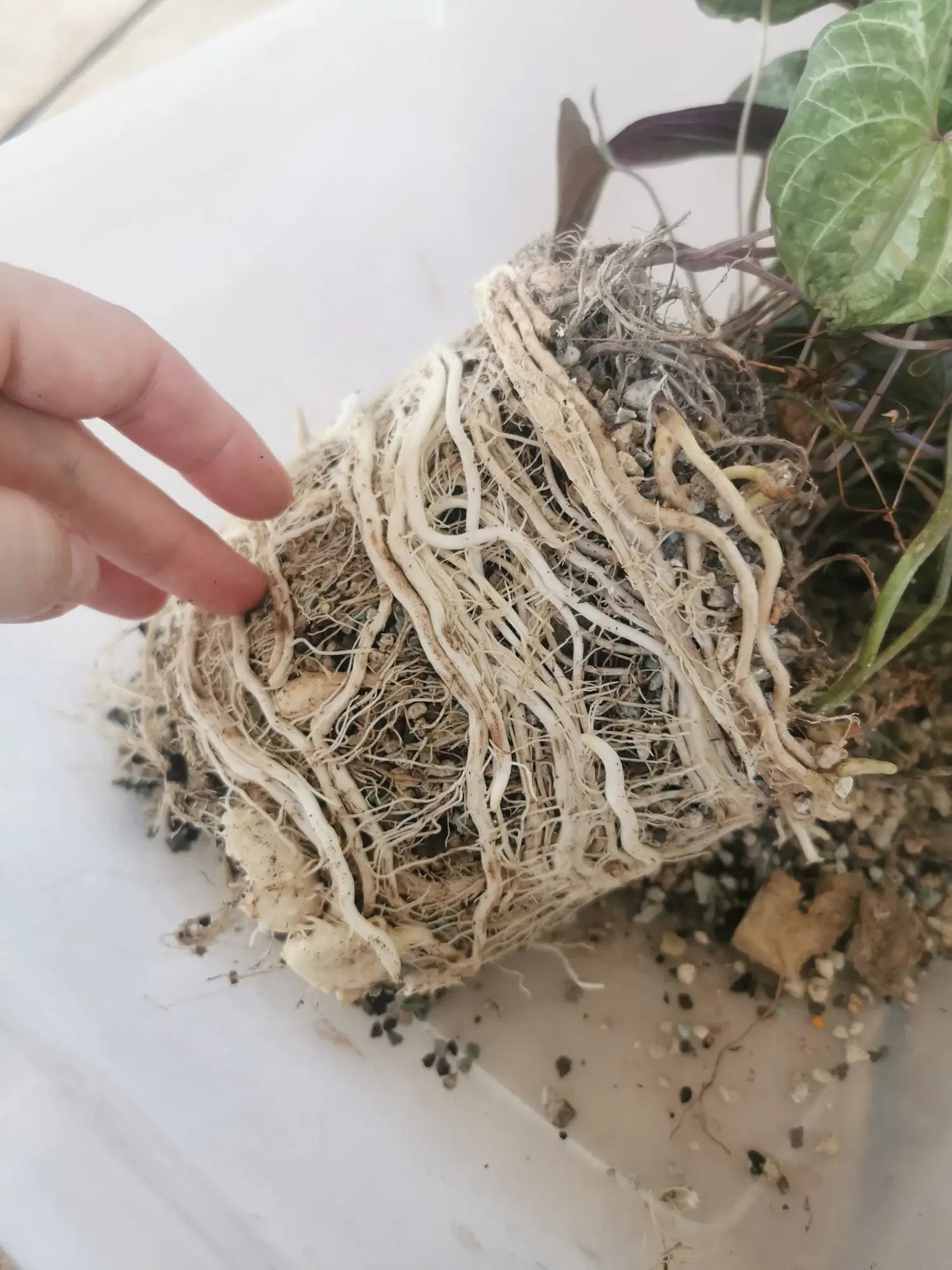
  • Gently slide the plant out of its pot and check for dense root mass

  • If roots form a tight coil or circle, it’s time to repot

  • Choose a pot 1–2 cm wider (not oversized)

  • Gently loosen or prune circling roots before replanting


Overpotting


While it’s tempting to give roots “room to grow,” pots that are too large create excess moisture zones. The soil stays wet for longer than the roots can manage — leading to poor oxygenation, microbial buildup, and rot.


Warning signs:

  • Soil stays wet for 5+ days

  • Brown tips appear even in high humidity

  • Lower leaves yellow and fall

  • Fungus gnats or sour smell from substrate


Fixes:

  • Repot into a container only slightly larger than the root mass

  • Use a coarse, airy substrate suited to your plant’s natural habitat

  • Ensure the pot has proper drainage — no cachepots without inner elevation


Root Rot and Oxygen Deprivation


When roots are damaged — whether by overwatering, compaction, or fungal infection — they can’t take up water, even when surrounded by it. This leads to classic symptoms of drought stress, including leaf tip browning, wilting, and slowed growth.


How to spot it:

  • Plant stays wilted despite moist soil

  • Leaf tips brown progressively

  • Roots appear black, mushy, or smell foul

  • Soil surface develops biofilm or green algae


Immediate steps:

  • Unpot and inspect the root system

  • Trim away rotted or dead sections

  • Rinse healthy roots and repot into fresh, well-aerated mix

  • Reduce watering and keep plant in bright, indirect light while it recovers


📌 If brown tips are paired with wilting or mushy stems, your issue might be below the surface.


Soil Compaction or Depleted Substrate


Even without visible root damage, old soil can restrict airflow and water movement, especially if it's:


  • Rich in fine peat particles

  • Never flushed or refreshed

  • Packed down by years of watering


This results in poor drainage and low oxygen at the root zone — leading to browning leaf tips and root stress symptoms.


Refresh strategy:

  • Repot annually for fast growers, every 2–3 years for slow growers

  • Use a mix appropriate to the species (e.g. airy aroid mix, sandy succulent mix)

  • Break up compacted soil gently, and flush out accumulated salts if not repotting


2.7 Chemical and Mechanical Damage — Invisible Triggers That Burn Leaves

Sometimes, the cause of brown leaf tips isn’t water, light, or nutrition — it’s something you touched, sprayed, or moved.


Chemical and mechanical injuries are often misdiagnosed, especially when the symptoms appear days or weeks after the actual event. But they follow a pattern — usually localized browning on certain leaves or specific areas — and they often happen suddenly, without other plant health issues.


This section explores five overlooked but common culprits.


Foliar Sprays and Phytotoxicity


Many indoor gardeners use neem oil, insecticidal soaps, or home remedies for pests or shine. While these can be effective, they can also cause phytotoxic burns if:


  • Used in strong concentrations

  • Applied under strong light

  • Combined with heat or low humidity


? What happens:

  • Oils or soaps form a film on the leaf surface

  • Heat or sun intensifies absorption or blocks stomatal function

  • Cells at the leaf tips or edges collapse — leading to dry, brown patches or curling


Especially common on: calatheas, palms, ferns, philodendrons, and variegated plants.


Prevention:

  • Never spray during midday or under grow lights

  • Always test a small leaf first

  • Use diluted formulas as directed — more isn’t better


Misting Under Strong Light


Misting isn’t inherently harmful — but mist droplets can act like magnifying glasses under sunlight or high-intensity artificial light. This can cause microscopic burn spots that merge into larger tip or edge damage.


This usually appears as:

  • Random tip or edge burn on freshly misted plants

  • Damage concentrated on the uppermost or most exposed leaves

  • No signs of root or nutrient problems


Safe misting:

  • Mist early in the morning or after lights are off

  • Avoid misting plants under high PAR lighting or in full sun

  • Use fine-mist bottles and focus on foliage that benefits (e.g. ferns)


Cleaning Products and Household Chemicals


Aerosol sprays, air fresheners, bleach, or even essential oils diffused near sensitive plants can cause leaf tissue dehydration and chemical burns.


Symptoms:

  • Random leaf edge browning on the side facing the exposure

  • Dry, papery, or curling tips with no root or light stress

  • Often accompanied by stalling of new growth or patchy yellowing


Safe practice:

  • Never spray anything near your plants unless it’s designed for them

  • Keep plants out of reach of cleaning zones, diffusers, or scented plug-ins

  • If exposed, gently rinse leaves with clean water and provide good airflow


Mechanical Damage — Handling, Shipping, or Brushing


Friction and impact — whether from transport, furniture, or even your hands — can bruise or break microscopic cells at the leaf tips. While it may look like dehydration, it’s actually physical trauma.


Look for:

  • Browning that begins at the exact point of contact (edges, folded tips)

  • One-sided damage (e.g. against a window, wall, or shelf)

  • Tips that dry and crack in a clean horizontal line


Tips:

  • Handle large-leaved plants gently during repotting or cleaning

  • Avoid pushing foliage against hard surfaces (e.g. placing under shelves)

  • If shipping or receiving plants, expect some tip damage — especially in variegated or soft-leaved species


Chemical Residue in Watering Cans or Tools


If you’ve ever used your watering can for fertiliser, pest control, or even household rinsing — and didn’t rinse it thoroughly — residues can end up in the pot.


This can trigger:

  • Isolated chemical burns

  • Soil pH imbalance

  • Localised tip browning on affected plants only


Recommendation:

  • Use separate, clearly labelled containers for plain water and fertiliser

  • Rinse tools, spouts, and nozzles after use

  • Avoid metal cans that can leach rust or minerals


Epipremnum giganteum leaf with a torn, browned tip and edge damage, close-up on white background
Not all brown tips are physiological — this Epipremnum giganteum shows mechanical damage from handling and movement.

3. How to Diagnose the Real Cause — A Step-by-Step Approach

Now that you’ve seen every major cause of brown leaf tips, the next question is: Which one is it in your plant?


Brown tips are a symptom — not a diagnosis. And because several issues can overlap or imitate one another, solving the problem starts with asking the right questions in the right order.


This section walks you through a structured, logic-based process to narrow down the most likely cause and take the right next steps.


Step 1 — Where Is the Browning Occurring?

Start by identifying which leaves are affected:

Affected Area

Most Likely Causes

New leaves only

Calcium deficiency, fast growth under stress, salt sensitivity

Older/lower leaves only

Potassium or magnesium deficiency, inconsistent watering

All leaves (old + new)

Fluoride or salt buildup, root problems, pH imbalance

Only one side or edge

Physical damage, chemical exposure, local draft or sunburn


Step 2 — What Does the Damage Look Like?

Describing the pattern can offer vital clues:

Symptom Description

Most Likely Triggers

Brown tips only

Salts, fluoride, dry air, uneven watering

Brown margins/edges

Potassium deficiency, pH imbalance, overfertilisation

Brown spots or patches

Sunburn, fungal issues, mechanical injury

Curling with brown tips

Low humidity, heat stress, nutrient imbalance


Step 3 — Check the Soil and Roots

The root zone is often the source of the issue — and it’s frequently overlooked.


Ask:


  • Does the soil stay soggy for days? → Overwatering or compacted mix

  • Does water run through without soaking in? → Rootbound

  • Is there a white crust on the soil or pot rim? → Salt accumulation

  • When was the last repotting? → Possible substrate breakdown or depletion


💡 If symptoms persist and you're unsure, unpot the plant and check the roots. Healthy roots are firm and pale. Black, mushy, or foul-smelling roots point to rot.


Step 4 — Review Water and Fertiliser Routine

  • Are you using tap water? → Check for fluoride, chlorine, hardness

  • Do you fertilise often? → Possible salt accumulation or nutrient burn

  • Do you rarely fertilise? → May be nutrient deficiency (K, Mg)

  • Do you flush the soil regularly? → If not, salts may be building up


💡 Consider testing your water’s pH and mineral content, especially if tip browning keeps recurring across multiple plants.


Step 5 — Audit the Plant’s Environment

Environmental factors often go unnoticed but can drive or worsen tip browning.


✓ Checklist:

☐ Is there a vent or draft nearby?

☐ Does light intensity match the species' needs?

☐ Is relative humidity consistently below 40%?

☐ Are you misting under grow lights or direct sun?

☐ Are strong fertilisers or aerosols used nearby?


💡 Sometimes the trigger isn’t in the soil or the watering can — it’s in the room.


Step 6 — Match and Confirm

Use a short matrix to cross-reference findings:

Observations

Top Suspects

Tips brown after repotting

Fertiliser burn, root disturbance

New leaves brown first

Calcium deficiency, high transpiration

Lower leaves show browning and yellowing

Potassium or magnesium deficiency

Soil crusty or old

Salt buildup, pH imbalance

Damage appears overnight

Drafts, physical or chemical damage

Same issue in several unrelated plants

Likely water quality or environmental

Close-up of a fern leaf with heavy tip browning on a black background
Ferns are especially prone to brown tips when exposed to fluctuating humidity or hard tap water.


4. What Actually Works — Proven Prevention and Real Fixes

Once you’ve identified the most likely cause of brown leaf tips, the next step is correction — not just treating the symptoms, but removing the underlying stress.


This section walks you through practical, effective solutions based on how plants actually function. Whether your issue is salt buildup, dry air, compacted roots, or nutrient imbalance — these strategies target the cause, not just the result.


4.1 Watering the Right Way

Watering isn’t just about frequency — it’s about depth, consistency, and context. Many tip problems arise from either underwatering, waterlogging, or irregular habits that swing between the two.


✓ Best Practices:

  • Water deeply and evenly until water flows from the bottom of the pot

  • Allow the substrate to partially dry — but not fully desiccate — before watering again

  • Use a finger test or moisture meter to check below the surface (not just the top layer)

  • Adjust watering to match seasonal light and temperature — not a strict calendar


✗ Avoid:

  • Splashy top-ups that barely moisten the root zone

  • Letting the plant dry until leaves collapse

  • Watering on autopilot without checking soil conditions


4.2 Improve Water Quality

Tap water quality varies dramatically — and many houseplants respond poorly to fluoride, high alkalinity, or softened water.


✓ What to do:

  • Use filtered, distilled, or rainwater for fluoride-sensitive plants (e.g. spider plant, calathea, dracaena)

  • Avoid softened water entirely — it contains sodium, which damages roots

  • If your tap water is hard (white crusts, cloudy residue), flush the soil monthly

  • Test your water’s pH and EC if browning persists across multiple plants


💡 Bonus tip: Mixing 50% tap water with rainwater can reduce mineral load while maintaining convenience.


📌Curious whether your tap water is helping or harming your plant?

Learn how to work with (or around) local water issues in our Ultimate Guide to Watering Houseplants — it covers more than just when to water.


4.3 Manage Fertiliser Wisely

Even the best fertiliser becomes harmful if overused, misapplied, or not flushed properly. Over time, salts accumulate and damage the sensitive tips and margins of leaves.


✓ Prevention and correction:

  • Fertilise only during active growth (spring–early autumn unless under grow lights year-round)

  • Use a balanced, complete fertiliser — not just nitrogen-heavy

  • Apply at half-strength monthly for most foliage plants

  • Flush the soil every 4–6 weeks to remove buildup


✗ Skip feeding entirely for 4–6 weeks if:

  • You notice salt crusts

  • Tip browning worsens after fertiliser use

  • The plant is recovering from transplant or root rot


📌 New to feeding houseplants and unsure where to start — or what “balanced” even means?

Check out our Beginner’s Guide to Fertilizing Houseplants for a clear, no-jargon walkthrough of when, what, and how to feed your plants properly.


📌 Overwhelmed by fertiliser choices — or not sure which one actually works?

Head to our deep dive on the Best Fertilizer for Houseplants to see which options support healthy growth without causing tip burn.


4.4 Optimise the Environment

Humidity, airflow, and light intensity all impact how fast your plant uses water — and how vulnerable the leaf tips are to stress.


✓ Smart environmental adjustments:

  • Keep humidity between 40–60% for most tropical houseplants

  • Place plants away from direct airflow from heaters, AC units, or open windows

  • Use sheer curtains to soften intense midday sun

  • Group plants together to create a microclimate

  • Use humidity trays or room humidifiers if ambient levels are consistently low


💡Reminder: Don’t rely on misting. It increases surface moisture for a few minutes, but doesn’t raise ambient humidity unless used constantly.

📌 If your space runs dry and your plants are showing it, it’s time to rethink how you manage humidity.

Mastering Humidity for Healthier Houseplants shows you what actually makes a difference — and what doesn’t.


4.5 Repot or Refresh the Substrate

If the soil is compacted, salt-laden, or breaking down, no amount of watering or feeding will help. In fact, keeping plants in stale mix often locks them into ongoing tip browning.


➜ When to act:

  • Repot annually for fast-growing plants

  • Repot every 2–3 years for slow growers or epiphytes

  • If repotting isn’t needed, flush the soil with clean water to remove salts

  • For semi-hydro systems, rinse leca or inert substrate monthly


➜ Choose substrates appropriate for the plant:

  • Chunky aroid mixes for philodendrons, monsteras

  • Fast-draining gritty mixes for succulents

  • Loose, airy peat-free blends for most tropical foliage


📌Not sure if it’s time to repot — or what mix to use when you do?

Start with our All-Inclusive Repotting Guide to repot with confidence, then head to the Ultimate Substrate Guide for help choosing the right mix.


4.6 Limit Chemical and Mechanical Exposure

Tiny stress events — like brushing against leaves, applying sprays in full sun, or using a contaminated watering can — can trigger brown tips without warning.


✗ Avoidable mistakes:

  • Spraying neem or insecticidal soap under grow lights

  • Using leaf shine or home remedies without testing

  • Mistiming pest control sprays (apply in shade, not on hot days)

  • Using watering cans previously filled with fertiliser or cleaner


Clean and rinse all tools regularly. Label watering cans used for feed vs. plain water. And when in doubt, spot-test first.


5. Bad Habits That Make It Worse — What to Stop Doing

When brown tips show up, most people try to fix the issue with quick, well-meaning solutions — misting, more fertiliser, or switching spots. But without understanding the root cause, these habits often make things worse.


This section highlights the most common routines and assumptions that exacerbate tip damage, not heal it.


5.1 Misting as a Cure-All

Misting is frequently recommended for dry-air symptoms — but it rarely solves humidity issues on its own. In fact, it can:


  • Trigger spotting or tipburn under strong light

  • Leave salt residues behind if using tap water

  • Encourage fungal growth in tight, low-airflow spaces


For hard water users, misting adds more minerals to the leaf surface — which dry and accumulate at the tips.


✓ What to do instead:

  • Focus on ambient humidity with a humidifier, grouped plants, or tray systems

  • If misting, use filtered water and avoid midday sun or grow lights

  • Never use misting as a replacement for proper watering or environment control


5.2 Overpotting to "Give Roots Room"

Using a pot that's too big for the current root ball often leads to:


  • Excess wet soil the roots can't absorb fast enough

  • Anaerobic zones that trigger root rot

  • Misleading signals — wet soil surface but dry inner core


Result: stressed roots, poor uptake, and brown tips from drought symptoms — despite apparent moisture.


Solution: Only increase pot size by 1–2 cm in diameter. Match pot depth to root mass and use breathable containers when possible.


5.3 Using Softened Water

This one is non-negotiable. Softened water contains sodium salts that accumulate in the root zone, displace calcium, and dehydrate root tissues.


Result: symptoms identical to drought or salt burn — but harder to diagnose because the watering routine seems "perfect."


Alternative: Use filtered, distilled, rainwater, or tap water before softening. Some systems offer bypass valves or separate taps for untreated water.


5.4 Feeding Without Flushing

Many houseplant owners feed regularly — but forget to flush the soil. Over time, even low-dose fertiliser builds up as salts, especially in:


  • Self-watering pots

  • Dense, organic-heavy soil

  • Containers never flushed with clean water


Excess salts reduce water availability at the root level — causing the very dehydration symptoms feeding was supposed to prevent.


💡 Tip: Every 4–6 weeks, flush pots with clean water until runoff is clear. Resume feeding once salts are removed.


5.5 Reusing Old Soil or “Topping Off” Forever

Adding new mix on top of old, compacted soil won’t fix structure or drainage. In fact, it can trap moisture, prevent proper drying, and add more nutrients into an already saturated zone.


Result: tip browning from salt stress, suffocated roots, and nutrient lockout.


Fixes:

  • Fully repot when soil becomes compacted or hydrophobic

  • Don’t keep layering fresh mix on top — address the root zone directly


Healthy-looking potted Spathiphyllum plant with uniform brown tips on all leaves
Even healthy Spathiphyllum can show widespread brown tips — often from fluoride or salt buildup, not just “dry air.”

6. Common Myths About Brown Leaf Tips — And What’s Actually True


Brown leaf tips are often met with blanket advice that sounds good — but doesn’t hold up under scrutiny. Misinformation can lead to wasted effort, misdiagnosis, and even more plant stress.


This section breaks down some of the most common myths you’ll see online or hear in plant communities — and what’s actually going on instead.


Myth 1: “Brown tips mean the plant is too dry”

Partly true — but incomplete.

While underwatering can lead to leaf tip browning, so can overwatering, poor drainage, salt buildup, and root rot. In fact, plants with waterlogged roots often display the same symptoms as drought-stressed plants — because the damaged roots can no longer absorb moisture.


What’s actually true:

You need to check both the watering routine and the root zone condition before assuming dryness is the problem.


Myth 2: “Humidity is the only cause”

False.

Low humidity can contribute to brown tips — especially in tropical foliage plants — but it's almost never the only factor. It often acts as a stress amplifier, making existing issues (like salts or poor substrate) more damaging.


What’s actually true:

Brown tips usually stem from compound stress — dry air plus salt accumulation, water imbalance, or nutrient transport issues.


Myth 3: “Just stop fertilising”

Risky generalisation.

Stopping fertiliser use cold turkey — especially for fast-growing species or plants under grow lights — can lead to deficiencies that make tip problems worse (like potassium, calcium, or magnesium shortage).


What’s actually true:

Reduce fertiliser only if overfeeding is confirmed, or switch to a balanced, low-EC formula. Always flush the substrate before pausing fertilisation.


Myth 4: “Misting fixes brown tips”

No, it doesn’t.

Misting only increases surface humidity for a few minutes. It doesn’t raise ambient levels unless done constantly. Worse, misting with hard water can leave mineral residues that concentrate on the tips and cause more browning.


What’s actually true:

Use a humidifier or room-level strategies to change air moisture. Mist only with clean water, and only when appropriate for the plant and environment.


Myth 5: “Cutting off the brown part will fix it”

Nope.

Cutting away brown tips improves appearance, but it doesn’t reverse the damage or solve the cause. In some cases, trimming too far into healthy tissue can even stress the leaf further.


What’s actually true:

Trim dead tissue conservatively if you want a cleaner look — but focus on correcting the underlying issue to stop further browning.


Myth 6: “Stop fertilising in winter”

Not necessarily.

If your plant is actively growing under artificial light or in a warm climate, it still uses nutrients. Blanket seasonal rules ignore how much indoor environments can vary.


What’s actually true:

Adjust feeding based on light and growth activity — not just the season. Reduce fertiliser when growth slows, but don’t stop blindly based on the calendar.


Philodendron leaf close-up with spider mite infestation and browning tips on a white background
Severe pest stress, like spider mites, can indirectly lead to tip browning — especially if roots or leaves are already stressed.

7. FAQs About Brown Leaf Tips — Quick Answers to Common Questions

This section addresses the most frequent questions houseplant owners have about tip browning — from trimming techniques to plant-specific sensitivities. These short, fact-based answers cut through confusion and give you immediate clarity.


Q1: Should I cut off the brown tips?

Yes — but only for aesthetics.


Trimming won’t stop the cause of browning, and it doesn’t “heal” the leaf. But if the brown tissue bothers you visually, you can:


  • Use sharp scissors

  • Cut along the natural shape of the leaf

  • Leave a thin margin of dead tissue to avoid stressing the healthy part


💡 Never cut into green tissue unless you’re removing an entire leaf.


Q2: Can a leaf recover once the tip turns brown?

No. Once the tissue is dead, it cannot regenerate. The goal is to prevent new leaves from developing tip damage, not to reverse it on old ones.


Q3: Why are only my newest leaves affected?

Likely calcium deficiency, high transpiration, or tipburn from fast growth .Calcium moves with water — but only to the newest tissue. If the plant is growing rapidly under bright light and dry air, tip damage may appear only in new foliage.


Q4: Why are older leaves browning at the edges first?

Possibly potassium or magnesium deficiency — or inconsistent watering.


Older leaves are where mobile nutrients like K and Mg are pulled from first. If the edges yellow and brown on mature leaves, consider adjusting your fertiliser routine and checking for overwatering.


Q5: Why are all my plants showing brown tips at once?

Check your water quality or environment.


When multiple unrelated plants develop brown tips at the same time, the problem usually points to a shared factor:


  • Fluoride or chlorine in tap water

  • Salt buildup in soil

  • Extremely low humidity

  • Recent change in heating, ventilation, or cleaning products


Q6: Can pests cause brown tips?

Rarely.


Most pests cause spots, webbing, distortion, or holes — not uniform browning at the tips. However, severe infestations that stress the root system (e.g. root mealybugs) can contribute to tip damage indirectly.


Q7: Are some plants more sensitive than others?

Absolutely.


Some plants are genetically more prone to tip browning — especially those with:


  • Thin, soft leaves (Calathea, Maranta, ferns)

  • High transpiration rates (Spider plant, Dracaena)

  • Fine root systems that are easily disrupted (Peace lilies, palms)


These species require more attention to water quality, humidity, and environmental consistency.


Calathea plant in a white pot with widespread browning on tips and edges, neutral background
When all tips are affected, like on this Calathea, the cause is usually systemic — not cosmetic. Start by checking water, salts, and substrate.

8. Recap and Final Takeaways — How to Stop Brown Tips for Good

Brown leaf tips may seem like a minor cosmetic issue — but they often signal deeper problems in watering, root health, nutrients, or environment. If left unaddressed, they can escalate into leaf loss, slowed growth, or even plant death in sensitive species.


Let’s summarise what you’ve learned and what actions to prioritise moving forward.


Brown Tips = Symptom, Not a Diagnosis


📌 Always remember: tip browning is a visual clue, not a root cause. The real trigger could lie in:


  • Root stress (overwatering, rot, compaction)

  • Water quality (fluoride, chlorine, sodium, hardness)

  • Nutrient imbalance (especially potassium, calcium, magnesium)

  • Salt buildup from fertilisers or soft water

  • Low humidity that exacerbates underlying problems

  • Environmental stress (heat, light, drafts, or chemical exposure)


5 Fixes That Actually Work

  1. Test and improve water quality — use filtered, rain, or distilled water if needed

  2. Flush the soil regularly — every 4–6 weeks with plain water to remove salts

  3. Adjust fertiliser routines — reduce frequency if salts accumulate, but don’t starve growing plants

  4. Check the roots and substrate — compacted, soggy, or degraded mix leads to chronic stress

  5. Address humidity strategically — raise ambient levels when needed, especially in winter


💡 Prevention Is Easier Than Repair

Once tips are brown, that tissue won’t recover. Focus on:


  • Avoiding future stress

  • Monitoring new growth for improvement

  • Keeping your plant’s environment consistent and well-adapted to its needs


Don’t chase symptoms — investigate patterns, habits, and environmental context. That’s where long-term plant health is built.


9. Glossary

Term

Definition

Apex necrosis

Death of tissue at the leaf tip — the scientific term for “brown tips.”

Buffer capacity

The ability of a substrate to resist changes in pH or nutrient levels; higher in organic soils, lower in mineral/inert mixes.

Calcium deficiency

A shortage or uptake issue causing browning, curling, or malformation in young leaves, especially during active growth.

Chlorine toxicity

Damage caused by chlorine in tap water; can result in tip browning or yellow halos in sensitive plants.

EC (Electrical Conductivity)

A measure of total dissolved salts in a substrate or water; high EC indicates high salt levels and potential osmotic stress.

Fertigation

Feeding plants through diluted nutrient solution during watering; common in hydro and semi-hydro setups.

Fluoride toxicity

Tip browning caused by fluoride in water; common in spider plants, Calathea, Dracaena.

Humidity

Moisture in the air; low levels can worsen tip burn caused by other stressors, but are rarely the sole cause.

Inert substrate

Growing medium with no nutrients or decomposition — e.g. LECA, pon, pumice; requires full control of watering and feeding.

Ion toxicity

Damage from excess mineral ions (e.g. sodium, fluoride, chloride); can interfere with water uptake.

Leaf margin necrosis

Death of tissue along the leaf edges, often from salt stress, overfeeding, or inconsistent watering.

Leaching

Flushing the pot with water to remove salts and residues that can lead to tip damage.

Mobile nutrient

A nutrient that can move within the plant to where it's needed most; deficiency symptoms appear in older leaves first.

Necrosis

Dead tissue that appears brown or black; irreversible and often a symptom of underlying problems.

Nutrient burn

Leaf tip or edge browning caused by excessive fertiliser use, especially with strong or frequent feeding.

Osmotic stress

Occurs when salt outside the roots pulls water away from the plant, causing dehydration and brown tips.

pH

A measure of acidity or alkalinity; affects nutrient availability in water and soil.

Root zone

The area around the roots, including the substrate and water environment; most problems that cause brown tips start here.

Salt buildup

Accumulated fertiliser salts and minerals in the substrate that lead to tip burn and root stress over time.

Semi-hydroponics

Growing in inert substrates with a water reservoir; allows precise control but increases risk of nutrient imbalance.

Substrate

The plant’s growing medium (soil, LECA, pon, etc.); substrate type affects water retention, pH, and nutrient delivery.

Tip burn

A visual symptom of stress — brown, dried-out tips — that can have multiple causes, not just humidity.

Transpiration

The release of water vapor from leaves; affected by humidity, temperature, and stress.


10. Sources and Further Reading:


  1. Bulatovic-Danilovich, M. (2022, August 30). Leaf scorch. West Virginia University Extension. https://extension.wvu.edu/lawn-gardening-pests/plant-disease/landscape-tree-disease/leaf-scorch


  2. Colorado State University Extension. (n.d.). Houseplants: Temperature & humidity (PlantTalk #1317). Colorado Master Gardener Program. https://planttalk.colostate.edu/topics/houseplants/1317-houseplants-temperature-humidity/


  3. Ertle, J., & Kubota, C. (2023). Testing cultivar-specific tipburn sensitivity of lettuce for indoor vertical farms. HortScience, 58(10), 1257–1266. 10.21273/HORTSCI17313-23


  4. Iowa State University Extension and Outreach. (2025, July 1). Why does my houseplant have brown leaf tips and edges? Yard and Garden. https://yardandgarden.extension.iastate.edu/faq/why-does-my-houseplant-have-brown-leaf-tips-and-edges


  5. Jenni, S., & Hayes, R. J. (2010). Genetic variation, genotype × environment interaction, and selection for tipburn resistance in lettuce. Euphytica, 171(3), 427–439. 10.1007/s10681-009-0075-5


  6. Missouri Botanical Garden. (n.d.). Why does my indoor plant have leaves with brown tips? Gardening Help FAQ. https://www.missouribotanicalgarden.org/gardens-gardening/your-garden/help-for-the-home-gardener/advice-tips-resources/gardening-help-faqs/question/1578/why-does-my-indoor-plant-have-leaves-with-brown-tips


  7. Pennisi, B. V. (2022). Growing indoor plants with success (Bulletin 1318). University of Georgia Cooperative Extension. https://extension.uga.edu/publications/detail.html?number=B1318


  8. Royal Horticultural Society. (n.d.). Nutrient deficiencies. RHS Gardening. https://www.rhs.org.uk/prevention-protection/nutrient-deficiencies


  9. Trinklein, D. (2021, January 25). Leaf tipburn on houseplants. University of Missouri Integrated Pest Management. https://ipm.missouri.edu/meg/2021/1/leafTipburn-DT/


  10. University of Maryland Extension. (2023, March 10). Watering indoor plants. https://extension.umd.edu/resource/watering-indoor-plants


  11. Wollaeger, H. (2015, February 20). Fluoride toxicity in plants irrigated with city water. Michigan State University Extension. https://www.canr.msu.edu/news/fluoride_toxicity_in_plants_irrigated_with_city_water


  12. Schippers, J. H. M., Schmidt, R., Wagstaff, C., & Jing, H.-C. (2015). Living to die and dying to live: The survival strategy behind leaf senescence. Plant Physiology, 169(2), 914–930. https://doi.org/10.1104/pp.15.00498[PMC: https://www.ncbi.nlm.nih.gov/pmc/articles/PMC4587445/]


  13. Royal Horticultural Society. (n.d.). Leaf damage on houseplants. RHS Gardening. Retrieved August 3, 2025, from https://www.rhs.org.uk/prevention-protection/leaf-damage-on-houseplants


  14. Cejudo, F. J., Sandalio, L. M., & Van Breusegem, F. (2021). Understanding plant responses to stress conditions: Redox-based strategies. Plant Physiology and Biochemistry, 169, 1–15. https://www.ncbi.nlm.nih.gov/pmc/articles/PMC8355751/


  15. Sangwan, D., & Taqa, A. R. (2023). Understanding the mechanisms of plant stress responses to environmental changes. Enhanced Research Publications. https://www.researchgate.net/publication/383942842_Understanding_the_Mechanisms_of_Plant_Stress_Responses_to_Environmental_Changes


  16. Mudasir, M., & Shahzad, A. (2025). Decoding plant responses to waterlogging: From stress signals to molecular mechanisms and their future implications. Plant Molecular Biology, 115(4), 78. https://doi.org/10.1007/s11103-025-01611-8

bottom of page