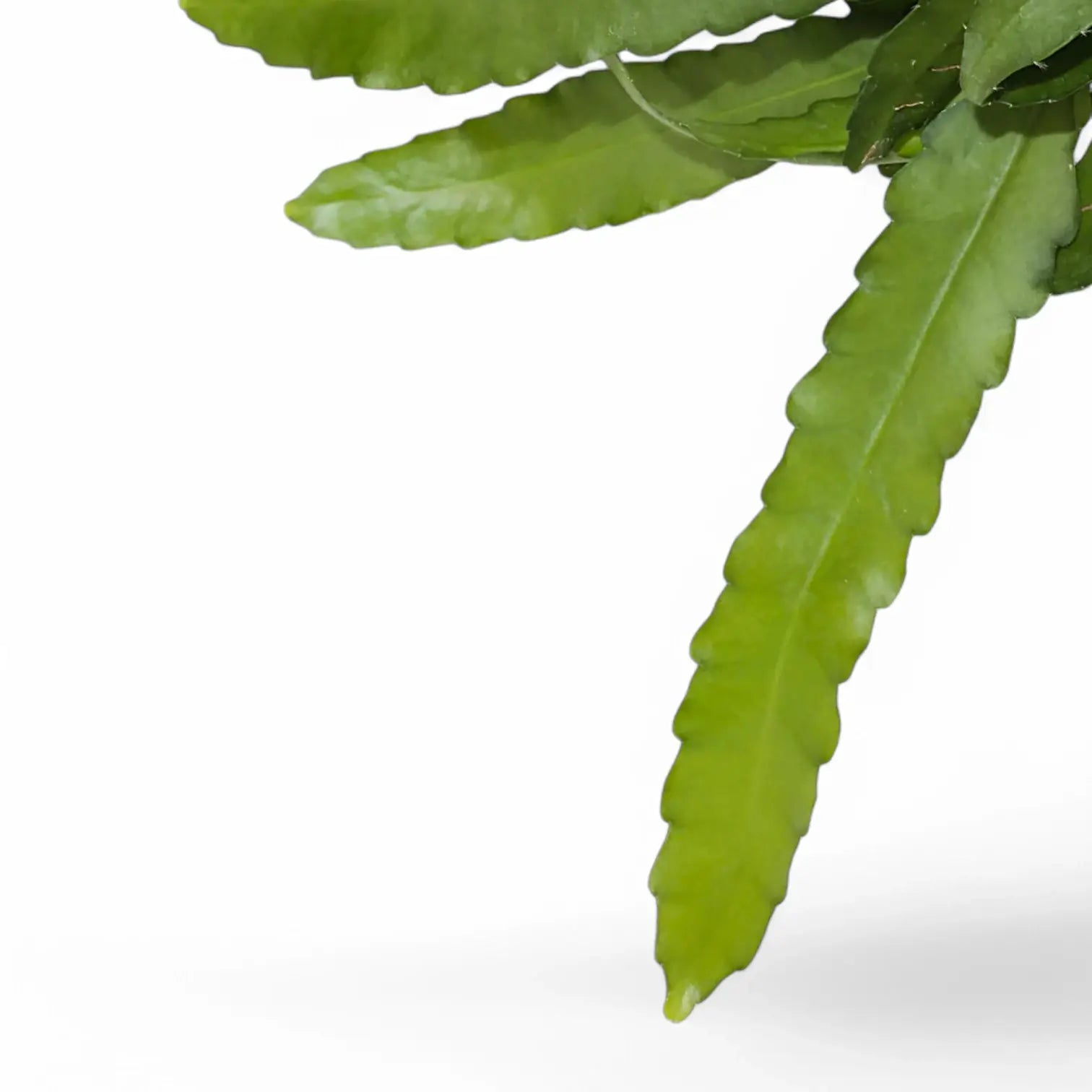
Epiphyllum: orchid cacti for hanging drama indoors
Epiphyllum in a nutshell-fast facts
- Growth style: flat or angled, often lobed stems that arch and trail, not spiky desert balls.
- Speed: moderate; segments form in bursts, older plants can spill gracefully over a pot or shelf.
- Flowers: large, short-lived blooms, often opening at night-you grow Epiphyllum for big “events”, not continuous colour.
- Key needs: bright, filtered light; loose epiphytic mix; deep watering followed by a real drying phase.
- Best role: architectural orchid cactus houseplant for hanging spots and high shelves in bright rooms.
Is Epiphyllum realistic for your setup?
Good match if:
- You have at least one bright, indirect-light window or a solid grow-light setup.
- You’re happy to water less often, but properly-soak, drain, then leave it alone until the mix really needs more.
- You like plants that stay in one pot for years and don’t mind waiting for flowering size.
More headache if:
- Most windows are small, shaded or blocked and you are not using grow lights.
- You prefer to keep soil constantly damp “just in case”.
- If you are looking for flowers every few weeks all year-Epiphyllum does short, intense shows, not permanent bloom.
Forest epiphyte, not desert cactus-why it changes the way the plant behaves
In habitat, Epiphyllum roots into pockets of leaf litter on trees or rocks across tropical and subtropical America. Roots sit in a thin, crumbly layer on bark or stone, with air everywhere and water passing through quickly after rain. Light is bright but filtered by canopy; air is humid, but there is almost always a breeze.
In a pot, that translates to “humus on a branch,” not a bucket of compost. You want a shallow container, very loose epiphytic mix and watering that drenches everything and then lets it breathe again. If you like the anatomy and physics of this kind of setup, our epiphytes vs soil guide is basically written for plants like Epiphyllum.
Light for Epiphyllum: bright, soft, and mostly from the side
Ideal light is strong but filtered. Good spots:
- Near an east-facing window with direct morning sun and bright shade later.
- A step back from a bright south or west window where stems see sky, not magnifying-glass midday beams.
- Under LED grow lights dialled to bright-indirect levels for 10-12 hours daily.
Too little light gives long, thin segments, wide gaps and very reluctant flowering. Too much hard sun, especially on a plant that just came from softer light, produces yellow, rough or corky patches along the exposed edges. If you want to get precise instead of guessing, the window tests in our bright-indirect light guide will tell you exactly which sill is a match.
Watering Epiphyllum: soak properly, then let it think
Epiphyllum wants a full drink, then space. A simple four-step rhythm:
- Wait until the top few centimetres of mix are dry and the pot is markedly lighter in your hand.
- Water slowly until substrate is fully soaked and water runs from drainage holes.
- Let the pot drain completely; no sitting in saucers.
- Leave it alone until that “light pot / dry top” point returns.
Repeated deep drought shrivels segments and can stall growth for months; constant wet, especially in a dense mix, is a fast track to rot starting at the base. If you like systems rather than guesswork, adapt the checks in our watering-houseplants deep dive to this “epiphytic cactus”: fewer waterings, but each one deliberate.
Building an Epiphyllum mix that forgives mistakes
A workable indoor Epiphyllum mix behaves more like orchid substrate than standard potting soil. Aim for:
- Base: a modest amount of peat-free indoor or cactus mix, just enough to hold some nutrients.
- Structure: plenty of fine orchid bark or coco chips to mimic loose forest debris.
- Mineral fraction: pumice, perlite or lava grit so water can move fast and air pockets stay open.
When you squeeze a handful, it should spring back, not smear into paste. If water sits on top for ages or the pot feels heavy and clammy days after watering, structure is wrong. Our drainage vs aeration guide explains why “fast draining” is really shorthand for “lots of oxygen around roots.”
Temperature, humidity and airflow-what orchid cacti actually want
Epiphyllum is content in typical warm indoor ranges, about 18-25 °C, with slightly cooler nights. Brief dips down near 10-12 °C are usually tolerable if the mix is close to dry, but cold and wet together are what damage roots and bases. Avoid parking pots pressed against very cold winter glass or above radiators where the substrate bakes.
Humidity around 40-60 % is usually fine indoors. A bit more makes buds and new segments happier, but “foggy terrarium” humidity is not mandatory. What is mandatory is air that actually moves: hanging stems should dry within a few hours after watering. Stagnant, damp air around a wet mix is exactly where fungal issues and rot begin.
Growth pattern, flowering and feeding over time
Epiphyllum builds a framework first, then treats you to flowers. Young plants add flat or angled segments from the tips; once they are mature and well lit, flower buds form along the edges of older segments. Many hybrids bloom once or twice a year if conditions are right, with individual flowers often spectacular and short-lived.
Feeding needs are moderate. During active growth and bud formation, use a balanced fertiliser at reduced strength occasionally on already moist mix. Strong, frequent feeding into dense, wet substrate just invites soft growth and rot; shape and flowering are driven far more by light and structure than by high nutrient numbers.
What you may notice from Epiphyllum after shipping
After a few days in a box, Epiphyllum rarely looks perfect. Segments may arrive with crease lines, a few scuffs or some slightly limp tips. One or two older pieces can yellow and drop as the plant adjusts to new light and humidity. That is transit and acclimatisation talking, not an instant verdict on your care.
Once unpacked, remove segments that are clearly snapped or rotting, then give the pot a single thorough watering if the mix has dried significantly. Put the plant straight into its long-term bright, filtered position instead of moving it around weekly. Skip repotting until you see new segments and roots; our acclimatisation guide shows how that “pause, then restart” phase looks across many species.
Epiphyllum troubleshooting-reading the stems
- Segments limp and wrinkled, pot very light: classic underwatering. Soak the mix thoroughly once, drain well and shorten the dry gap slightly next time.
- Bases soft, dark and wobbly in a wet pot: root or stem rot from airless, saturated mix. Unpot, cut back to firm tissue and reset into a much airier substrate, then water more cautiously while new roots form.
- Segments turning red, bleached or rough on one side: sunburn from sudden strong light or hot glass. Move the plant further from the window or add sheer fabric; increase exposure more gradually in future.
- Buds form but dry and drop before opening: often temperature swings, relocation or watering that flips between extremes. Keep light, moisture and position steady during bud formation.
- Very long, thin, pale segments: light is nowhere near sufficient. Shift to a brighter window or under a proper grow light, and treat future watering as “epiphytic cactus in bright shade,” not “low-light foliage plant.”
Back to top and choose the Epiphyllum that fits your bright filtered light and the steadier watering it prefers ↑