
Light
Bright indirect • approx. 10,000–20,000 lux


VAT included · plus
Quick overview of our standard shipping rates, free-shipping thresholds and typical transit times for the countries we currently serve. Remote-area surcharges for certain postcodes are added automatically at checkout where applicable.
For full details, winter shipping rules and packaging information, please visit our Shipping & Delivery page.
| Country | Shipping | Free from | Transit time |
|---|---|---|---|
| Austria | € 12.95 | € 100 | 2–4 working days |
| Belgium | € 8.95 | € 100 | 1–2 working days |
| Bulgaria | € 21.95 | € 300 | 5–7 working days |
| Croatia | € 29.95 | € 300 | 5–7 working days |
| Cyprus (²) | € 39.95 | No free shipping | 5–7 working days |
| Czechia | € 16.95 | € 150 | 2–4 working days |
| Denmark (¹) | € 16.95 | € 150 | 2–4 working days |
| Estonia | € 18.95 | € 200 | 2–4 working days |
| Finland | € 29.95 | € 300 | 5–7 working days |
| France (¹) | € 12.95 | € 100 | 2–4 working days |
| Germany | € 8.95 | € 70 | 1–2 working days |
| Greece (¹²) | € 29.95 | € 300 | 5–7 working days |
| Hungary | € 18.95 | € 200 | 2–4 working days |
| Ireland | € 14.95 | € 150 | 2–4 working days |
| Italy (¹) | € 14.95 | € 150 | 2–4 working days |
| Latvia | € 18.95 | € 200 | 5–7 working days |
| Lithuania | € 18.95 | € 200 | 2–4 working days |
| Luxembourg | € 12.95 | € 100 | 1–2 working days |
| Malta (²) | € 39.95 | No free shipping | 5–7 working days |
| Netherlands | € 8.95 | € 100 | 1–2 working days |
| Poland | € 12.95 | € 100 | 2–4 working days |
| Portugal (¹) | € 14.95 | € 150 | 2–4 working days |
| Romania | € 21.95 | € 300 | 5–7 working days |
| Slovakia | € 18.95 | € 200 | 5–7 working days |
| Slovenia | € 18.95 | € 200 | 5–7 working days |
| Spain (¹) | € 14.95 | € 125 | 2–4 working days |
| Sweden | € 18.95 | € 200 | 2–4 working days |
| Switzerland | € 29.95 | € 300 | 5–7 working days |
Secure shipping – carefully packed orders with safe delivery across the EU, UK and Switzerland.
28-day plant guarantee – if a plant arrives damaged or fails soon after delivery, we help you make it right.
Free returns – simple, cost-free returns according to our policy.
For full details, please see:
Light
Bright indirect • approx. 10,000–20,000 lux
Watering
Water when ~20–35% dry
Potting mix
Fine but airy • Moisture-buffered • Balanced • Fine
Temperature
Ideal: 18–24 °C • Avoid below: 15 °C
Growth habit
compact rosette clumper
Support
none
Growth speed
Average
Max size indoors
Max. height: 20 cm • Max. spread: 30 cm
Toxicity & safety
Non-toxic & Pet Friendly
Origin & habitat
Tanzania & Kenya; montane tropical biome
These metrics are standardised reference points. We compile them by reviewing and cross-checking multiple botanical and horticultural references, then refining them through real-world growing experience. Source links: Plant Care Resources.
Please use the values as guidance. Conditions vary by home, so the same plant can respond differently. For plant-specific context, read the full product description and browse our Plant Care Guides.
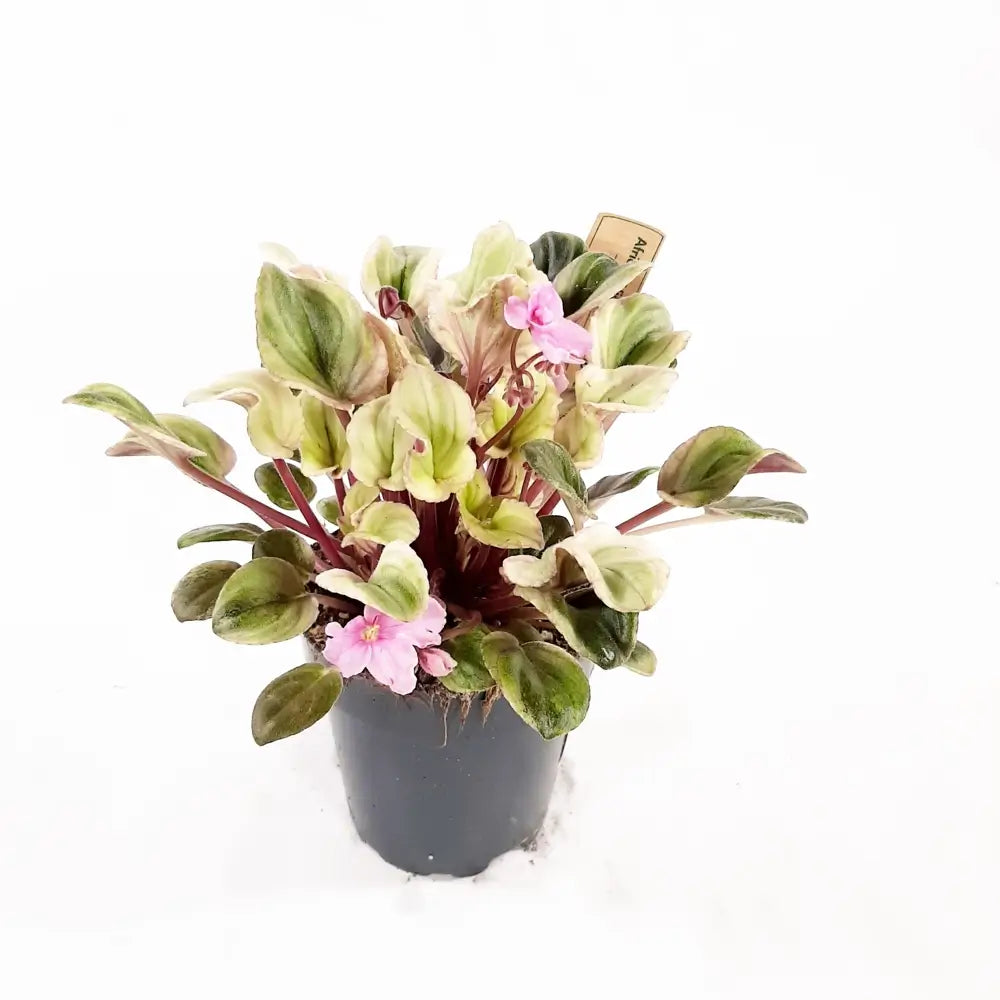
Streptocarpus sect. Saintpaulia ‘Tiamat’ (often called African violet ‘Tiamat’) is prized for its unusual foliage and delicate charm. Velvet-textured leaves, crisp edges, and frequent flowering make it a standout in compact indoor collections.
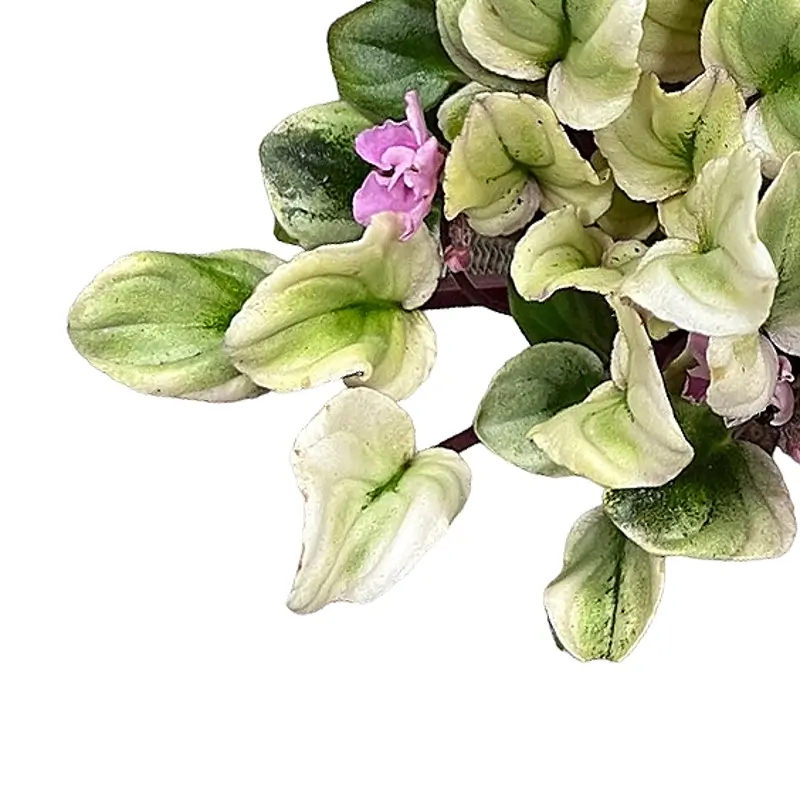
Leaves are velvety, slightly ruffled or wavy at the edges, forming a tight rosette. Foliage tends to be medium-green, occasionally showing lighter veins or subtle sheen (depending on light). Its floral display is typical for violets: small clusters of five-lobed blooms in soft colours. Plant size stays compact – rosette diameter approx 15-20 cm, height (including blooms) ~ 12-22 cm in pot. Flowers may be semi-double or single depending on cultivar line.
‘Tiamat’ belongs to Streptocarpus sect. Saintpaulia (formerly genus Saintpaulia), part of family Gesneriaceae. These plants are native to Tanzania and southeastern Kenya, often in shaded understory or on moist rocks in forests. Wild species are typically rosette-forming, with soft, hairy (velvety) leaves adapted to filtered light. The section includes about ten species. ‘Tiamat’ is a horticultural cultivar bred for leaf form, texture and flowering.
Saintpaulia ‘Tiamat’ is valued for its leaf texture and flowering potential rather than size. Flowers may come in shades of pink, purple or white depending on breeding line. Because of delicate leaves, handle gently – velvety surface damages easily. Plants bloom repeatedly when conditions are stable. Non-toxic generally, although leaves are fuzzy and soil should be kept clean to avoid fungal issues. Collectors prize ‘Tiamat’ for its leaves + flower combo in a modest footprint.
The group name Saintpaulia (now Streptocarpus sect. Saintpaulia) was named after Baron Walter von Saint Paul-Illaire, collector in East Africa. Section includes species once classified under Saintpaulia. Cultivar ‘Tiamat’ likely chosen for mystical or exotic connotation (name referring to mythic dragon or chaos figure), emphasizing its striking appearance. Kind of naming that draws on appearance and sensation rather than botanical traits.
Looking for a charming violet with velvet leaves, gentle blooms and a modest footprint? Order Saintpaulia ‘Tiamat’ now and enjoy a perennial bloom-cycle and delicate beauty in your indoor space.
Your new plant has just travelled a long way and needs a calm start in its new home. For step-by-step unboxing and first-week care, check our after-delivery care guide. For deeper tips on how your plant settles in over the next weeks, read our houseplant acclimatization guide.
Please head to our FAQ Page or Contact us.
Choose options
VAT included · plus Shipping costs
Secure shipping – carefully packed orders with safe delivery across the EU, UK and Switzerland.
28-day plant guarantee – if a plant arrives damaged or fails soon after delivery, we help you make it right.
Free returns – simple, cost-free returns according to our policy.
For full details, please see:
Light
Bright indirect • approx. 10,000–20,000 lux
Watering
Water when ~20–35% dry
Potting mix
Fine but airy • Moisture-buffered • Balanced • Fine
Temperature
Ideal: 18–24 °C • Avoid below: 15 °C
Growth habit
compact rosette clumper
Support
none
Growth speed
Average
Max size indoors
Max. height: 20 cm • Max. spread: 30 cm
Toxicity & safety
Non-toxic & Pet Friendly
Origin & habitat
Tanzania & Kenya; montane tropical biome
These metrics are standardised reference points. We compile them by reviewing and cross-checking multiple botanical and horticultural references, then refining them through real-world growing experience. Source links: Plant Care Resources.
Please use the values as guidance. Conditions vary by home, so the same plant can respond differently. For plant-specific context, read the full product description and browse our Plant Care Guides.


%20is%20prized%20for%20its%20unusual%20foliage%20and%20delicat...)