Alocasia 'Dragon Tail' – Rare Curled-Leaf Statement Plant

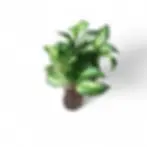
Alocasia 'Dragon Tail' is an extraordinary indoor plant that instantly captures attention with its dramatic, inward-curled leaves. The long, narrow blades twist in unpredictable spirals, giving this cultivar its signature dragon-tail silhouette. Compact yet bold, this plant is a true collector’s piece for anyone seeking an exotic, sculptural element for modern interiors.

● What Makes Alocasia 'Dragon Tail' Stand Out?
- Eye-Catching Foliage: Leaves curl inward in irregular spirals, creating a kinetic, tail-like effect.
- Rare Mutation: Believed to be a tissue-culture chimera, making it highly sought after by collectors.
- Compact Growth: Upright habit fits perfectly into smaller spaces while still making a bold statement.
● Provenance and Genetic Mystery
The origin of Alocasia 'Dragon Tail' remains unclear. It is widely thought to be a chimera mutation developed through tissue culture, though no genetic verification or official cultivar registration exists. Many sellers compare it to Alocasia cucullata 'Crinkles' due to their curled foliage, but subtle differences suggest they may not be the same plant:
- 'Dragon Tail': Very dark green, narrow blades with irregular, inward curling and a striking sculptural appearance.
- 'Crinkles': A cucullata form with lighter green tones and more uniform, ruffled margins rather than erratic spirals.
Our view: While often marketed as interchangeable, we believe they are distinct. 'Crinkles' shows consistent curl patterns, whereas 'Dragon Tail' has more chaotic twists and a deeper leaf tone. No official genetic studies confirm or deny this relationship.
● Natural Range and Botanical Context
Alocasia belongs to the family Araceae and originates from tropical Asia and the Malesian region, where species thrive in shaded, humid rainforest floors. While 'Dragon Tail' is a man-made cultivar, it shares the environmental preferences of its wild relatives.
● Care Tips for Alocasia 'Dragon Tail'
- Light: Bright, indirect light ensures strong, healthy growth. Avoid prolonged direct sun.
- Watering: Water when the top 2 – 3 cm of substrate is dry. Keep evenly moist but never waterlogged.
- Humidity: Prefers 60% or higher for stable foliage; a consistent microclimate is key.
- Temperature: Ideal range is 20 – 28°C; avoid sudden drops or drafts.
- Soil: Use an airy mix with perlite or bark for excellent drainage and oxygenation.
- Fertilizer: Apply a balanced liquid fertilizer every 4 weeks during active growth.
- Repotting: Every 1 – 2 years in spring when rootbound; refresh the substrate for best results.
- Propagation: Best done by division during repotting; include viable roots and a growth point.
- Semi-Hydro Option: Performs well in inert substrates if moisture is maintained consistently.
● Styling Ideas for Alocasia 'Dragon Tail'
Highlight its sculptural form by pairing with minimalist planters or placing on plant stands where its curled leaves can cascade visually. Works beautifully as a standalone centerpiece or alongside other bold-leaf aroids for a high-contrast display.
● Common Issues and Quick Fixes
- Excessive Curling: Some curl is normal; severe curling can indicate low humidity or underwatering.
- Yellowing Leaves: Often caused by overwatering or poor drainage. Check soil aeration and pot size.
- Pests: Monitor for spider mites in dry conditions. Wipe leaves regularly and treat promptly if spotted.
● Additional Notes for Collectors
Alocasia 'Dragon Tail' is a plant for those who love the unconventional. Its rarity stems from tissue culture complexity and its dramatic look makes it a focal point in any plant collection. Growth is moderate, and mature plants typically reach 40 – 60 cm indoors.
● Etymology and Botanical Details
The genus Alocasia derives from the Greek “a-” (without) combined with Colocasia, a related genus. The name “Dragon Tail” reflects its sinuous, curling leaf structure that mimics a dragon’s tail in motion.
● FAQs: Everything You Wanted to Know
- Is 'Dragon Tail' the same as 'Crinkles'? There’s no proof. They share traits, but color and curl patterns differ significantly.
- Does it flower indoors? Rarely. If it blooms, expect a small spadix typical of Araceae plants.
- Can it handle low light? No, low light leads to weak growth and leaf distortion.
- Why is it so rare? Its unusual mutation and slow propagation make it a collector’s item.
- Does it go dormant? Indoors, it rarely goes fully dormant; growth just slows under lower light.
Order your Alocasia 'Dragon Tail' today and give your home a bold, artistic edge!
Alocasia 'Dragon Tail'
Alocasia 'Dragon Tail'comes in following sizes:
L –comes in a ⌀ 14 ⌀ nursery pot and is approximately 70 cm tall.
XL – comes in a ⌀ 23 ⌀ nursery pot and is approximately 120 cm tall.