Light
Full sun / direct • approx. 40,000–80,000 lux

Buy 4 plants, get 1 free
VAT included · plus
Your new plant has just travelled a long way and needs a calm start in its new home. For step-by-step unboxing and first-week care, check our after-delivery care guide. For deeper tips on how your plant settles in over the next weeks, read our houseplant acclimatization guide.
Secure shipping, carefully packed orders with safe delivery across the EU, UK and Switzerland.
28-day plant guarantee, if a plant arrives damaged or fails soon after delivery, we help you make it right.
Free returns, simple, cost-free returns according to our policy.
For full details, please see:
Please head to our FAQ Page or Contact us.
Quick Care Guide
Light
Full sun / direct • approx. 40,000–80,000 lux
Watering
Water when ~90–100% dry
Substrate
Gritty • Ultra fast-draining • Mineral-heavy • Fine-medium
Temperature
Ideal: 18–30 °C • Avoid below: 10 °C
Humidity
Normal 40–50 %
Growth habit
Upright succulent shrub or tree.
Support
not needed
Growth speed
Average
Max size indoors
Max. height: 300 cm • Max. spread: 150 cm
Toxicity & safety
Toxic
Origin & habitat
Native from northeastern Sudan to Somalia
Outdoor growing
Outside from 12 °C · sheltered spot
These care values are quick reference points for indoor growing. Use them as a guide, then adjust for pot size, substrate, temperature and how quickly the substrate dries.
For more detail, read the full product description or visit our Plant Care Guides.
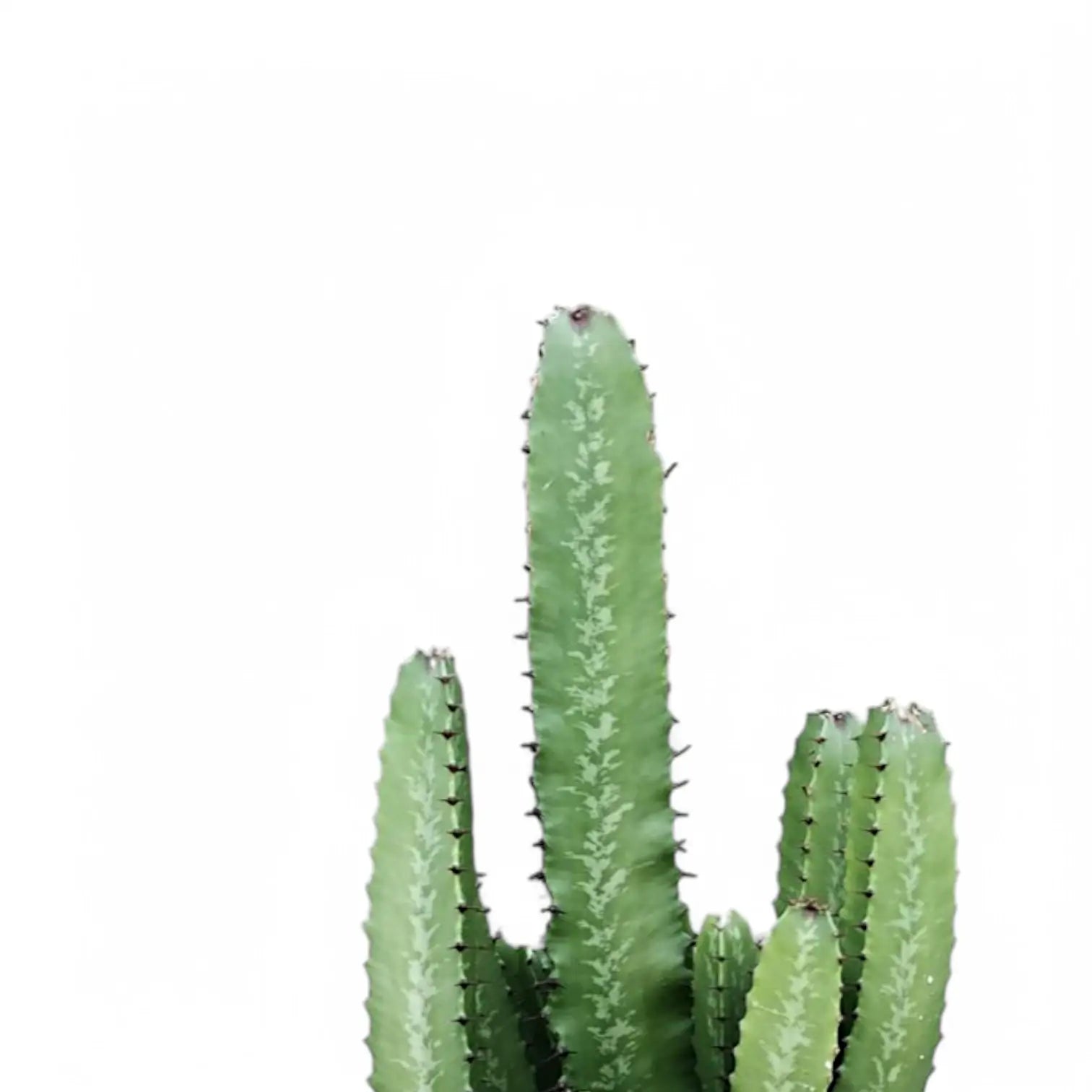
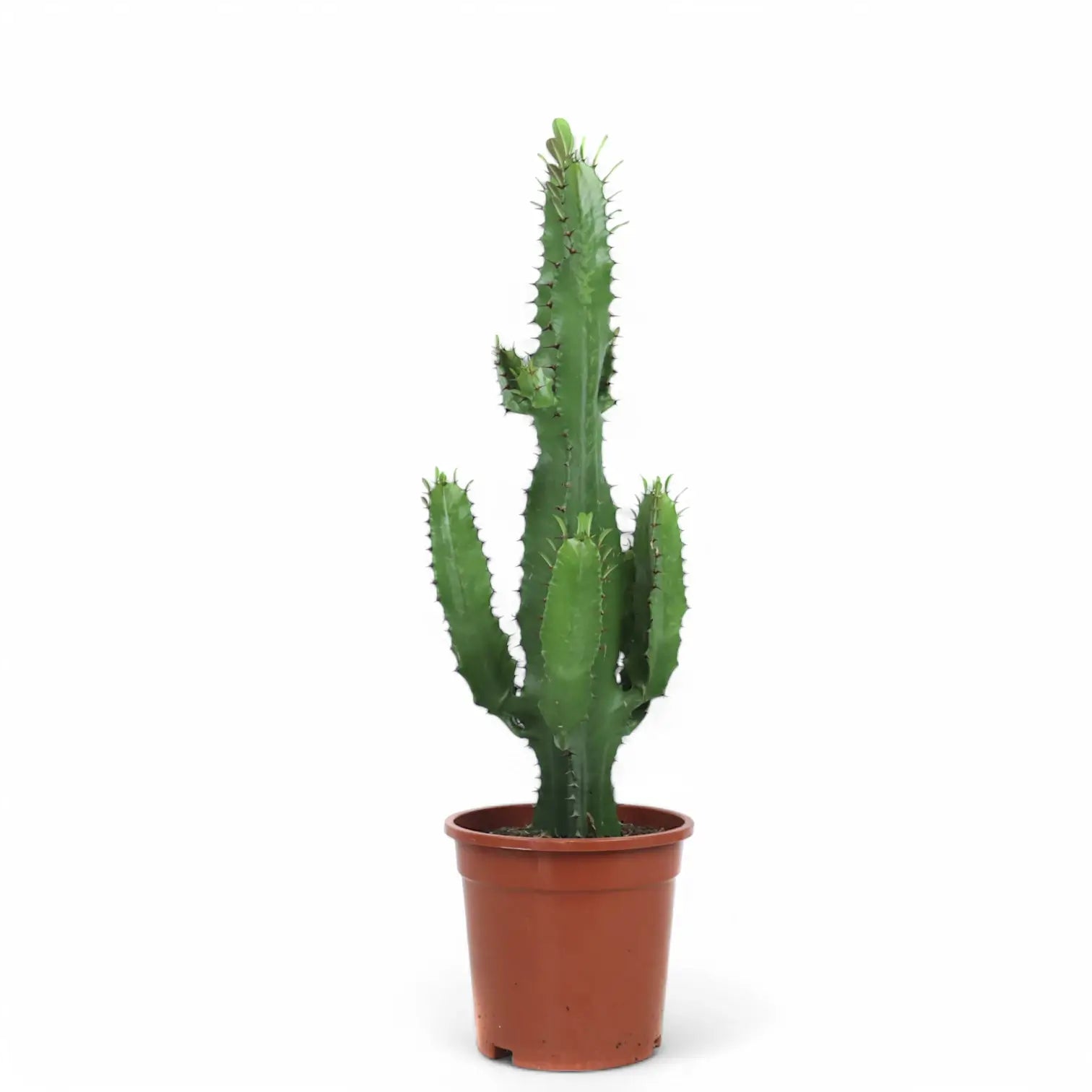
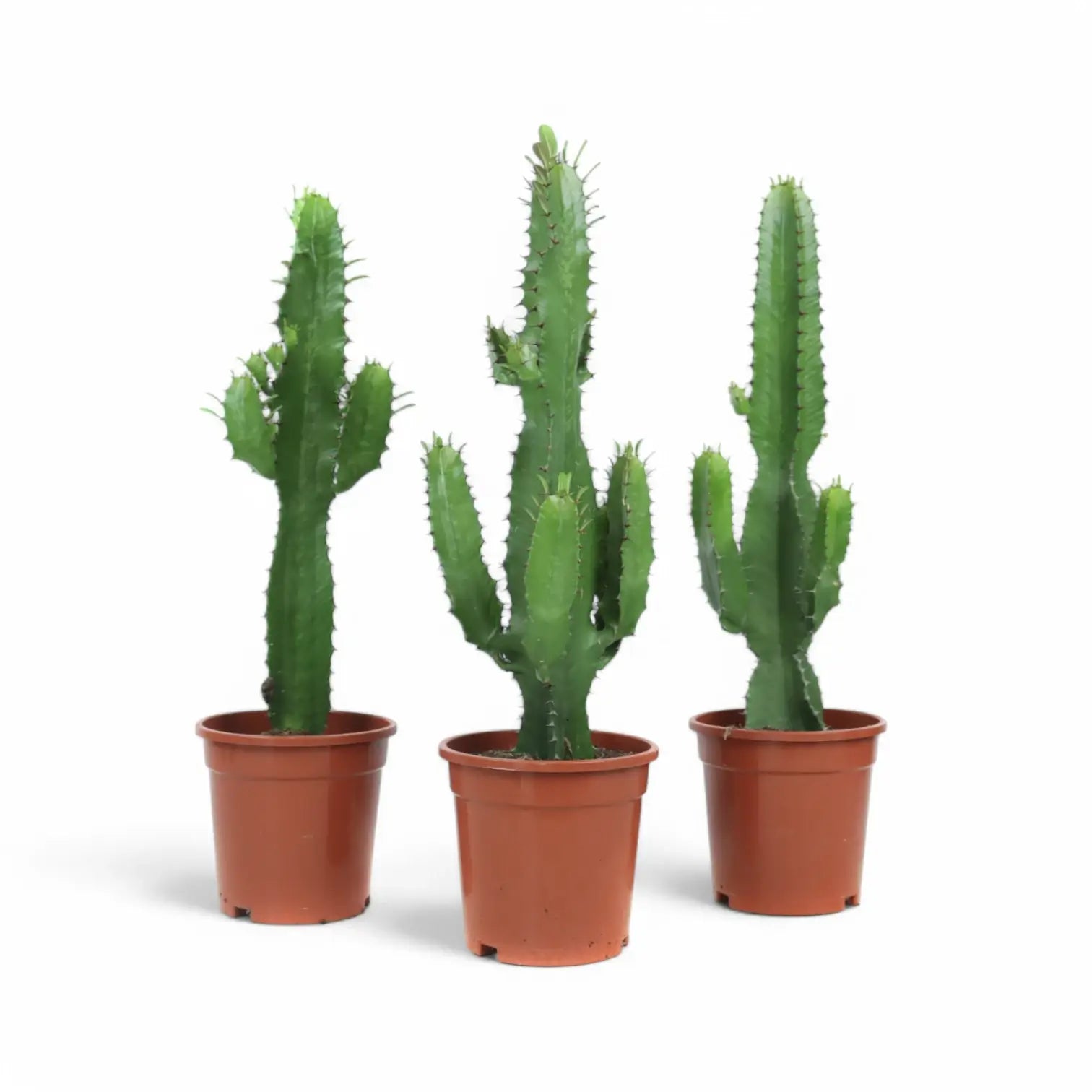
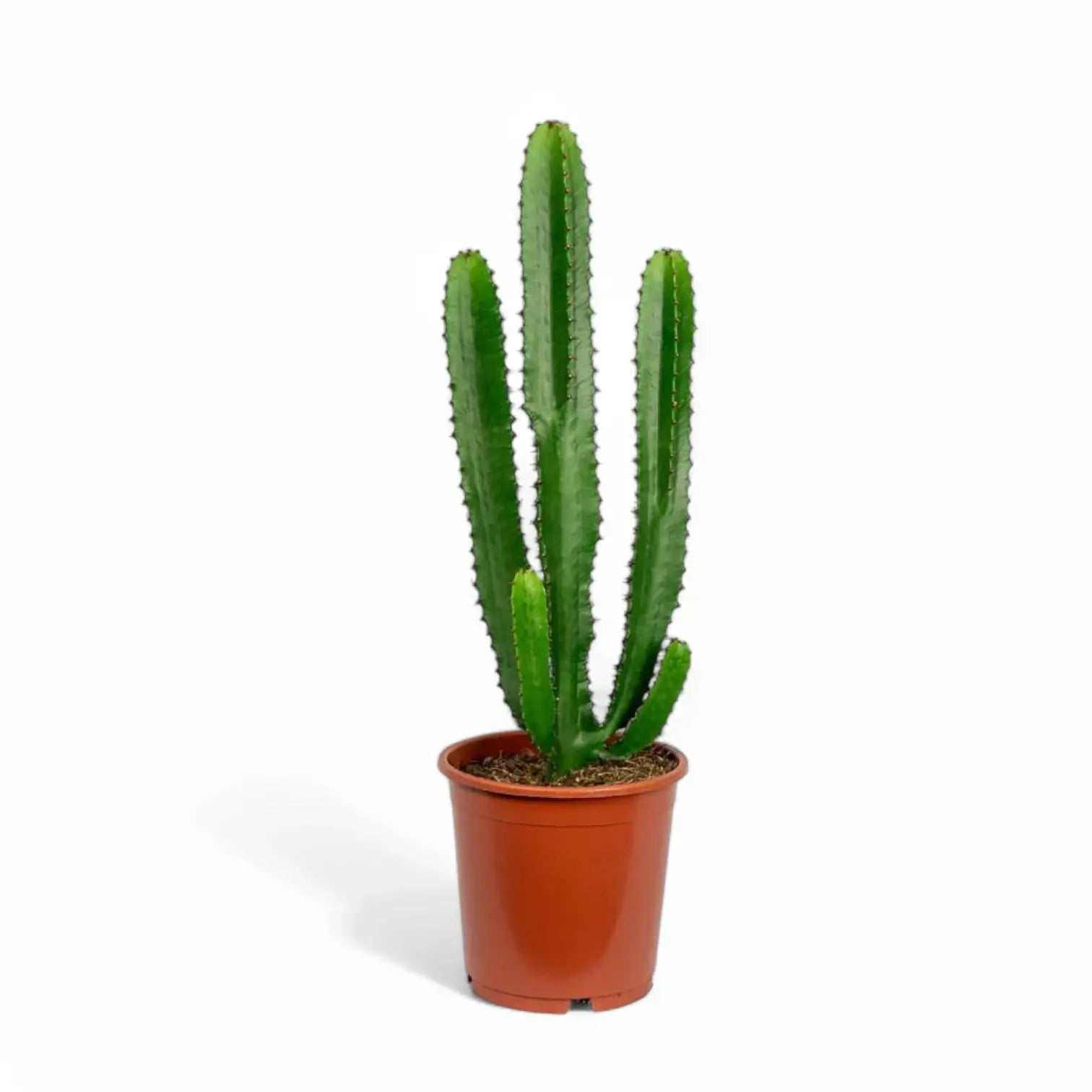
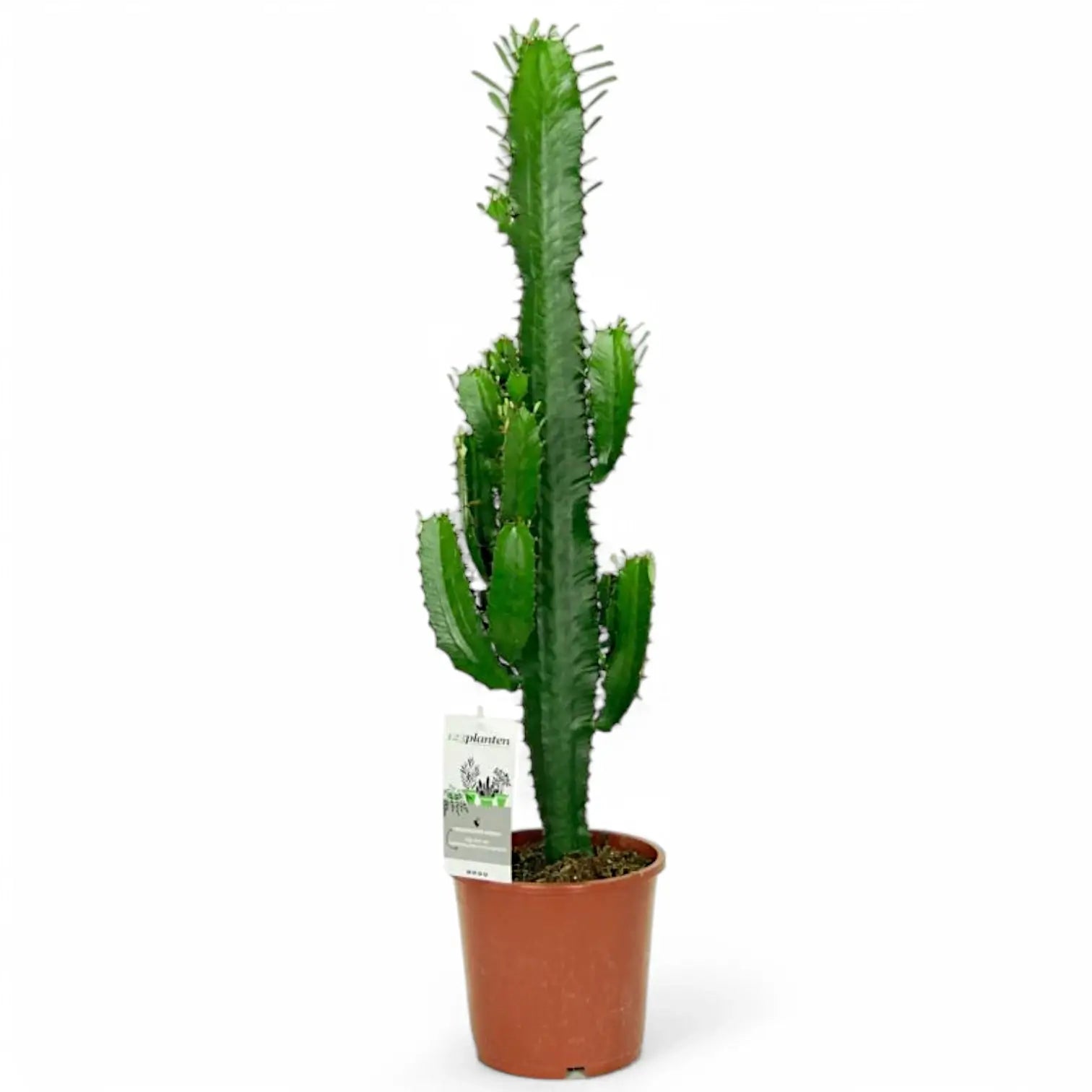
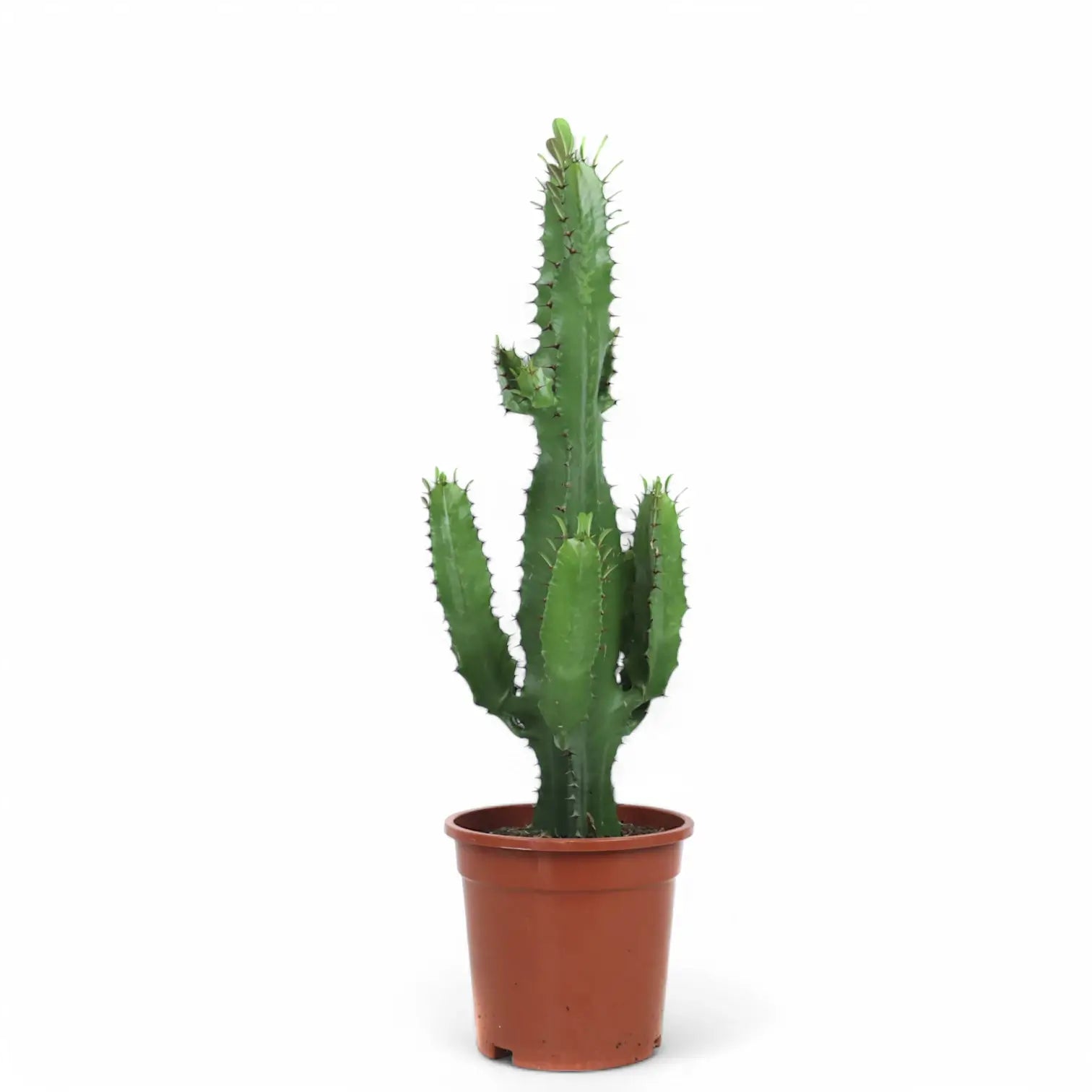
Euphorbia abyssinica is a large, tree-forming succulent Euphorbia from northeast Africa. It is not a cactus, even though its ribbed green stems and paired spines can look cactus-like. In habitat, mature plants can grow into tall, branching succulent trees. In a pot, it develops much more slowly, with upright stems that gain height and branch over time.
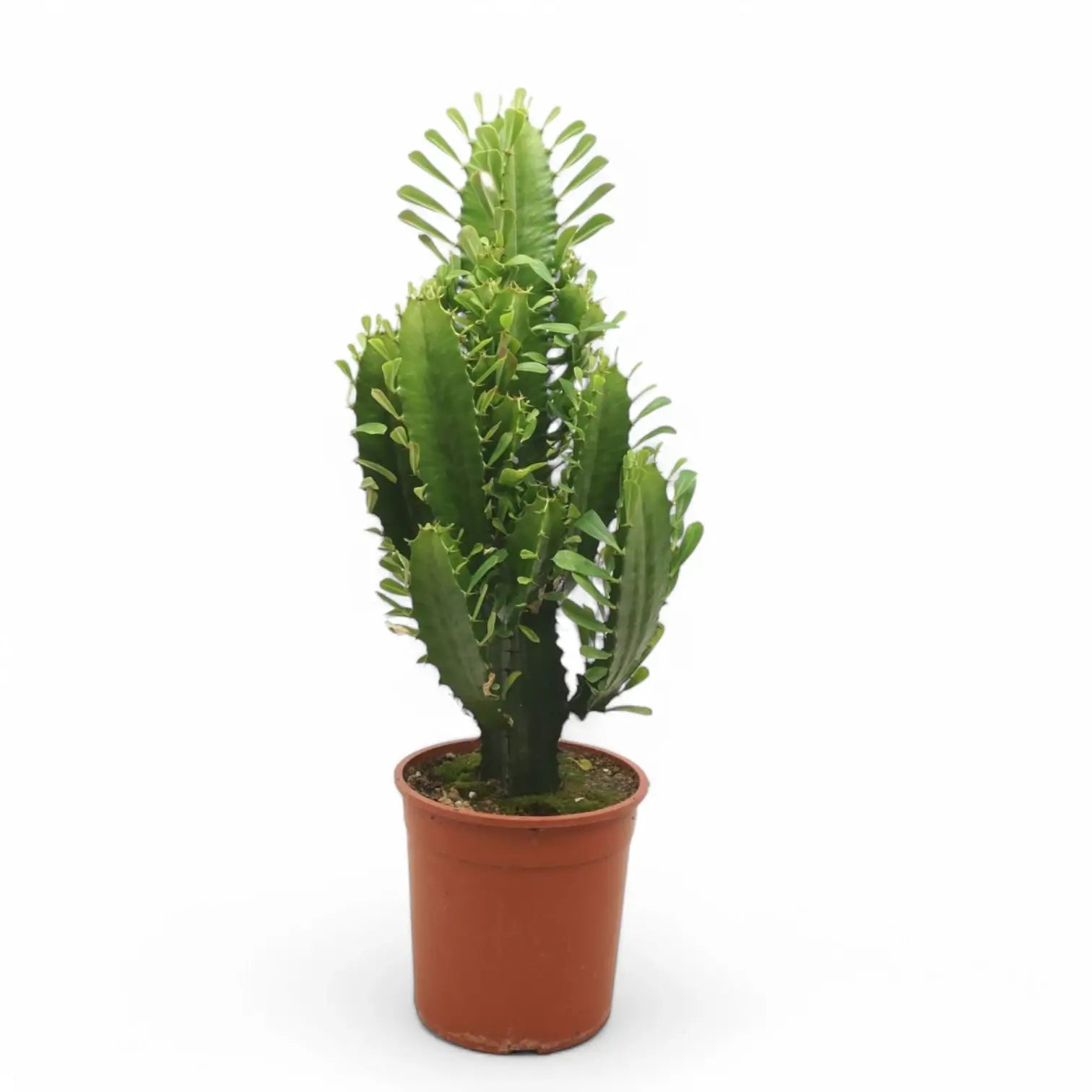
Lasting leaves are not a main feature of this species. The thick green branches store water and do most of the photosynthesis through their surface. Small leaves may appear on fresh growth during active periods, then fall away naturally. Raised ribs run along the stems, with paired spines set on the angles. Older plants can form a woody base, while the upper green stems remain the active succulent parts. Mature plants may produce small yellowish cyathia, the specialised flower structures typical of Euphorbia.
Euphorbia abyssinica is native from northeastern Sudan to Somalia, where it grows in desert and dry shrubland habitats. Its thick stems, short-lived leaves and ribbed surface are all linked to dry conditions. The stems hold water, the green surface keeps working when leaves are absent, and the ribs allow slight expansion and contraction as stored water changes.
Indoors, this means bright light, mineral drainage and clear dry intervals after watering. Avoid rich mixes that stay wet for long periods. In a pot, the plant remains firmer when the roots dry properly, the stem base is not kept damp and fertiliser is kept weak.
Euphorbia abyssinica contains white latex that can irritate skin, eyes and mucous membranes. Wear gloves when pruning, repotting or cleaning damaged tissue, and keep the plant away from children and pets that may touch or chew the stems. If sap touches skin, wash it off promptly. If it gets into the eyes, rinse with clean water and seek medical advice.
Euphorbia abyssinica belongs to Euphorbiaceae and was first published by Johann Friedrich Gmelin in 1791. The genus name Euphorbia is traditionally linked to Euphorbus, physician to King Juba II of Mauretania. The species name abyssinica refers to Abyssinia, a historical name associated mainly with Ethiopia and the wider northeast African region.
Over time, Euphorbia abyssinica forms a tall, ribbed plant with paired spines and an upright tree-like structure.
Plant names, growth habits, natural habitats and indoor care guidance are checked against trusted botanical, habitat and horticultural references before publication.View our plant care resources and references.
Sign up for Foliage Factory newsletter for early access to new arrivals and practical care tips that work in real homes.