Light
Bright indirect • approx. 10,000–20,000 lux

VAT included · plus
Your new plant has just travelled a long way and needs a calm start in its new home. For step-by-step unboxing and first-week care, check our after-delivery care guide. For deeper tips on how your plant settles in over the next weeks, read our houseplant acclimatization guide.
Secure shipping, carefully packed orders with safe delivery across the EU, UK and Switzerland.
28-day plant guarantee, if a plant arrives damaged or fails soon after delivery, we help you make it right.
Free returns, simple, cost-free returns according to our policy.
For full details, please see:
Please head to our FAQ Page or Contact us.
Quick Care Guide
Light
Bright indirect • approx. 10,000–20,000 lux
Watering
Water when ~20–35% dry
Substrate
Moisture-retentive but aerated • Evenly moist • Organic-leaning • Fine-medium
Temperature
Ideal: 18–27 °C • Avoid below: 15 °C
Humidity
Moist 50–60 %
Growth habit
Upright clumping herbaceous perennial.
Support
not needed
Growth speed
High
Max size indoors
Max. height: 200 cm • Max. spread: 150 cm
Toxicity & safety
Toxic
Origin & habitat
Cultivar of Homalomena rubescens; species native from Sikkim to Myanmar
Outdoor growing
Outside from 15 °C · sheltered spot
These care values are quick reference points for indoor growing. Use them as a guide, then adjust for pot size, substrate, temperature and how quickly the substrate dries.
For more detail, read the full product description or visit our Plant Care Guides.
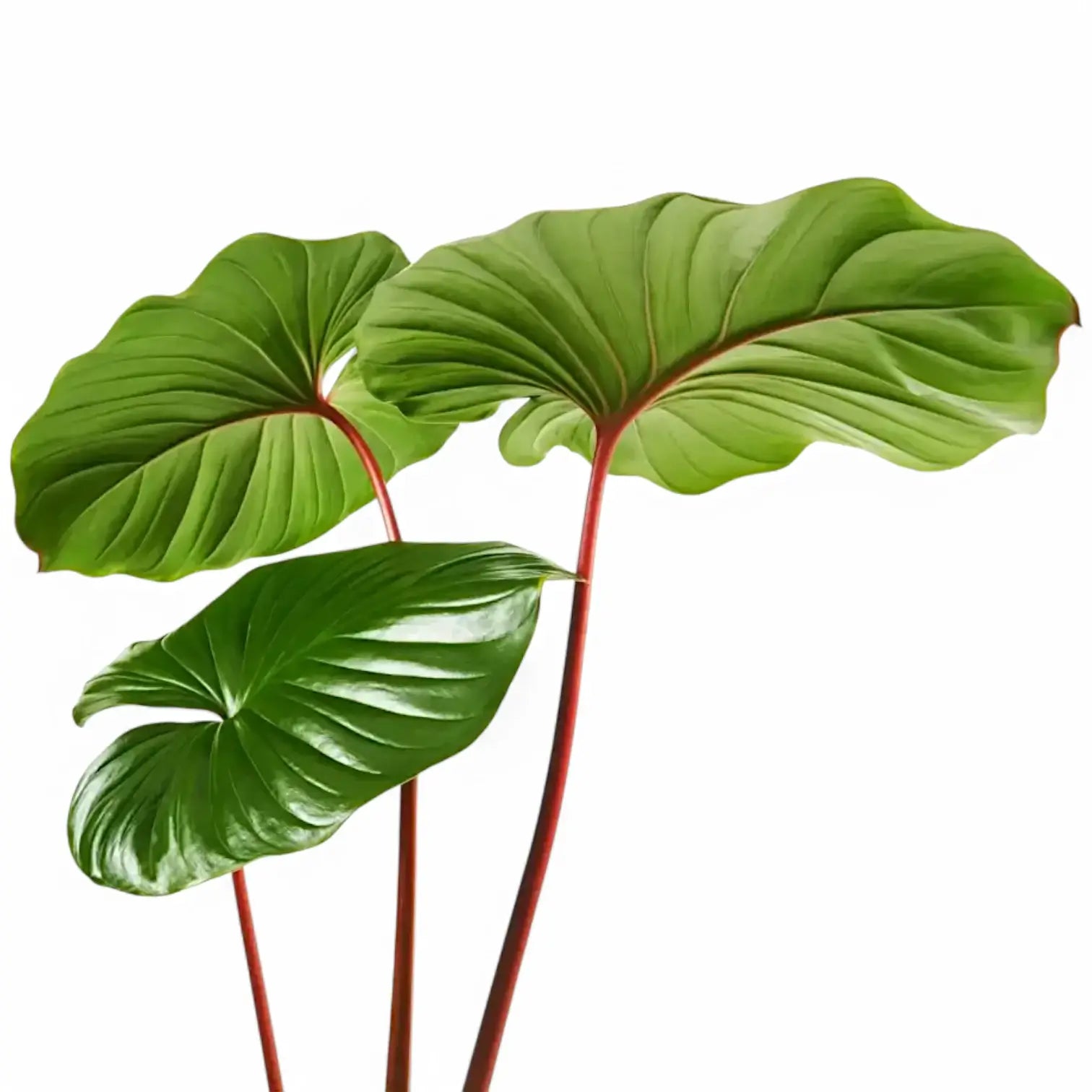
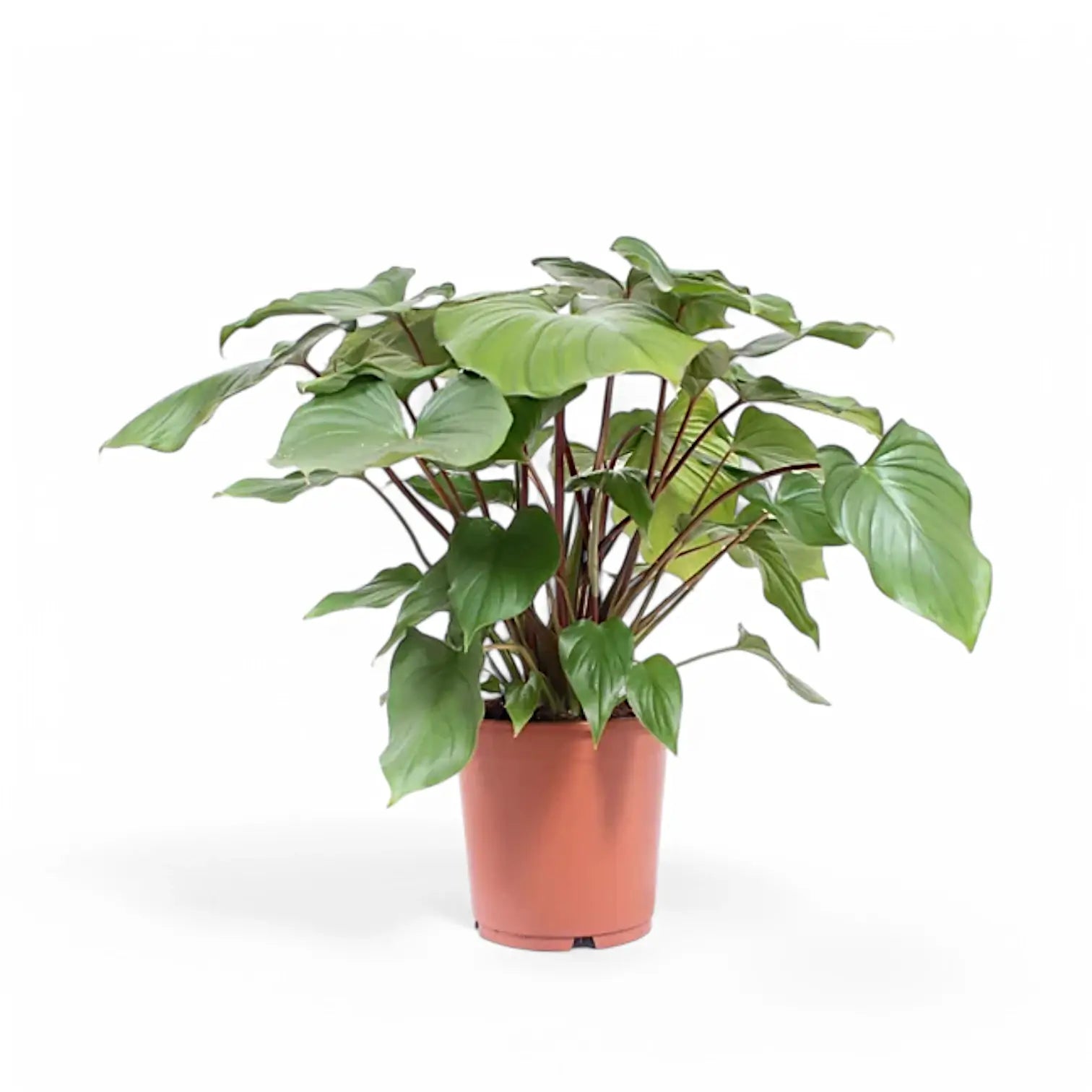
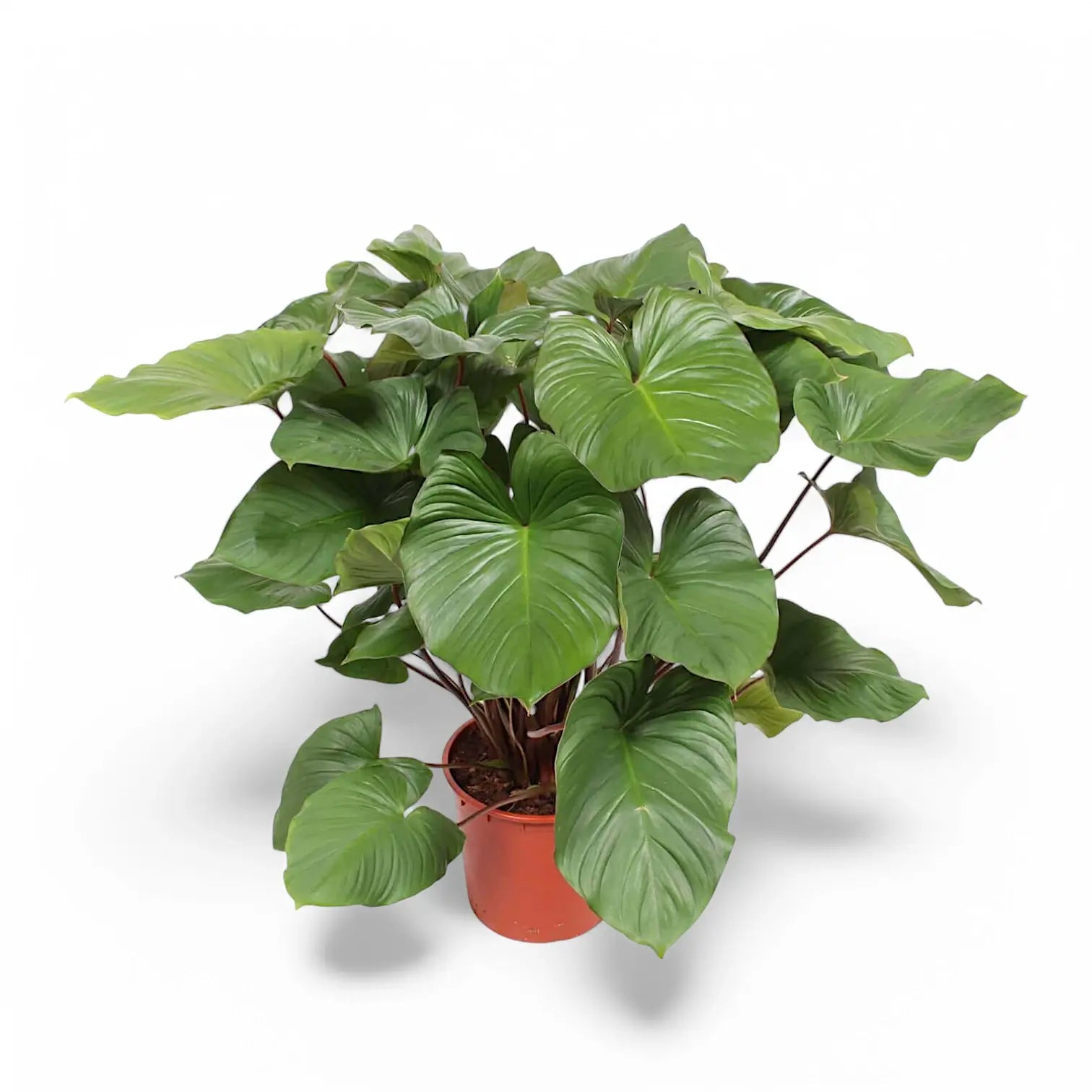
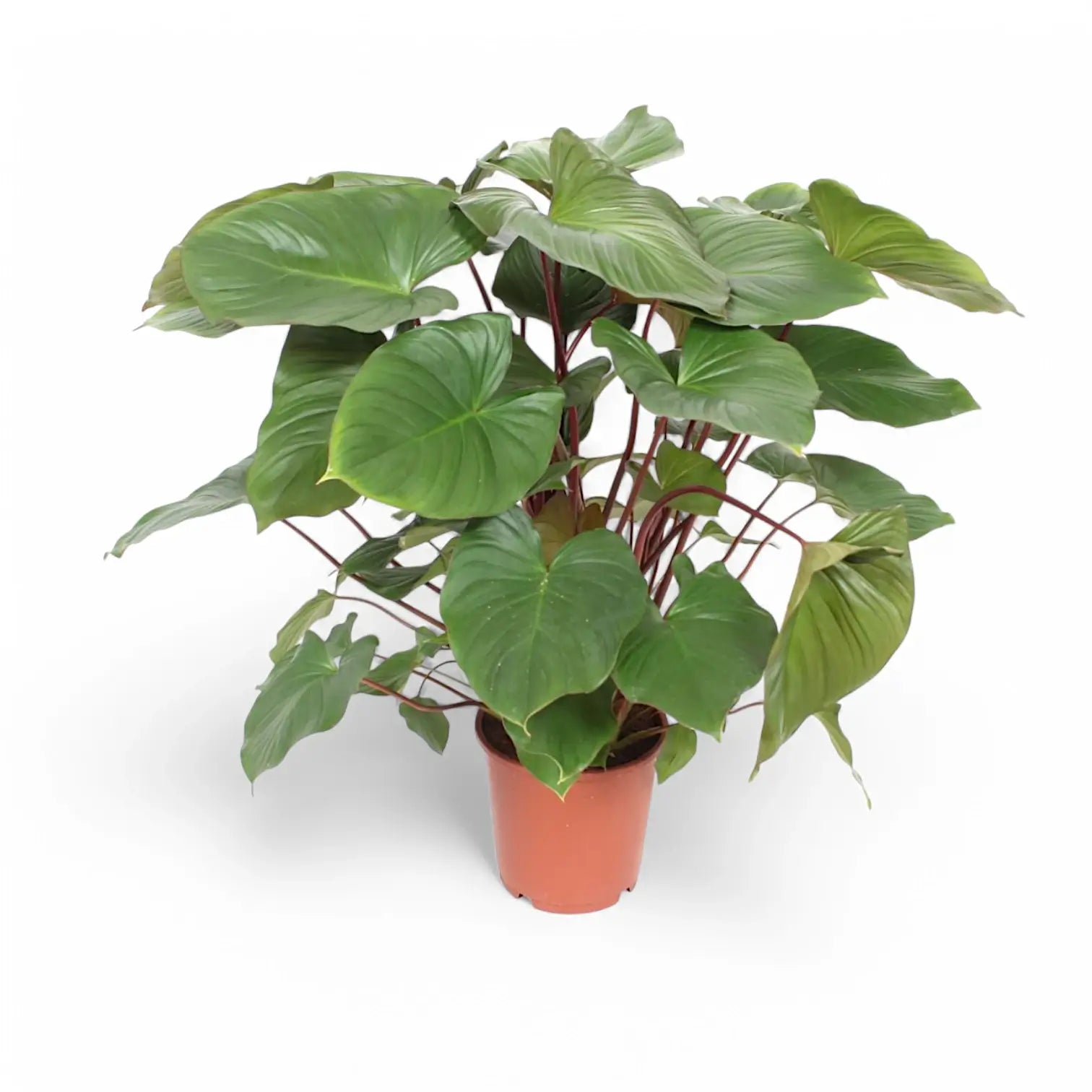
Homalomena rubescens ‘Maggy’ is a broad-leaved tropical aroid with large, glossy green blades and warm reddish petioles. It grows as a full, clumping plant, with leaves rising from a compact base and spreading outward on thick, coloured stems. The heart-shaped to oval leaves give the plant a lush, grounded shape, while the red tones in the petioles add colour between flushes of new growth.
Homalomena rubescens ‘Maggy’ grows best in a warm indoor position with gentle light and an evenly moist root zone. Its wet-tropical Araceae background, from the eastern Himalayan region towards Myanmar, matches a chunky moisture-retentive substrate, stable warmth and protection from harsh direct sun.
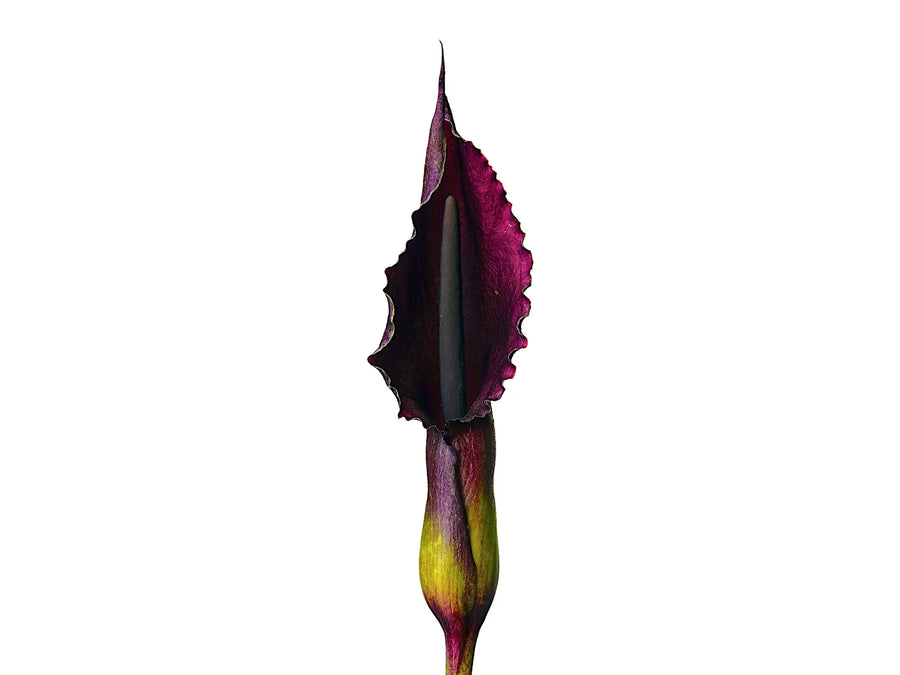
Homalomena rubescens is an accepted species in Araceae. Its native range is recorded from Sikkim to Myanmar, and it grows primarily in wet tropical conditions. In cultivation, ‘Maggy’ has a rounded leaf outline, glossy green surface and red-toned petioles. Like many aroids, it may produce a spathe and spadix, though the broad leaves and coloured petioles remain more visible indoors.
Homalomena rubescens ‘Maggy’ carries large leaves on fleshy petioles, so it can show moisture stress quickly, yet its roots still need air around them. A chunky, humus-rich substrate, drainage holes and careful watering keep the root zone lightly moist without becoming dense or sour.
Homalomena rubescens ‘Maggy’ keeps its broad basal shape when older leaves are removed selectively. Cut only fully yellowed or damaged leaves close to the base with clean scissors. Wiping dust from the glossy leaves helps light reach the leaf surface and makes pest checks easier.
Homalomena rubescens ‘Maggy’ should be kept away from pets and children that chew plants. As an aroid, its tissues may irritate the mouth, throat or skin if damaged or ingested. Wear gloves if you have sensitive skin and wash your hands after pruning or repotting.
Homalomena rubescens belongs to Araceae. The genus name Homalomena is historically connected with a Malay plant name later interpreted in botanical literature through Greek-derived elements. The species epithet rubescens means becoming reddish, matching the red tones often seen in the petioles and floral parts. ‘Maggy’ is the horticultural cultivar name for this selection.
Homalomena rubescens ‘Maggy’ grows into a full, self-supporting aroid with broad glossy leaves and warm red petioles.
Plant names, growth habits, natural habitats and indoor care guidance are checked against trusted botanical, habitat and horticultural references before publication.View our plant care resources and references.
Sign up for Foliage Factory newsletter for early access to new arrivals and practical care tips that work in real homes.