
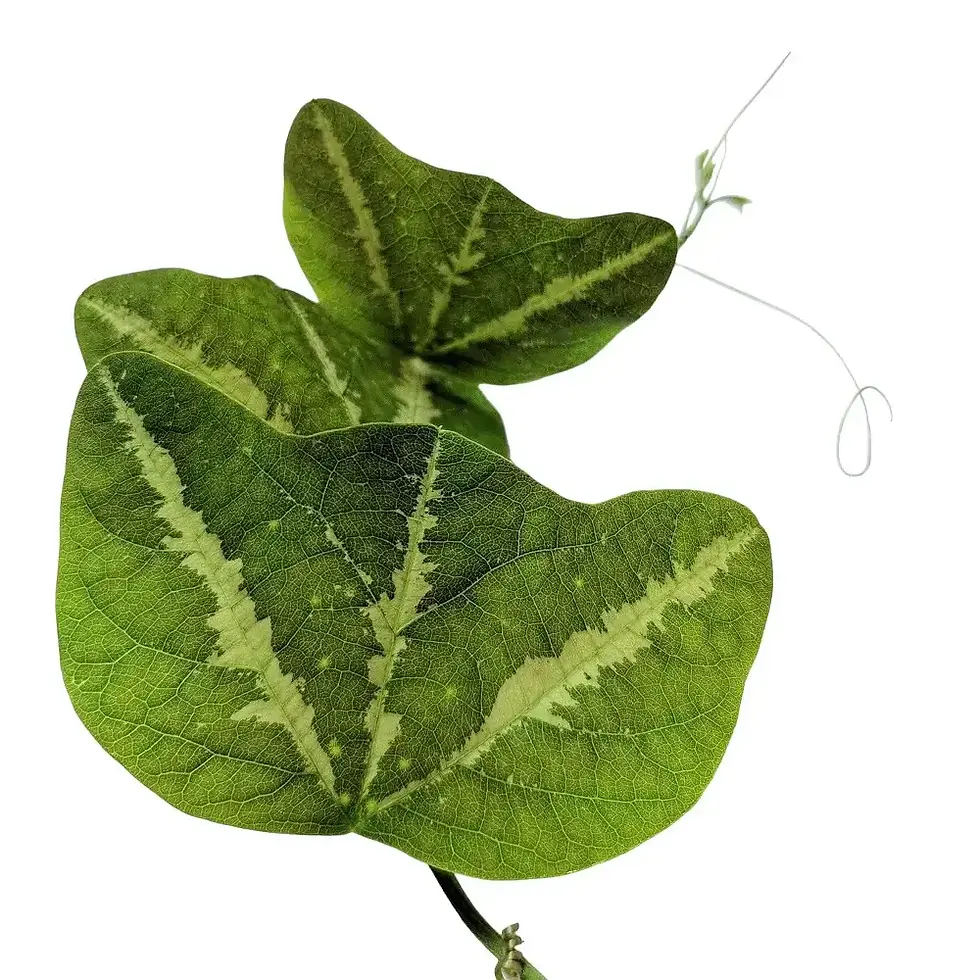

Passiflora organensis 'Mariana' – Collector’s Passionflower with Spotted Foliage

Passiflora organensis 'Mariana' is a striking cultivar of Passiflora organensis Gardner, which itself has been reclassified under Passiflora porophylla Vell. This rare variety is distinguished by its vivid foliage patterning: dark green leaves marked with bright red and yellow streaks and spots that follow the primary veins. The colors shift with age, giving the plant a dynamic, ever-changing look – young leaves often emerge in shades of red, then gradually transition to yellow as they mature. This makes every growth phase visually distinct and adds to the cultivar’s ornamental appeal.

● Key Features of Passiflora organensis 'Mariana'
- Foliage Coloration: Dark green base leaves adorned with red and yellow spots or streaks.
- Color Transition: Young leaves show red tones, which change to yellow as they age.
- Pattern Variety: Some leaves display only red, others only yellow, and some a mix of both hues.
- Growth Habit: A twining climber that benefits from trellises, poles, or mesh supports.
● Natural Background of Passiflora organensis
Passiflora organensis was first described by George Gardner in 1842 and is native to the Atlantic Forest regions of southeastern Brazil. It typically grows as a climbing vine, weaving through shrubs and small trees in warm, humid habitats. The cultivar 'Mariana' is valued in cultivation for its unique foliage patterning, which adds ornamental contrast to greenhouse and indoor collections.
● How to Care for Passiflora organensis 'Mariana'
- Light: Prefers bright, indirect light with some filtered sun to encourage vivid leaf coloration.
- Watering: Keep soil evenly moist, avoiding prolonged dryness or waterlogging.
- Humidity: Appreciates moderate to high humidity; thrives in greenhouse or grouped indoor setups.
- Substrate: Well-draining mix with organic matter and mineral components for root aeration.
- Feeding: Apply balanced fertilizer during active growth for optimal foliage vibrancy.
- Support: Provide climbing structures to allow natural twining growth.
● Common Issues in Cultivation
- Faded Leaf Colors: Often caused by insufficient light; stable indirect light helps maintain variegation.
- Pest Pressure: May attract spider mites or whiteflies if kept in dry conditions; monitor regularly.
- Slow Growth: Typically linked to nutrient deficiency or compacted substrate.
● Additional Notes
The shifting colors of 'Mariana' make it especially captivating for collectors who value dynamic foliage plants. Unlike some passionflowers, this cultivar is grown primarily for its ornamental leaves rather than its flowers, though blooms may still appear under favorable conditions.
● Etymology of Passiflora organensis
The genus name Passiflora was established by Carl Linnaeus in 1753, from Latin passio (“passion”) and flora (“flower”). The species epithet organensis refers to the Serra dos Órgãos mountains in Brazil, where the species occurs naturally. The cultivar epithet 'Mariana' is a horticultural selection named for its distinct leaf patterning.
● Frequently Asked Questions
- Is 'Mariana' grown for its flowers? Primarily for its foliage; blooms are secondary and less ornamental.
- Can it be grown indoors? Yes, with bright indirect light and humidity, it adapts well indoors.
- Does the coloration remain stable? Yes, but the ratio of red to yellow shifts with leaf age and lighting.
● Why Choose Passiflora organensis 'Mariana'?
If you’re seeking a passionflower that offers more than flowers, Passiflora organensis 'Mariana' is the perfect choice. Its ever-changing red and yellow foliage makes it a living artwork. Add this rare cultivar to your collection today and enjoy its dynamic beauty year-round.
Meta description: Passiflora organensis 'Mariana' – rare passionflower cultivar with red and yellow spotted foliage. A Brazilian collector’s plant grown for ornamental leaves.
Passiflora organensis 'Mariana'
Passiflora organensis 'Mariana' is approximately 35 cm tall and comes in an 10 cm pot.


