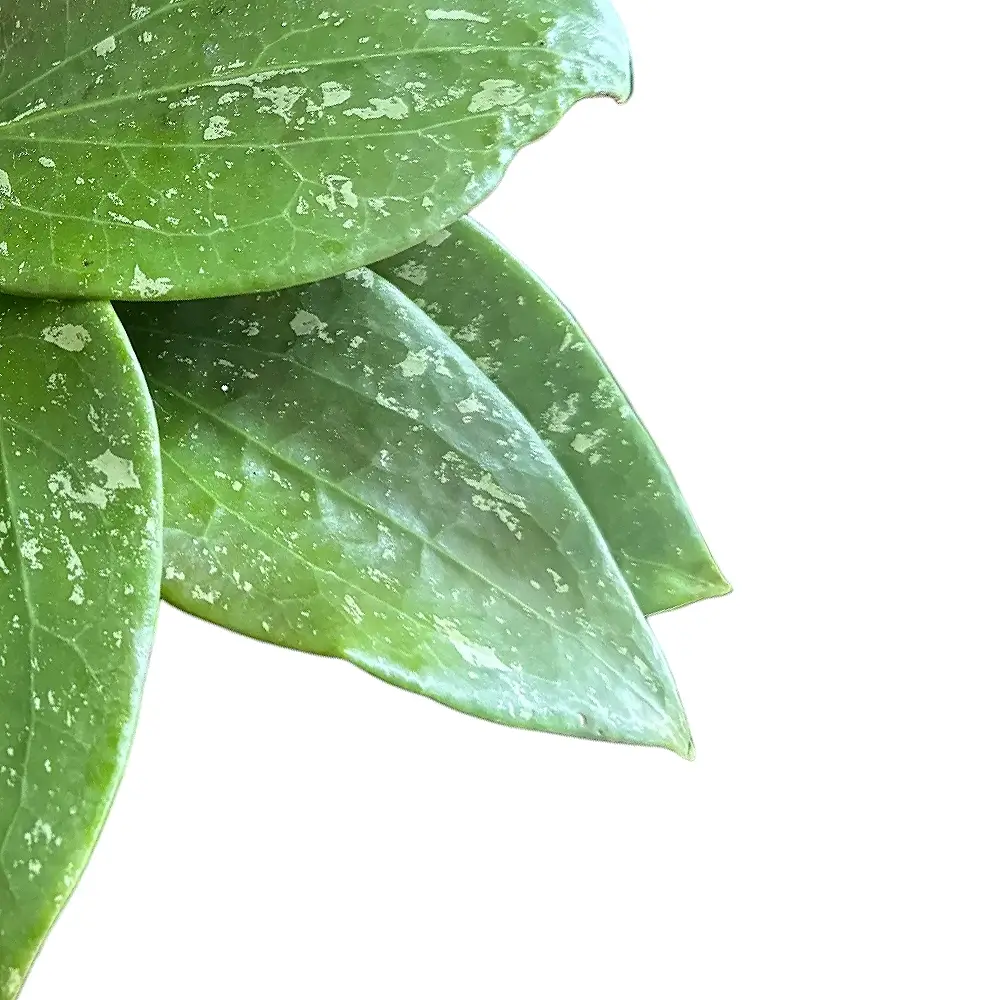
Hoya sp. Thailand – Rare Paddle-Leafed Climber with Striking Venation
Hoya sp. Thailand is an undescribed tropical species native to Thailand, valued for its large, paddle-shaped leaves and strong, vining growth. This rare climbing Hoya from Thailand stands out with its bright green foliage and bold, high-contrast venation — a visual signature that makes it a favourite among collectors. Thick, rigid leaves give the plant a sculptural quality, while its ease of care makes it suitable for beginners and seasoned enthusiasts alike.
● What Makes Hoya sp. Thailand Special
- Leaf Characteristics: Bright green, paddle-like leaves with raised, contrasting venation and a firm, structured texture.
- Growth Habit: Fast-growing climber or trailer. Perfect for trellises, moss poles, or letting cascade from hanging pots.
- Visual Impact: Mature leaves can grow large, offering bold texture and a lush, tropical look indoors.
- Botanical Rarity: An undocumented Hoya species, making it a unique and valuable addition to curated collections.
● How to Care for Hoya sp. Thailand Indoors
This Hoya with paddle-shaped leaves thrives with consistent, minimal care. Here's how to keep it healthy:
- Light: Bright, indirect light is ideal. Tolerates some gentle morning sun. Avoid direct midday exposure, which may scorch leaves.
- Watering: Let the top 2 – 3 cm of substrate dry before watering again. Never allow the pot to sit in water.
- Humidity: Does well in average indoor humidity (40 – 60%). Benefits from higher humidity but doesn’t require it.
- Temperature: Keep between 18 – 26 °C. Protect from cold drafts and sudden changes.
- Soil: Use a chunky, well-draining mix (e.g. cactus soil with added perlite and orchid bark).
- Feeding: Apply a balanced liquid fertilizer every 4 – 6 weeks. No need to adjust between seasons — consistency is key.
● Common Issues and Solutions
- Yellowing Leaves: Often due to overwatering or dense soil. Let soil dry slightly and improve aeration.
- Root Rot: Caused by excess moisture. Repot in a fresh, airy substrate and trim damaged roots.
- Spider Mites: Look for tiny webs and speckled leaves. Treat with neem oil or insecticidal soap and raise humidity.
- Mealybugs: Cottony clusters on stems or nodes. Remove manually and treat with systemic or contact-safe insecticides.
- Leaf Browning: Usually from too much sun or underwatering. Adjust placement and check watering routine.
● Extra Tips to Support Strong Growth
- Support: Train the plant on a trellis or moss pole to encourage upward growth and better light exposure.
- Pruning: Trim back long or leggy growth to promote branching and fuller shape. Always use sterile tools.
- Propagation: Root stem cuttings in water or well-draining substrate. Allow cut ends to callous before planting.
● Natural Habitat and Growing Insight
In the wild, this species likely grows epiphytically in shaded, humid forests across Thailand. Recreating those conditions indoors — warm temperatures, bright indirect light, and a fast-draining substrate — allows it to thrive long-term. It’s resilient, adaptable, and thrives in typical European home conditions when kept warm and dry at the roots.
● Where the Name Comes From
The genus Hoya was named in honour of English botanist Thomas Hoy (c. 1750 – 1822), who cultivated tropical species in 18th-century glasshouses. Since this Hoya remains undescribed, it is provisionally known by its country of origin — Thailand — reflecting both its rarity and botanical mystery.
● FAQs – Hoya sp. Thailand
- Is it easy to grow? Yes – it adapts well to indoor life and needs only moderate care.
- Will it flower indoors? It may bloom once mature, with fragrant cluster flowers typical of Hoyas. However, foliage is the main ornamental focus.
- Can I grow it in LECA? Yes. Hoya sp. Thailand responds well to semi-hydro setups like LECA, as long as humidity, warmth, and oxygen flow are maintained.
● Bring Hoya sp. Thailand into Your Collection
Looking for a rare Hoya with bold leaf structure and reliable indoor growth? Hoya sp. Thailand delivers tropical form and collector value in one. Stock is limited — add it to your cart now and elevate your indoor jungle with this botanical gem.
Hoya sp. Thailand
Hoya sp. Thailand comes in a ⌀ 6 cm pot and is approximately 10–15 cm tall