
How to Build a Starter Terrarium: A Complete Guide,
Terrariums made easy: choose open vs closed, layer correctly, pick plants that thrive, avoid common mistakes, and keep your mini ecosystem stable.
Read more

Cart
Your cart is empty
Nepenthes are climbing or scrambling carnivorous plants that produce pitchers only when light, humidity, water quality and temperature sit in a comfortable range. Indoors they belong in bright, humid, well-ventilated setups, not in dry corners or sealed jars, and they need rainwater, distilled water or another very low-mineral water source plus an airy low-nutrient medium.
Nepenthes rewards careful attention rather than routine neglect. It is less about filling a room with greenery and more about keeping a fascinating plant in the range where pitchers, leaves and growth stay balanced. Cabinets, warm bright windows and carefully managed setups suit it far better than standard pot and saucer care.
Filters help you narrow things down fast and without guessing. We put a lot of time and effort into keeping filter values consistent across the shop by cross-checking references and validating them against real-world indoor growing and handling.
Use them as guidance, not guarantees. Homes vary a lot, so for the full context (and any exceptions), open the product page and read the description.
If you want to see the references we use, Plant Care Resources is simply a curated list of source links (POWO, Kew, and more).
Sort by
Filters
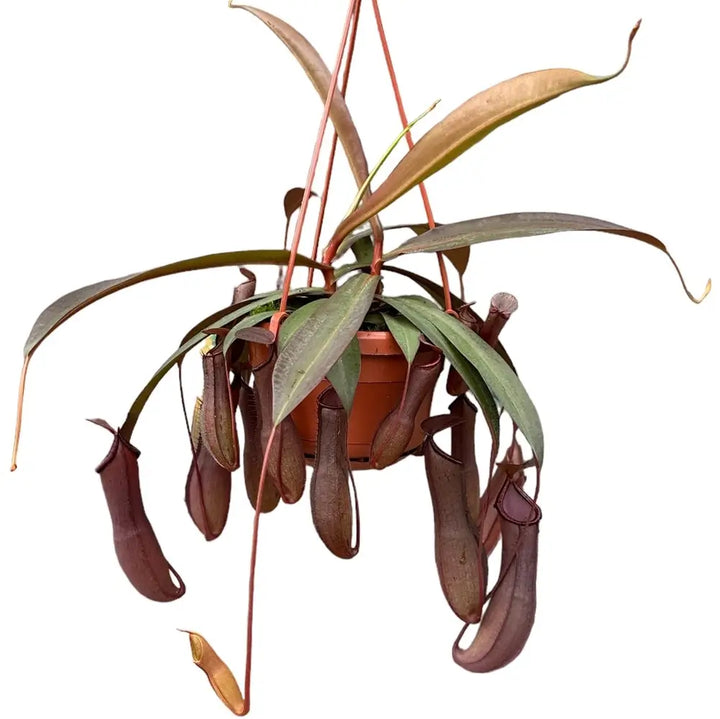
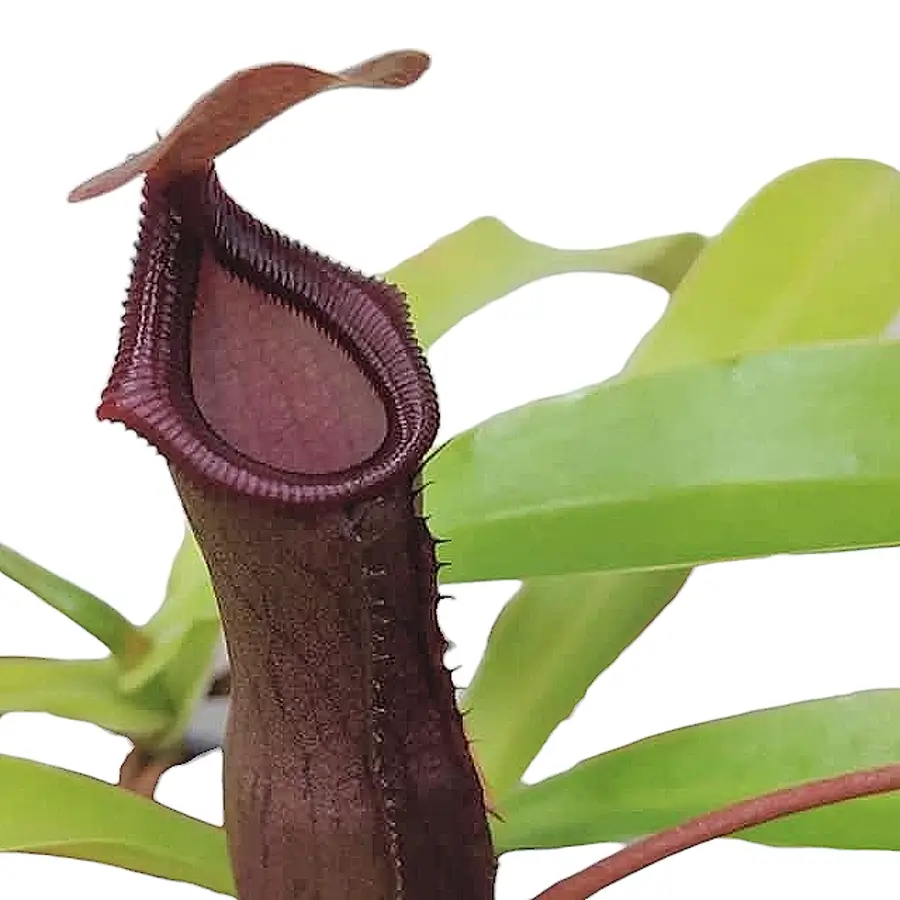
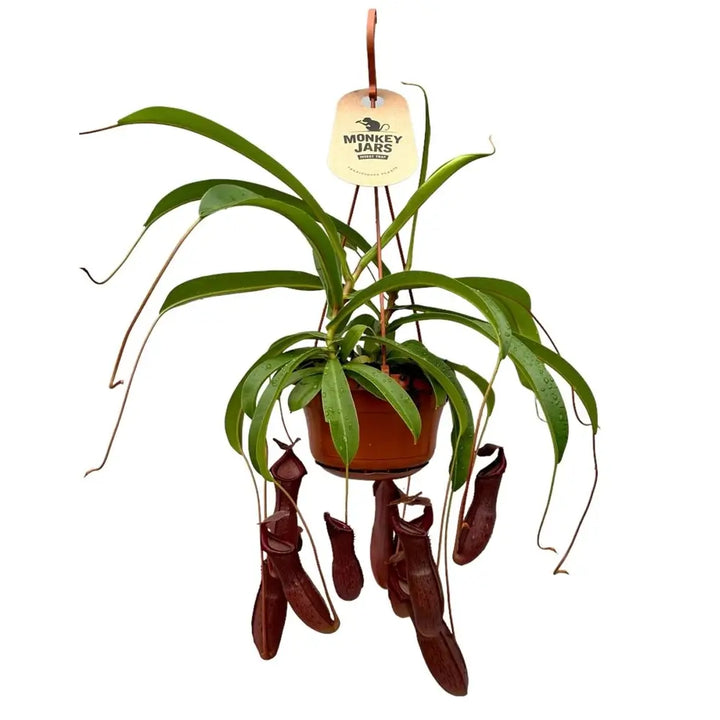

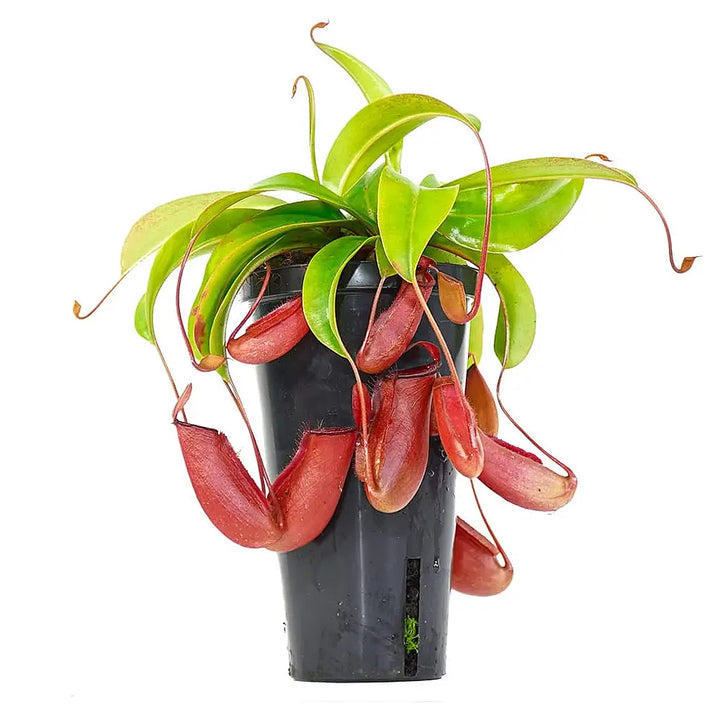
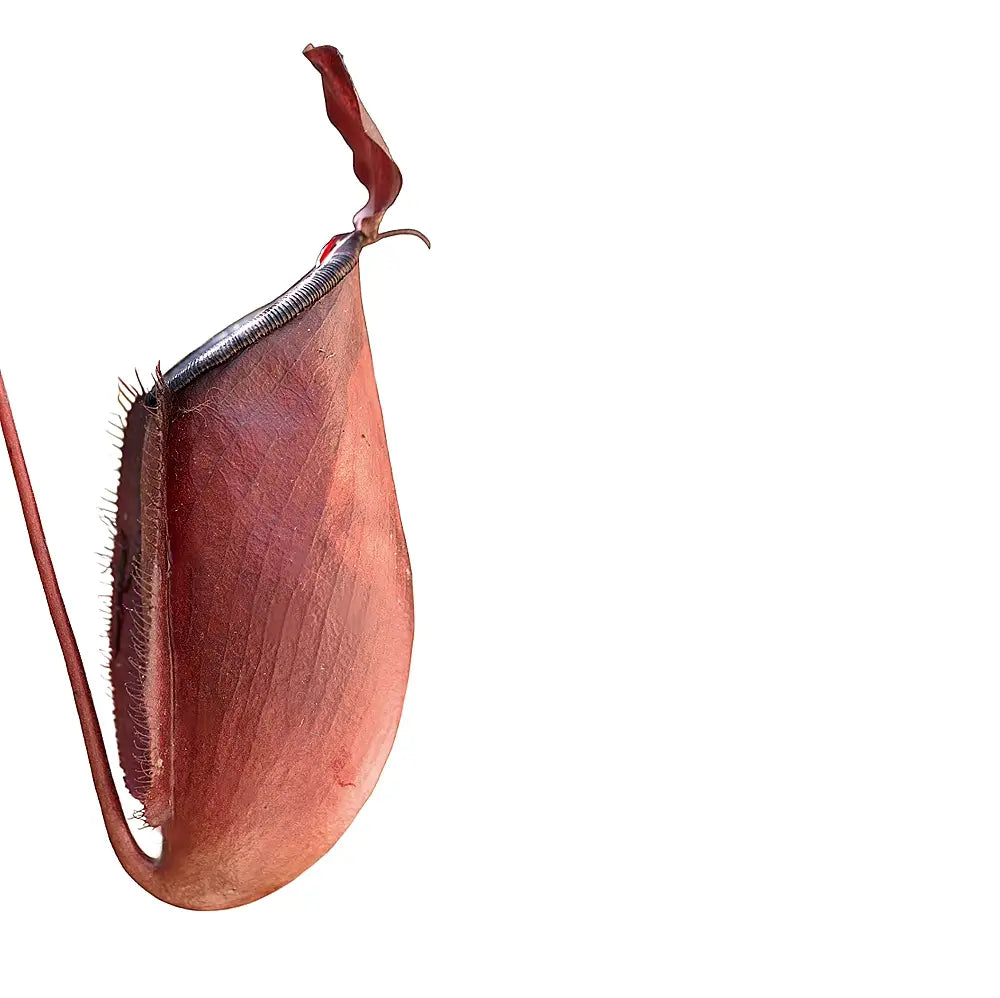
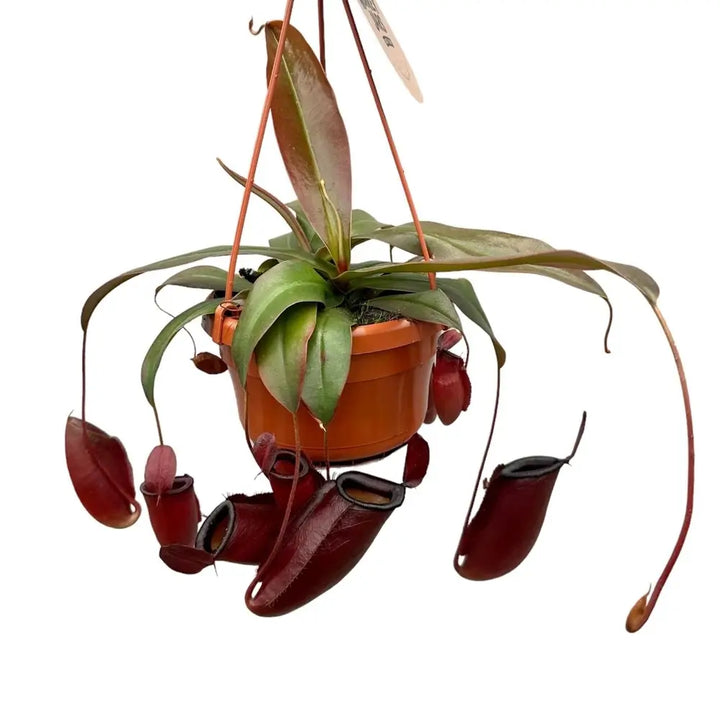
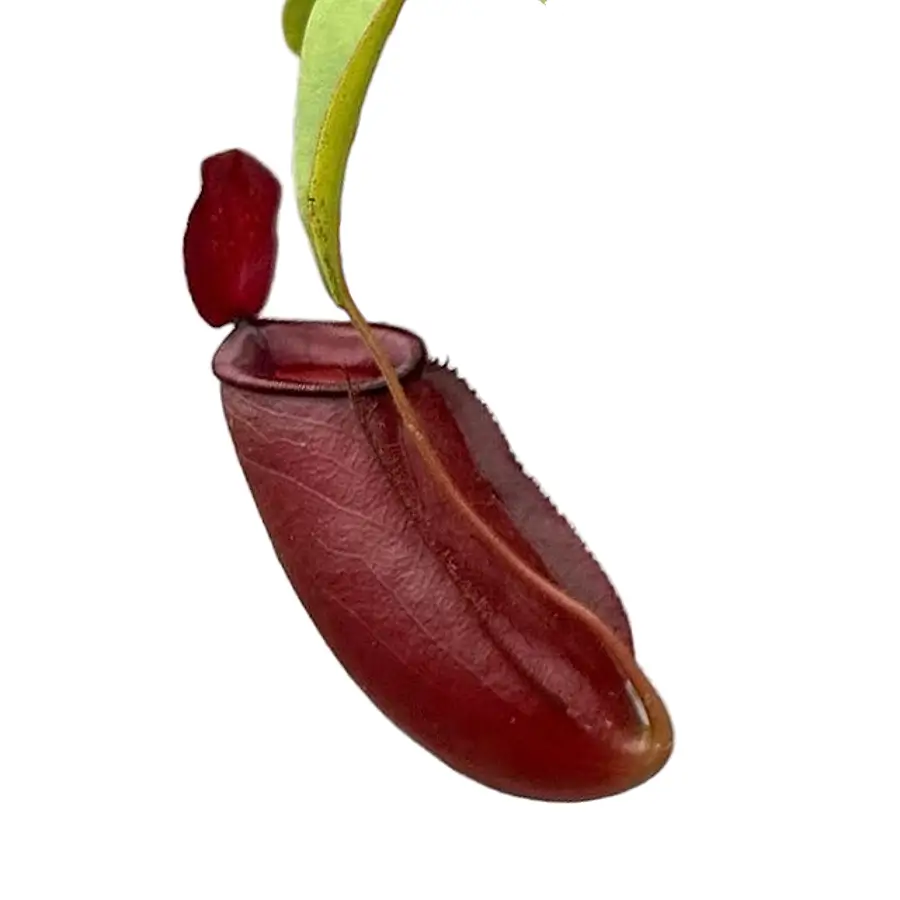
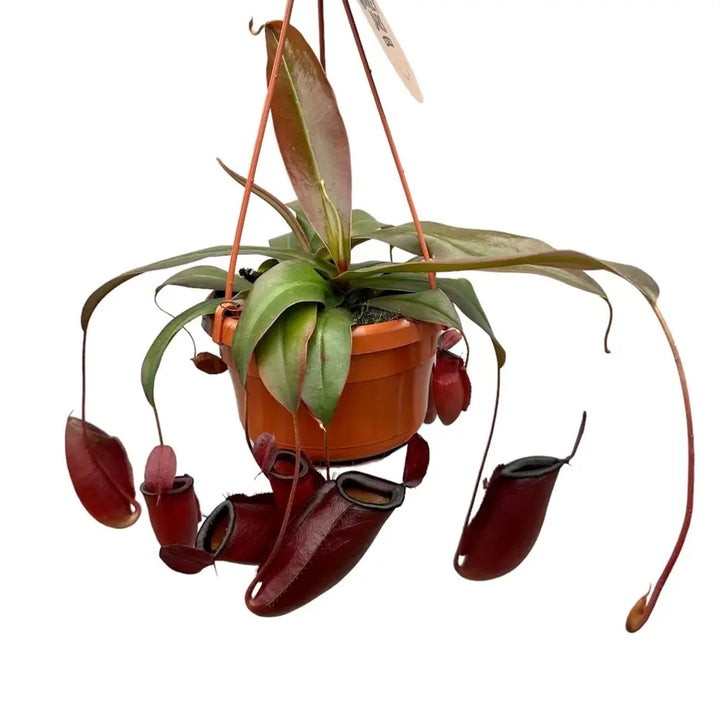
Nepenthaceae
Nepenthes is a genus of carnivorous lianas and subshrubs in the monogeneric family Nepenthaceae, first described by Linnaeus in 1737. Often called tropical pitcher plants or monkey cups, Nepenthes comprises about 170 currently recognised species plus many natural and horticultural hybrids. The genus is cytologically uniform with a somatic chromosome number of 2n = 80, reflecting ancient polyploidy.
Range & habitat: Nepenthes is restricted to the Old World tropics from Madagascar and Sri Lanka through Southeast Asia to New Guinea, northern Australia and New Caledonia. Most species are rooted in acidic, leached substrates on ridges, open slopes, forest margins or montane cloud forests, with some confined to ultramafic or peat soils; many are climbers in shrubby or forested habitats with high humidity and pronounced diurnal temperature ranges.
Inflorescence & fruit: Unisexual plants produce erect or pendulous racemes or panicles of small, typically inconspicuous flowers; pollination is mainly by flies and other insects attracted to scent. Fruits are elongated, dehiscent capsules containing many winged seeds that are wind-dispersed across open ridges and forest gaps.
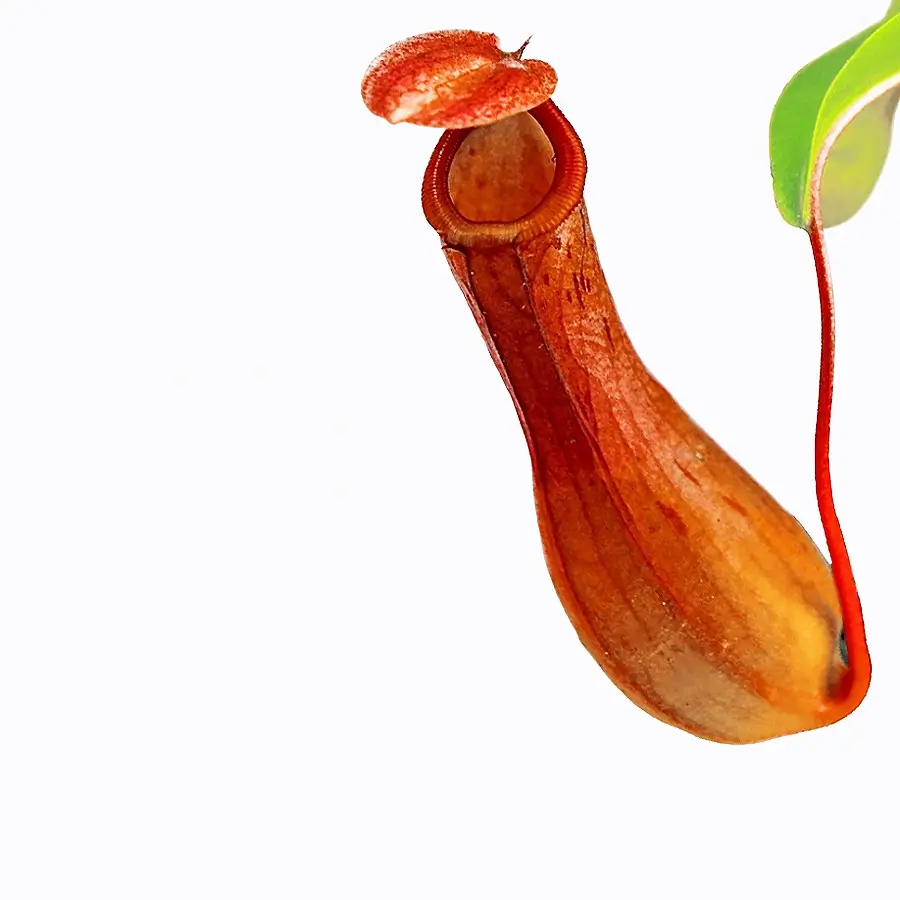
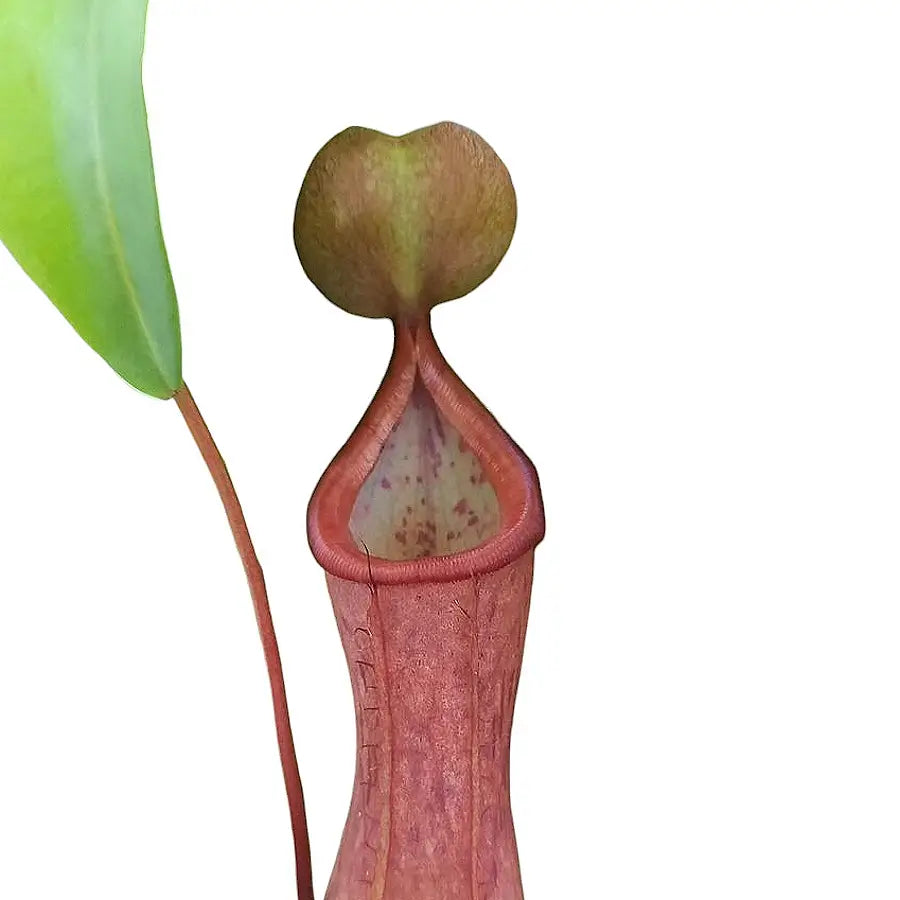
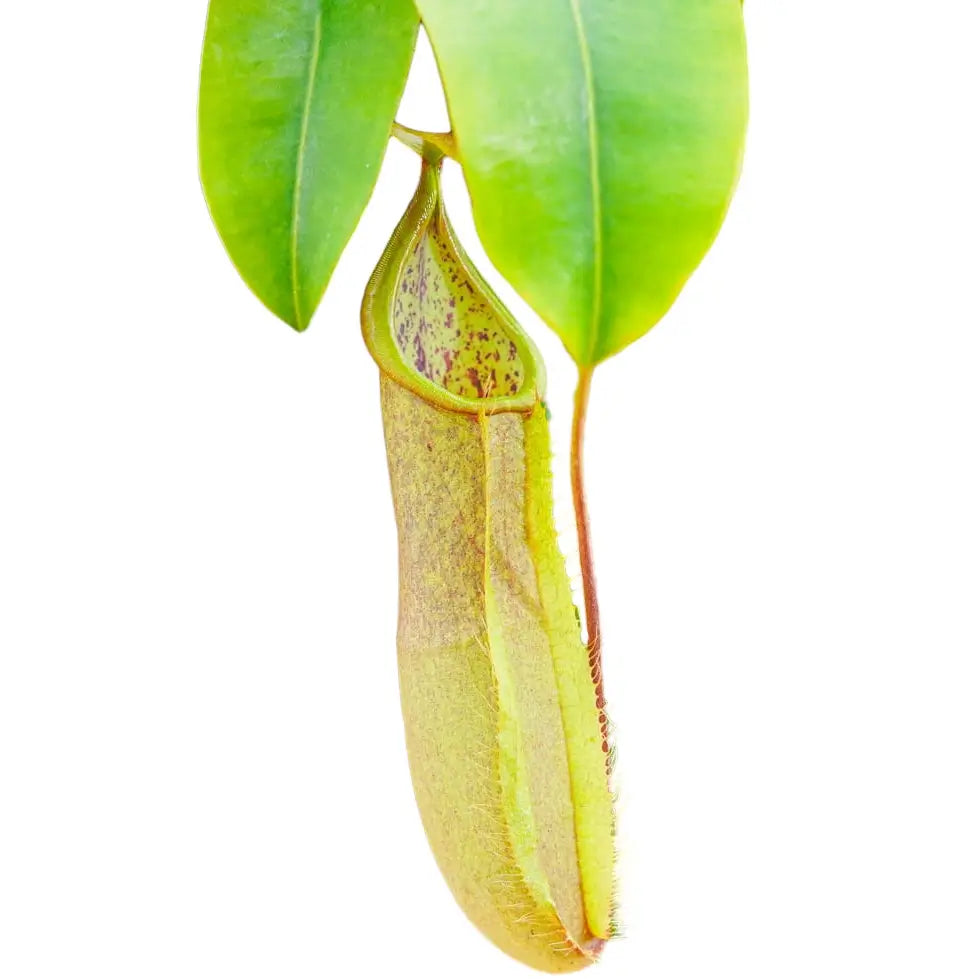
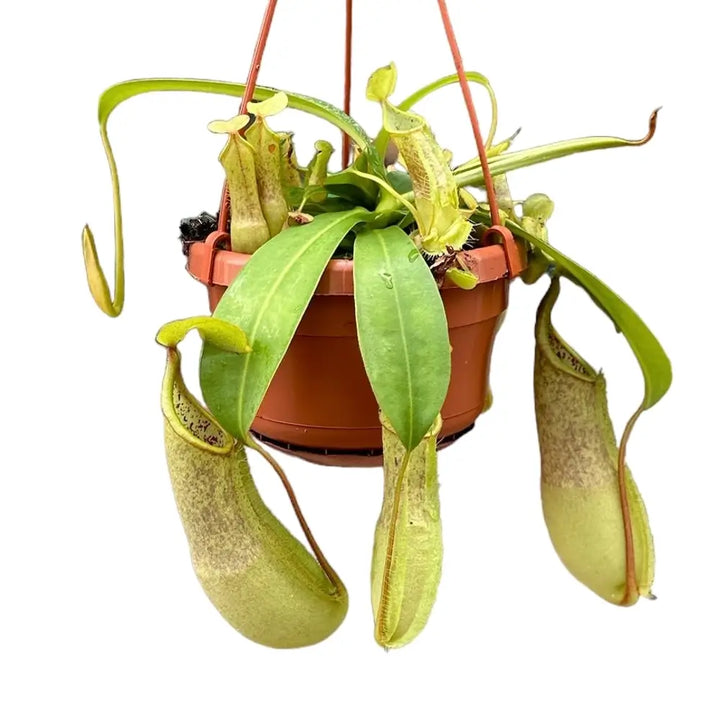
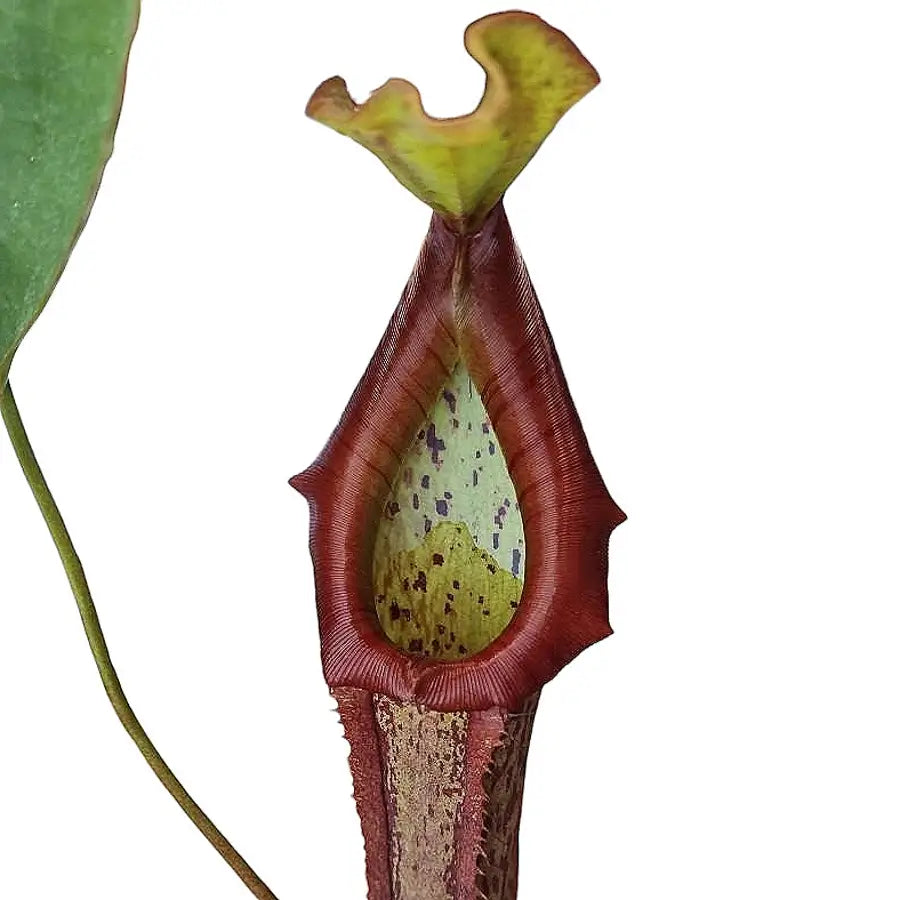
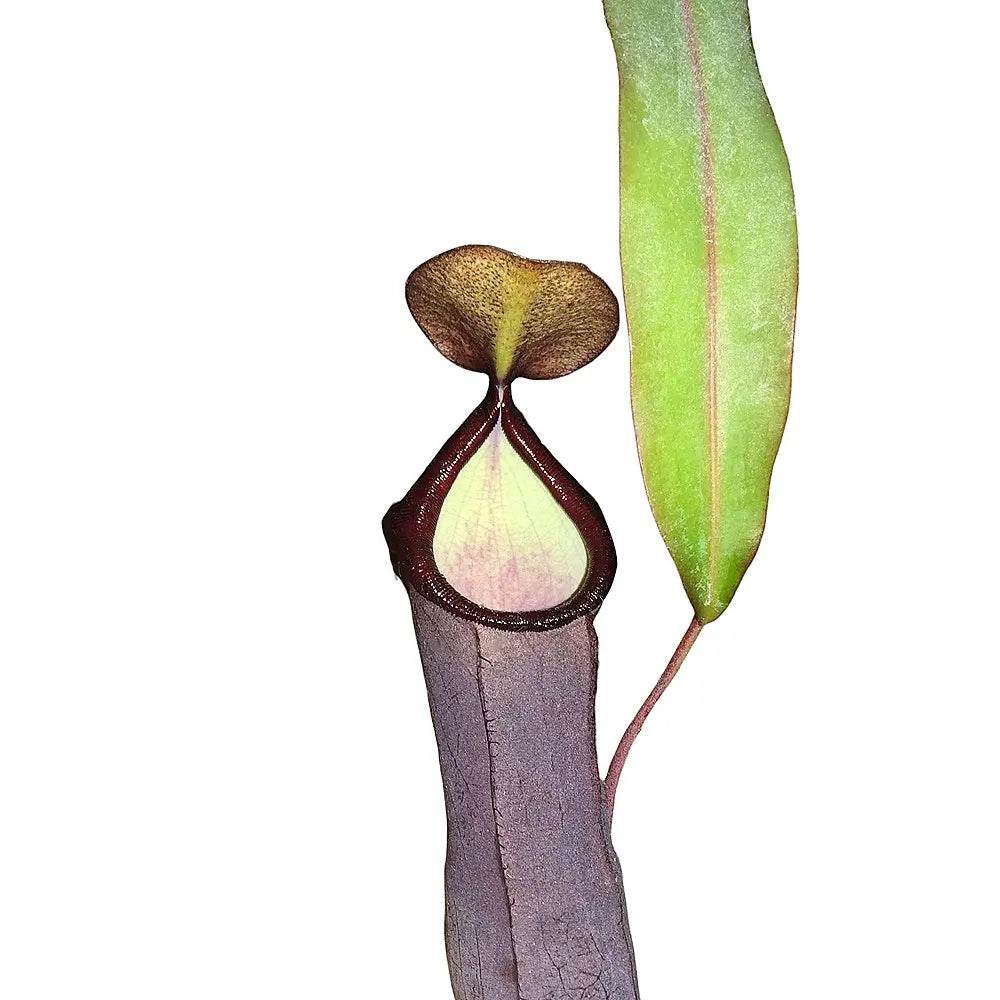
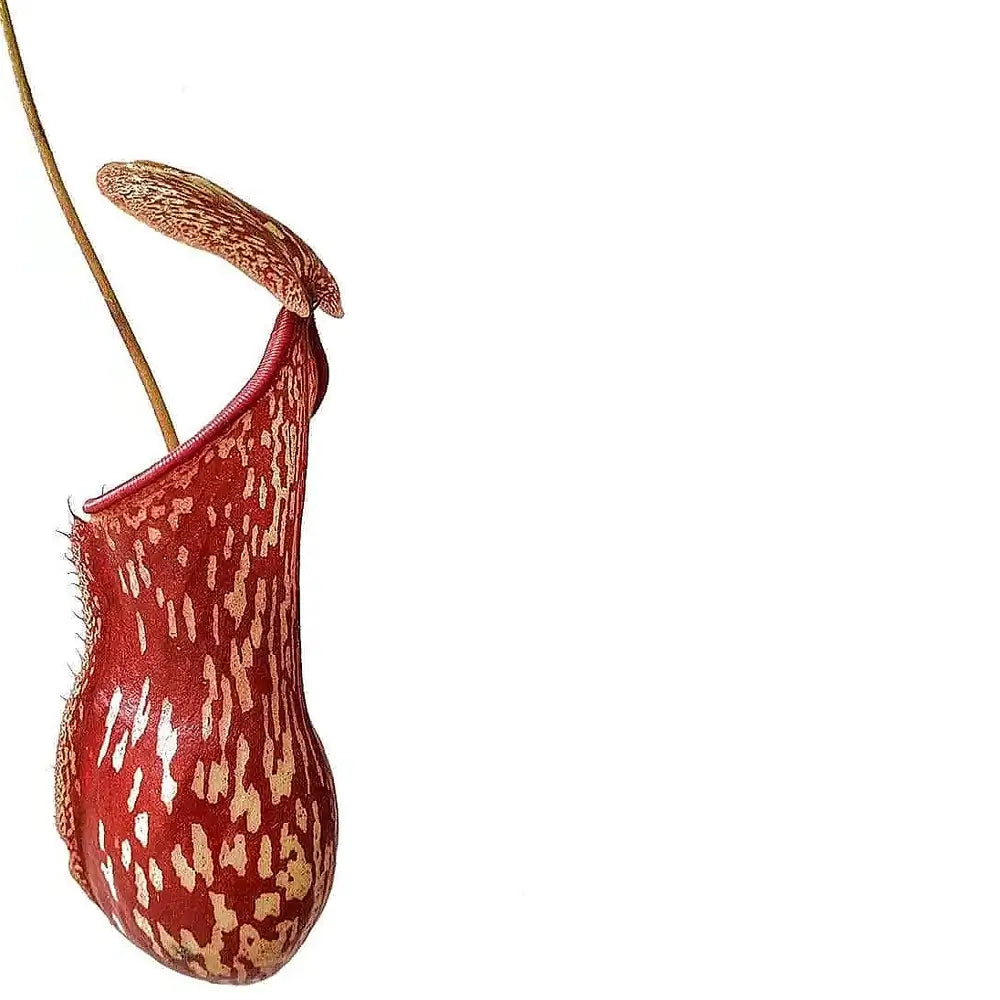
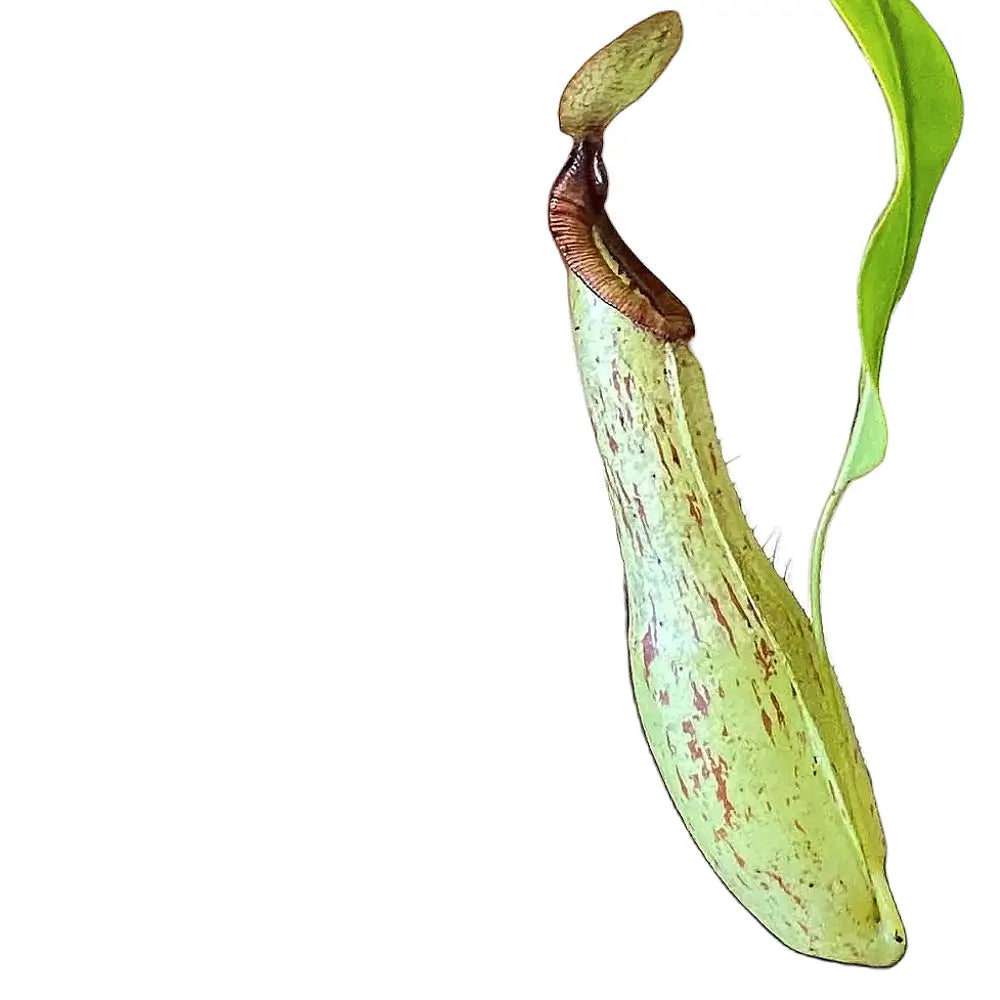
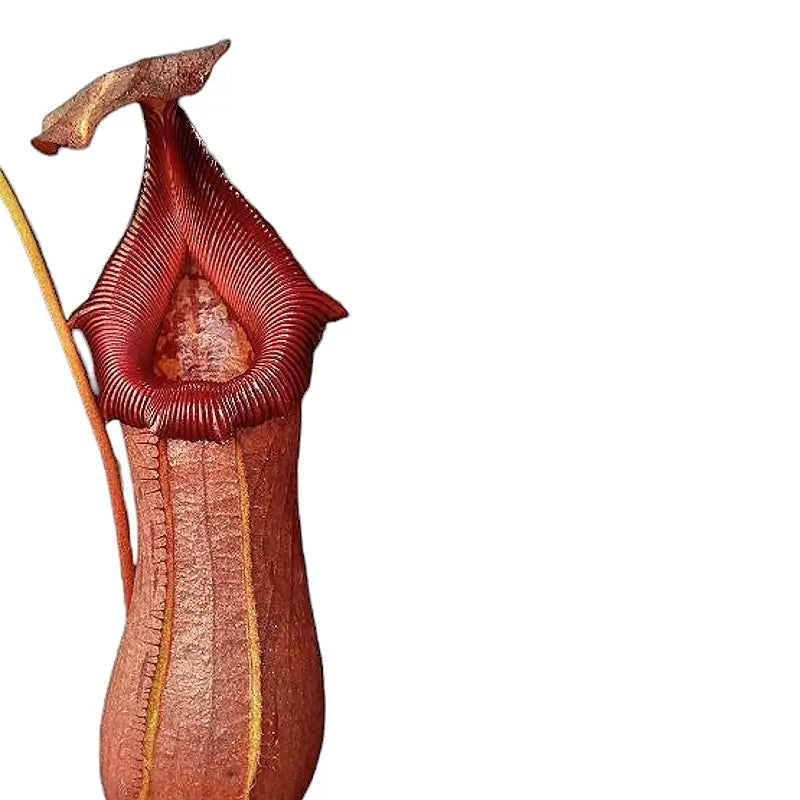
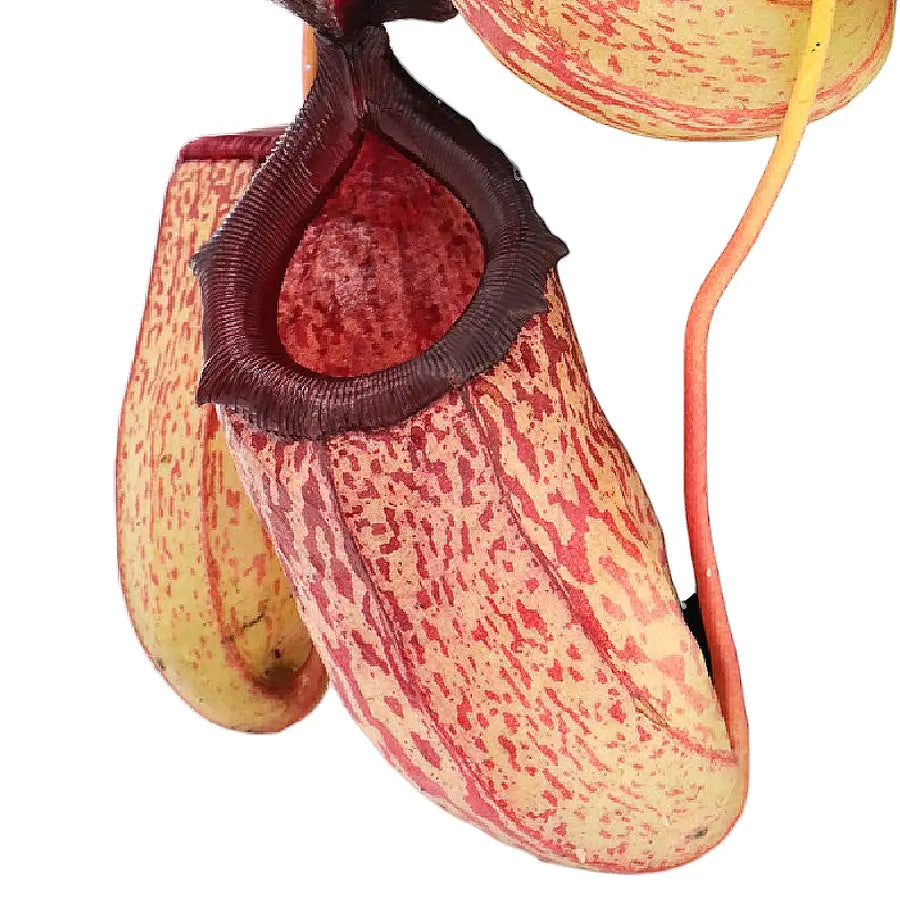
Nepenthes brings hanging pitchers, climbing stems and a look that feels closer to a greenhouse vine than a tray-grown carnivorous plant. Pitchers are not separate flowers or pods; they are modified leaf tips formed at the end of a tendril, and healthy plants keep producing them at home as leaves mature. Indoors, common hybrids can be surprisingly manageable, but only if you stop treating Nepenthes like a permanently waterlogged bog species.
For most homes, the real draw is obvious: coloured traps, long leaf lines and a plant that can hang, climb or scramble depending on how you grow it. Most failures are just as predictable: compact compost, mineral-heavy water, air that is dry and still, or a dim corner that keeps leaves alive but never supports proper pitcher formation.
Nepenthes is native across Old World tropics, from Seychelles and Madagascar through tropical Asia to the western Pacific. Some species live in hot lowland forest, others on cooler, brighter mountain slopes, and many climb as lianas or grow partly as epiphytes rather than rooting in deep ground soil. That range explains why species can vary a lot in temperature tolerance, vigour and pitcher size.
Most plants sold as houseplants are not demanding collector species. They are usually adaptable hybrids chosen because they cope with ordinary indoor conditions better than many true species. In practice, steady warmth, filtered light and decent humidity matter more for success than chasing extreme specialist settings copied from highland-only grow guides.
Nepenthes usually does best in bright, indirect light with maybe a little gentle morning or late-afternoon sun. East windows, bright north exposures, or a short distance back from stronger south- or west-facing glass often work well. Harsh midday sun behind glass can bleach leaves and dry pitchers fast, while deep shade gives you long green leaves with few or no pitchers.
Warmth matters too. Many easy indoor hybrids stay happy around 18-28 °C if nights do not crash and cold drafts stay away. True highland species often want cooler nights than standard houseplants, so for mixed indoor collections it is smarter to buy Nepenthes that fits your room than to force your room to imitate a mountain.
Nepenthes roots want moisture and oxygen at the same time. Use a very open mix: bark, perlite and coconut fibre, or long-fibre sphagnum with extra aeration; it sits far better than dense universal compost. Substrate should stay lightly moist, not sodden and stale. Unlike Sarracenia, Nepenthes is not a plant to leave sitting permanently in deep tray water.
Water quality is not optional. Rainwater is ideal; distilled water is also fine. Hard tap water slowly loads the mix with dissolved minerals and is one of the fastest ways to ruin a good plant over time. Water the substrate, not the pitchers, and let excess drain freely instead of turning the pot into a bog.
Pitcher formation is where many people get stuck. Leaves may look healthy enough, then stop inflating traps. Low humidity is a common reason, but stale air is just as bad. Nepenthes usually performs best with moderate to high humidity and constant gentle airflow, so leaf tips and tendrils can stay active without crowns or mix turning sour.
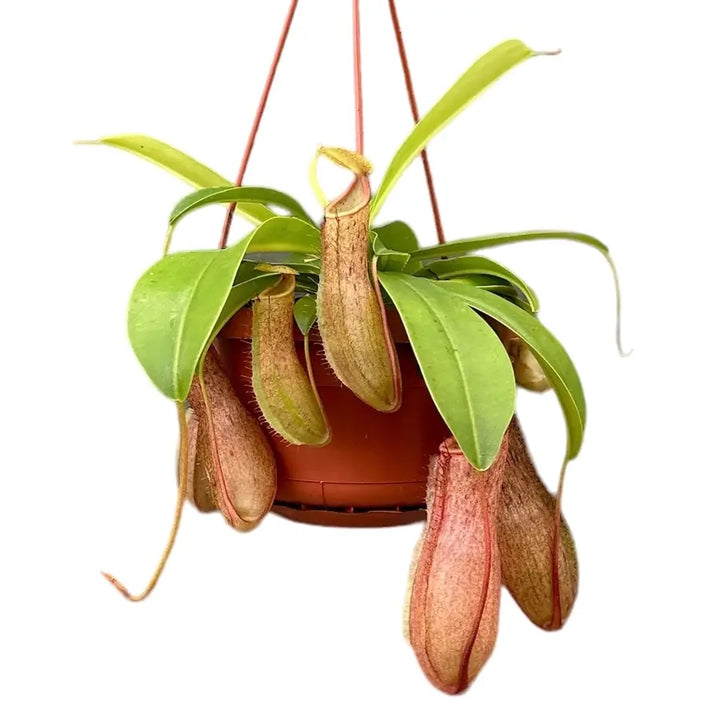
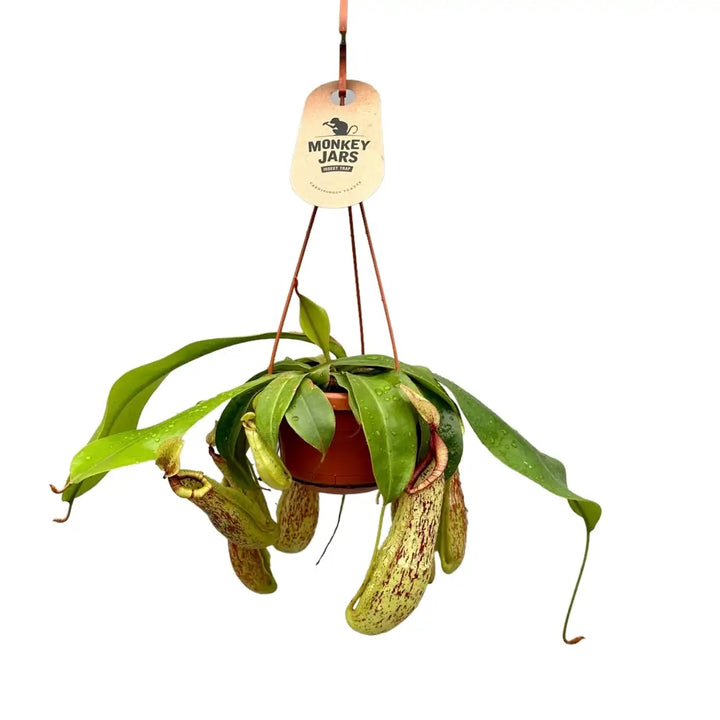
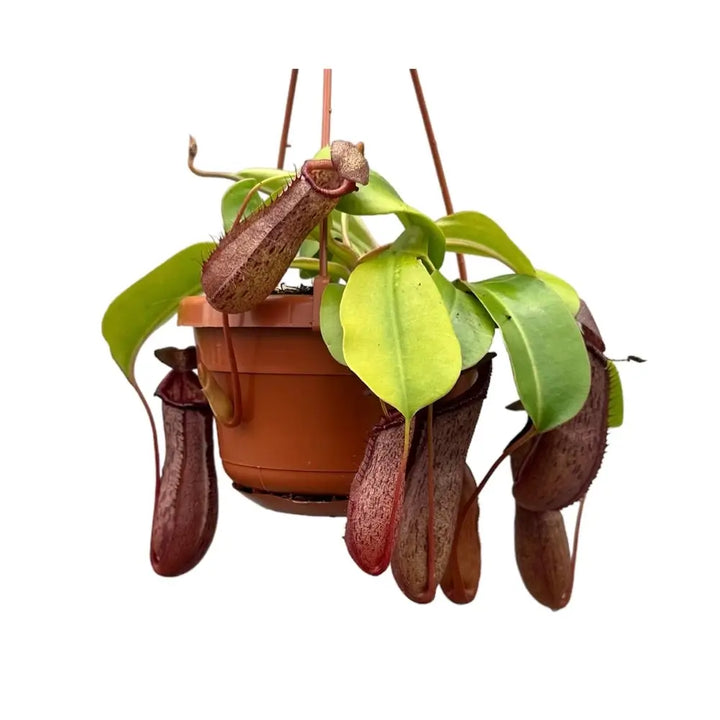
Hanging baskets, open greenhouse-style shelves and bright cabinets all suit Nepenthes better than cramped decorative cachepots. If your room is very dry, pitchers may stay smaller, abort halfway or fail to inflate. Raise ambient humidity if you can, but do not trade airflow for damp stillness.
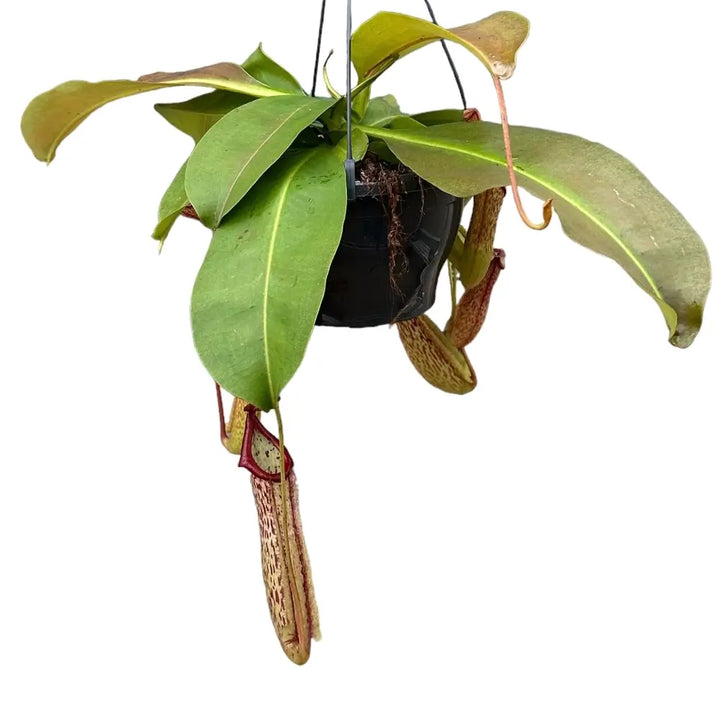
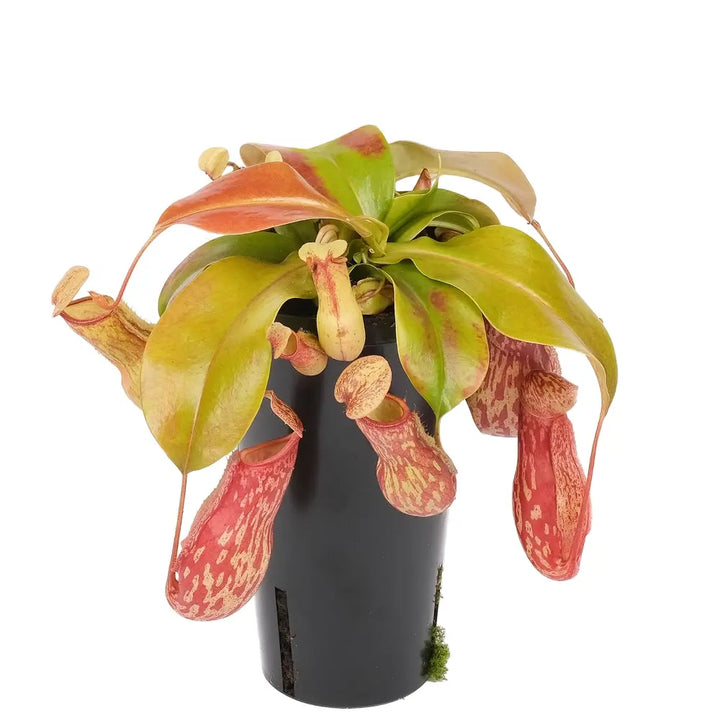
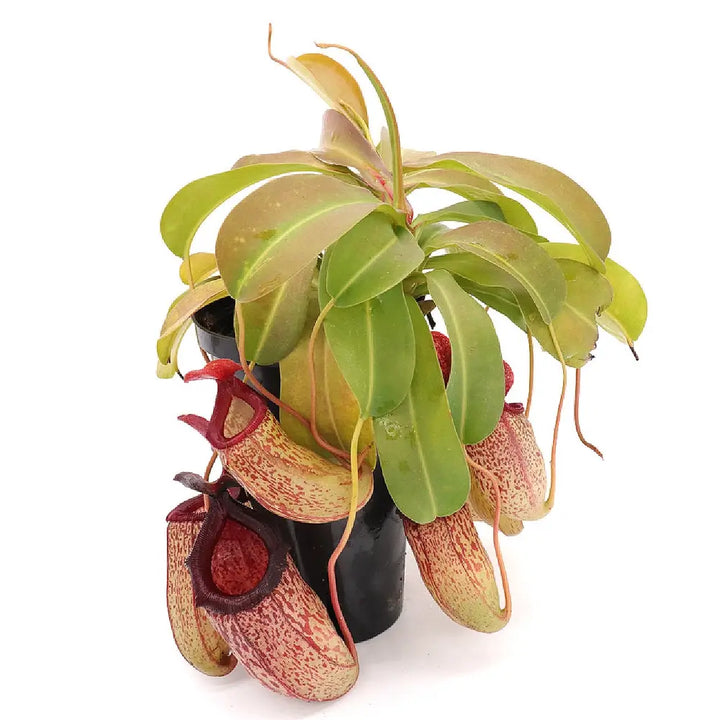
Nepenthes starts compact, then usually reveals its real habit as a vine. Lower pitchers are often broader and heavier-looking; upper pitchers can become slimmer once stems begin climbing. Given a support, many plants produce cleaner, better-spaced growth than when left tangled in a low pot. Mature stems can also be cut back and rooted from cuttings, which is how many nursery plants are multiplied.
Routine fertiliser is usually unnecessary. Carnivorous plants evolved for low-nutrient conditions, and overly rich feed or ordinary houseplant compost pushes weak growth and root problems much faster than it helps. Nepenthes also does not need meat stuffed into traps. If insects find the pitchers, fine. If not, good light, clean water and an airy root zone matter more than playing plant-zookeeper.
Freshly shipped Nepenthes often arrives with a few imperfect pitchers. Lids may dry at the edge, tendrils may stall, and older traps may brown faster than they would in a greenhouse. That is normal transport stress, not automatic decline. Watch the newest leaf and newest tendril, not the oldest pitcher.
After unpacking, place Nepenthes straight into its intended bright, humid spot and leave it alone for a while. Check moisture in the mix: if it feels only lightly moist, maintain that level; if it is soaked and cold, do not add more water just because it travelled. Hold off on repotting unless the medium is clearly broken down or obviously wrong for the plant.
Back to top and compare the Nepenthes that match your humidity, your temperatures and the consistency you can genuinely keep ↑
Nepenthes is a genus of carnivorous lianas and subshrubs in the monogeneric family Nepenthaceae, first described by Linnaeus in 1737. Often called tropical pitcher plants or monkey cups, Nepenthes comprises about 170 currently recognised species plus many natural and horticultural hybrids. The genus is cytologically uniform with a somatic chromosome number of 2n = 80, reflecting ancient polyploidy.
Range & habitat: Nepenthes is restricted to the Old World tropics from Madagascar and Sri Lanka through Southeast Asia to New Guinea, northern Australia and New Caledonia. Most species are rooted in acidic, leached substrates on ridges, open slopes, forest margins or montane cloud forests, with some confined to ultramafic or peat soils; many are climbers in shrubby or forested habitats with high humidity and pronounced diurnal temperature ranges.
Inflorescence & fruit: Unisexual plants produce erect or pendulous racemes or panicles of small, typically inconspicuous flowers; pollination is mainly by flies and other insects attracted to scent. Fruits are elongated, dehiscent capsules containing many winged seeds that are wind-dispersed across open ridges and forest gaps.
Nepenthes brings hanging pitchers, climbing stems and a look that feels closer to a greenhouse vine than a tray-grown carnivorous plant. Pitchers are not separate flowers or pods; they are modified leaf tips formed at the end of a tendril, and healthy plants keep producing them at home as leaves mature. Indoors, common hybrids can be surprisingly manageable, but only if you stop treating Nepenthes like a permanently waterlogged bog species.
For most homes, the real draw is obvious: coloured traps, long leaf lines and a plant that can hang, climb or scramble depending on how you grow it. Most failures are just as predictable: compact compost, mineral-heavy water, air that is dry and still, or a dim corner that keeps leaves alive but never supports proper pitcher formation.
Nepenthes is native across Old World tropics, from Seychelles and Madagascar through tropical Asia to the western Pacific. Some species live in hot lowland forest, others on cooler, brighter mountain slopes, and many climb as lianas or grow partly as epiphytes rather than rooting in deep ground soil. That range explains why species can vary a lot in temperature tolerance, vigour and pitcher size.
Most plants sold as houseplants are not demanding collector species. They are usually adaptable hybrids chosen because they cope with ordinary indoor conditions better than many true species. In practice, steady warmth, filtered light and decent humidity matter more for success than chasing extreme specialist settings copied from highland-only grow guides.
Nepenthes usually does best in bright, indirect light with maybe a little gentle morning or late-afternoon sun. East windows, bright north exposures, or a short distance back from stronger south- or west-facing glass often work well. Harsh midday sun behind glass can bleach leaves and dry pitchers fast, while deep shade gives you long green leaves with few or no pitchers.
Warmth matters too. Many easy indoor hybrids stay happy around 18-28 °C if nights do not crash and cold drafts stay away. True highland species often want cooler nights than standard houseplants, so for mixed indoor collections it is smarter to buy Nepenthes that fits your room than to force your room to imitate a mountain.
Nepenthes roots want moisture and oxygen at the same time. Use a very open mix: bark, perlite and coconut fibre, or long-fibre sphagnum with extra aeration; it sits far better than dense universal compost. Substrate should stay lightly moist, not sodden and stale. Unlike Sarracenia, Nepenthes is not a plant to leave sitting permanently in deep tray water.
Water quality is not optional. Rainwater is ideal; distilled water is also fine. Hard tap water slowly loads the mix with dissolved minerals and is one of the fastest ways to ruin a good plant over time. Water the substrate, not the pitchers, and let excess drain freely instead of turning the pot into a bog.
Pitcher formation is where many people get stuck. Leaves may look healthy enough, then stop inflating traps. Low humidity is a common reason, but stale air is just as bad. Nepenthes usually performs best with moderate to high humidity and constant gentle airflow, so leaf tips and tendrils can stay active without crowns or mix turning sour.
Hanging baskets, open greenhouse-style shelves and bright cabinets all suit Nepenthes better than cramped decorative cachepots. If your room is very dry, pitchers may stay smaller, abort halfway or fail to inflate. Raise ambient humidity if you can, but do not trade airflow for damp stillness.
Nepenthes starts compact, then usually reveals its real habit as a vine. Lower pitchers are often broader and heavier-looking; upper pitchers can become slimmer once stems begin climbing. Given a support, many plants produce cleaner, better-spaced growth than when left tangled in a low pot. Mature stems can also be cut back and rooted from cuttings, which is how many nursery plants are multiplied.
Routine fertiliser is usually unnecessary. Carnivorous plants evolved for low-nutrient conditions, and overly rich feed or ordinary houseplant compost pushes weak growth and root problems much faster than it helps. Nepenthes also does not need meat stuffed into traps. If insects find the pitchers, fine. If not, good light, clean water and an airy root zone matter more than playing plant-zookeeper.
Freshly shipped Nepenthes often arrives with a few imperfect pitchers. Lids may dry at the edge, tendrils may stall, and older traps may brown faster than they would in a greenhouse. That is normal transport stress, not automatic decline. Watch the newest leaf and newest tendril, not the oldest pitcher.
After unpacking, place Nepenthes straight into its intended bright, humid spot and leave it alone for a while. Check moisture in the mix: if it feels only lightly moist, maintain that level; if it is soaked and cold, do not add more water just because it travelled. Hold off on repotting unless the medium is clearly broken down or obviously wrong for the plant.
Back to top and compare the Nepenthes that match your humidity, your temperatures and the consistency you can genuinely keep ↑
Nepenthes are tropical carnivorous plants that make pitchers from the ends of their leaves. They are not ordinary foliage plants, and they are not bog tray-plants in the usual houseplant sense either, so their water and potting logic is different from both.
Use rainwater, distilled water, reverse-osmosis water, or another low-mineral source wherever possible. Very soft tap water can work in some homes, but hard or mineral-rich tap water is a common reason Nepenthes decline over time.
Keep the mix lightly moist, but not sodden. Water when roughly the top 5–10% of the pot has started to dry, then water through with low-mineral water and let the excess drain away. Do not let most of the pot dry out, and do not leave the plant sitting in stagnant water.
Usually because humidity is too low, light is too weak, or the plant is still adjusting after a move. A Nepenthes can keep making leaves while refusing to pitcher properly if the conditions are just a bit off.
No, not routinely. Good light, correct water, and the right low-nutrient mix matter more than trying to feed every pitcher, and meat should never be used.
Terrariums made easy: choose open vs closed, layer correctly, pick plants that thrive, avoid common mistakes, and keep your mini ecosystem stable.
Read more
Humidity shapes leaf health, pest pressure, and growth. This guide breaks down how RH works, target ranges for different plant types, how to measure it, and which tools help—from humidifiers to cloche covers. Includes room tips, ventilation basics, and comm...
Read more
Should you mist houseplants or is it just a feel-good ritual? This guide breaks down what misting really does to humidity, when foliar feeding can help, why tap water can leave residue, and the safer, more effective ways to support tropical plants indoors.
Read moreThe plants are carefully packaged and arrive in great conditions (I’m based in Spain) and they’re always there to help in any way they can with your purchase.I have and will always recommend Foliage Factory to every friend I can. I’m not only satisfied with their plants and prices, but their customer service is exceptional.
José, ES
Super Service, Gute Auswahl, Preise sind fair. Eine Pflanze kam kaputt an, hab sofort Ersatz bekommen. Danke an den unkomplizierten (und blitzschnellen) Kundenservice!!
Sarah, DE
Beautiful plants and excellent customer service. Had a great time ordering several tropical houseplants from Foilage-factory.com. All but one arrived in great condition. After contacting customer service, I quickly got detailed help nursing the plant back to full health. Never experienced such service before!
Frederik, DK
Envoie très rapide (2 jours), plantes parfaitement emballées et super offres ! Je suis une habituelle j'ai passé 6 ou 7 commandes et je n'en peut être plus satisfaite du service client et de la qualité et variété des plantes offertes
Iris, FR
Die Sendung kam leider in keinem guten Zustand bei mir an, kann passieren. Habe mich darauf hin sofort an Foliage Factory gewandt und habe selten einen so guten, schnellen, freundlichen und kulanten Kundendienst erlebt.
Frauke, DE
Sign up for Foliage Factory newsletter for early access to new arrivals and practical care tips that work in real homes.
Limited-time discounts, extras, and bundle deals for subscribers.
Earn points with every purchase and redeem them later for discounts on your next plant order.
Give your friends 15% off and get 15% off your next order in return.
Newsletter Perk
Use your 10% welcome code on plants and care products when you're ready to order.
